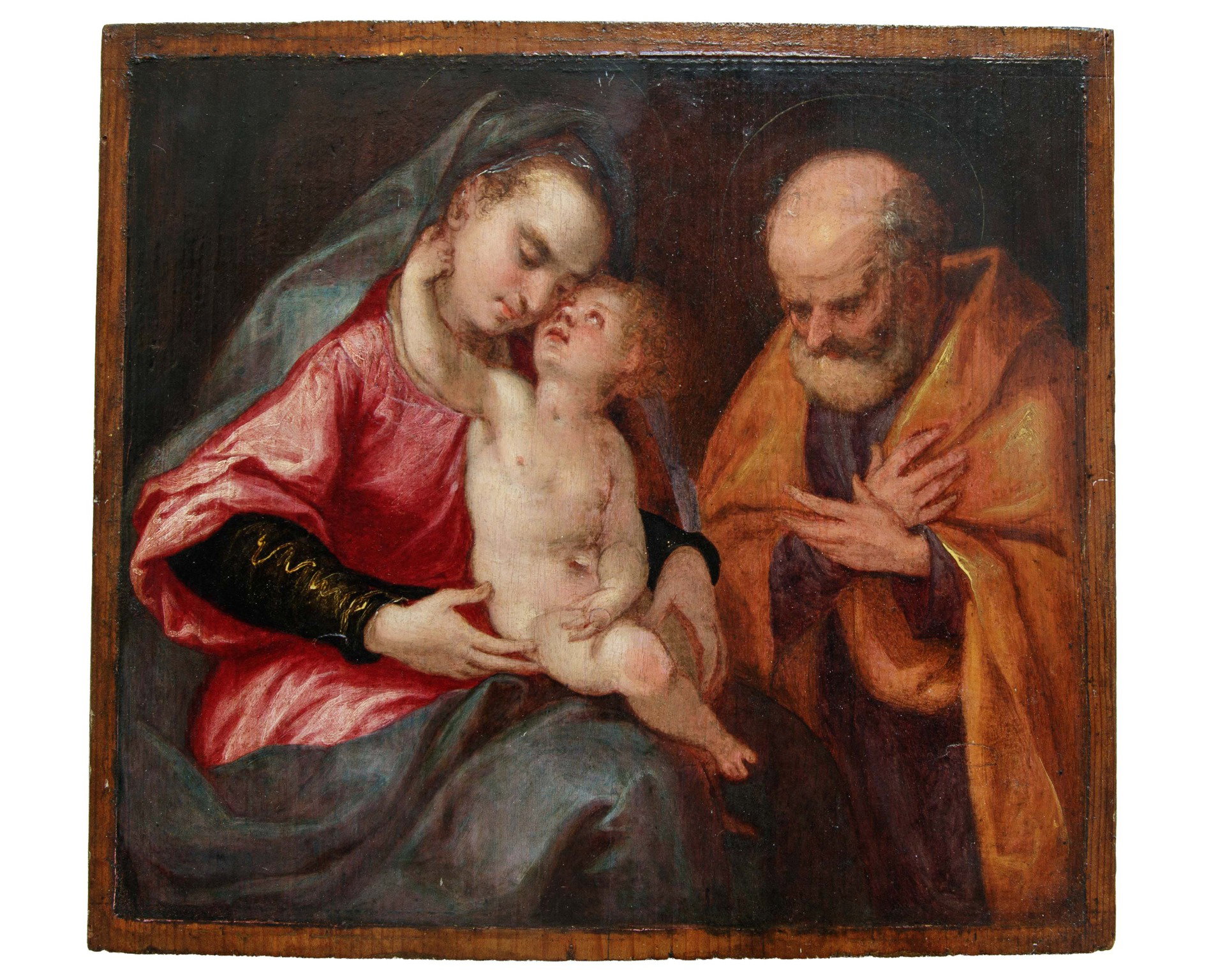
Paolo Piazza, also known as Cosimo da Castelfranco (Castelfranco Veneto, c. 1560 – Venice, 1620), attributed. Holy Family
Description:
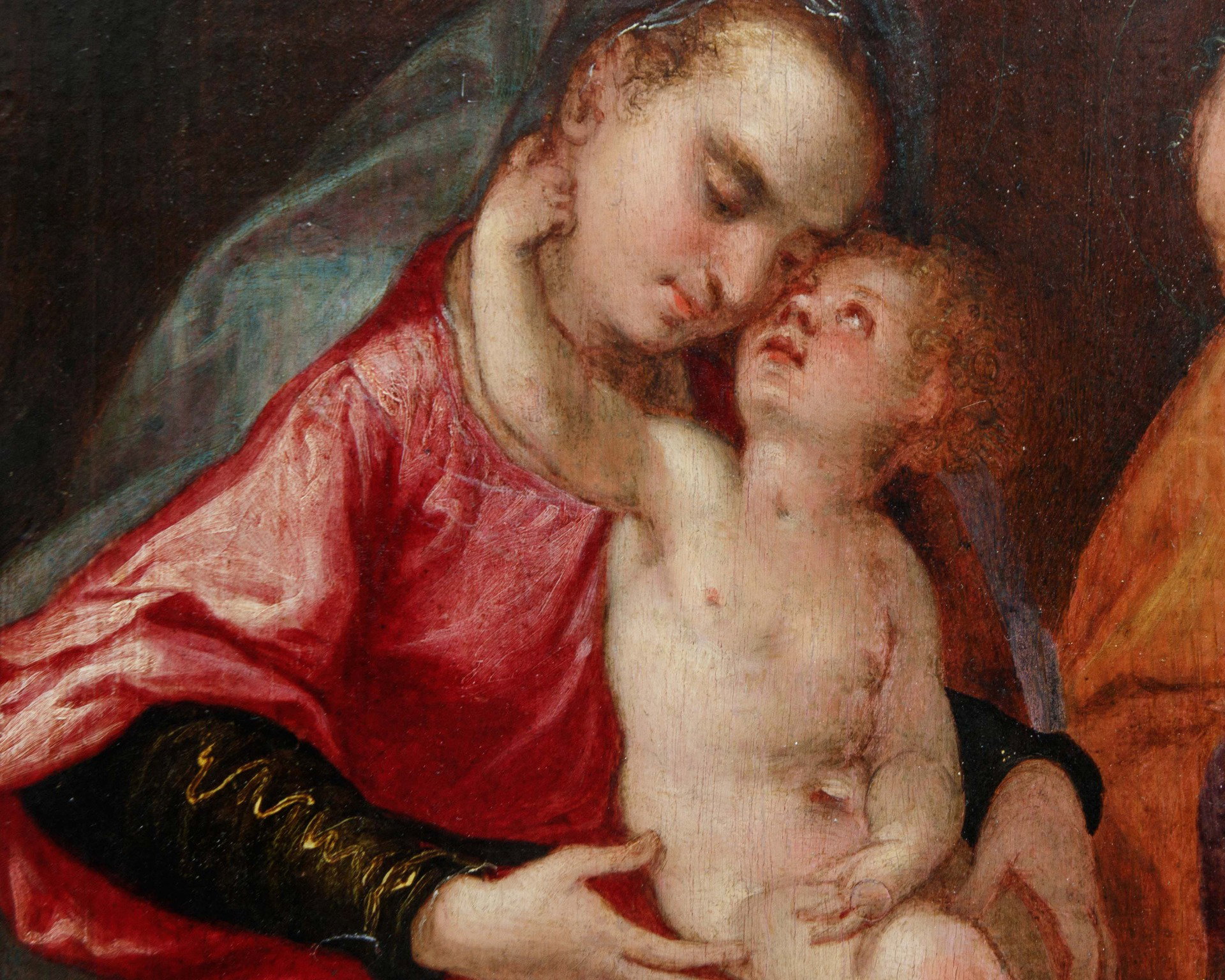
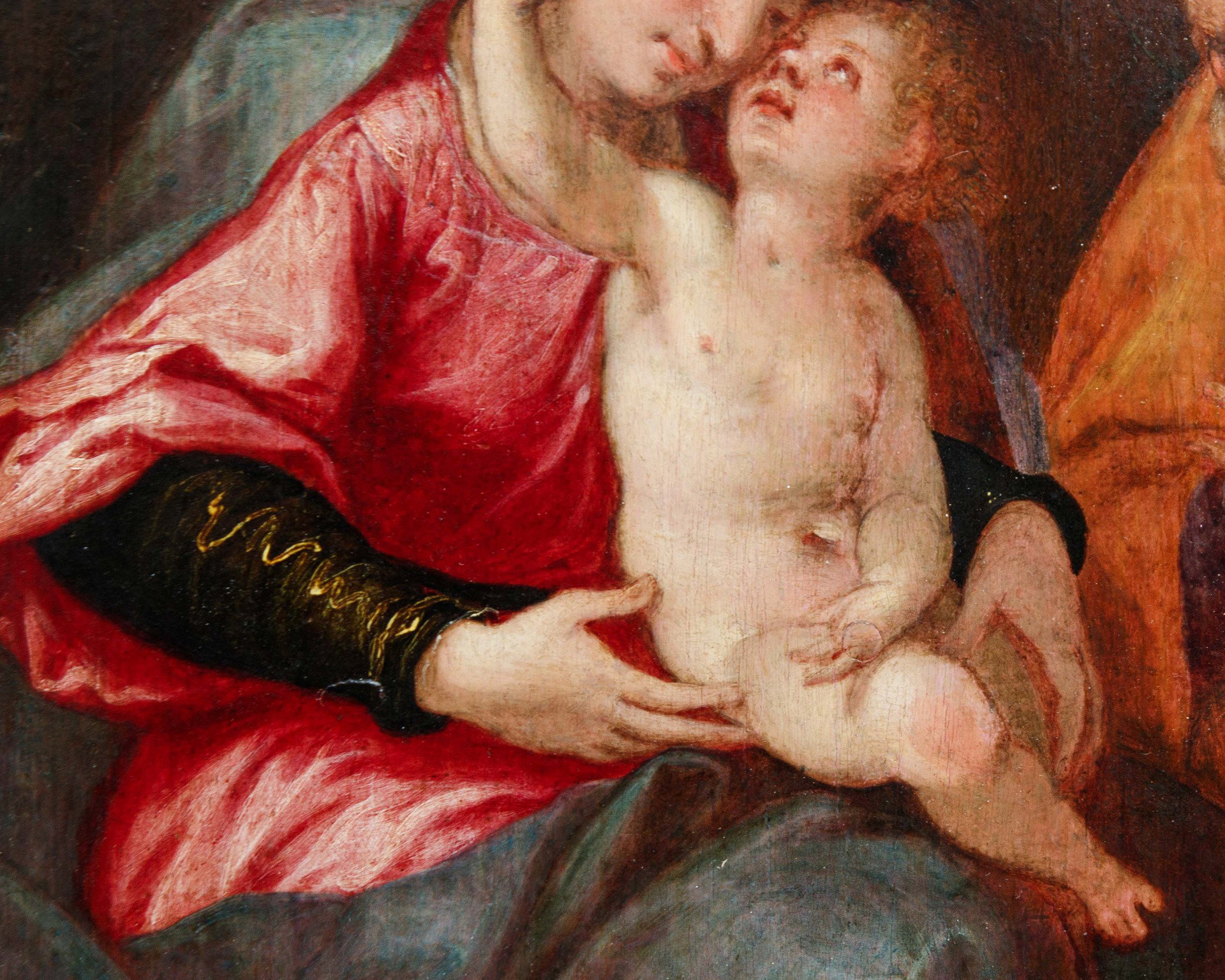
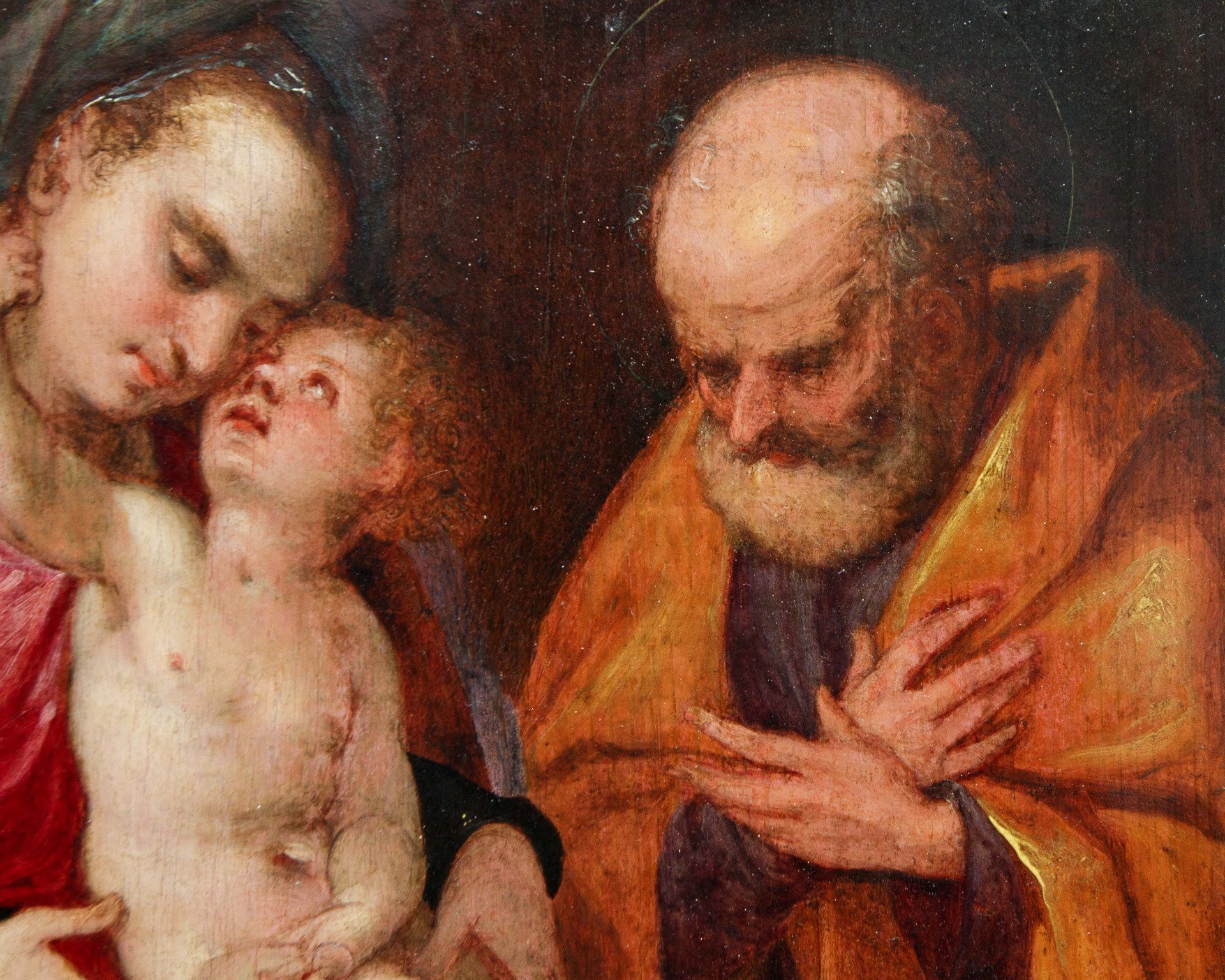
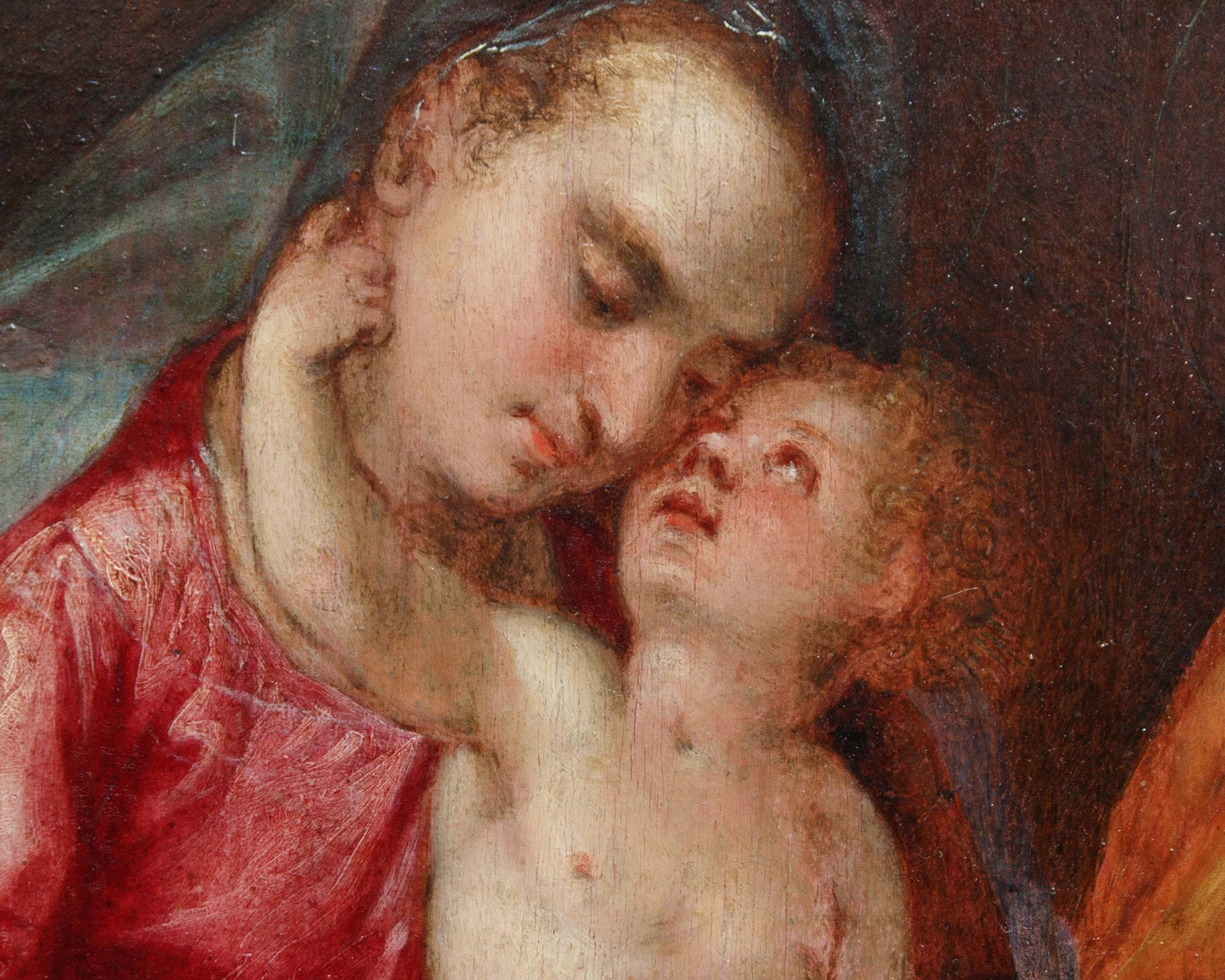
Paolo Piazza, also known as Cosimo da Castelfranco (Castelfranco Veneto, c. 1560 – Venice, 1620), attributed. Holy Family. Oil on panel, 30 x 33 cm. The analyzed painting, a refined oil on panel depicting the Holy Family, fits perfectly within the late 16th-century Venetian tradition, exhibiting stylistic characteristics that decisively point to the hand of Paolo Piazza, also known as Father Cosimo da Castelfranco. The work presents a compact and intimate composition, where the Virgin delicately holds the Child, who seeks affectionate contact by turning towards her, while on the right, the figure of St. Joseph emerges from the shadow in an attitude of devout contemplation. The chromatic execution, rich in glazes and highlighted by sudden bursts of light, reveals the legacy of the great Venetian school, particularly the influence of masters like Palma il Giovane and the Bassano family, with whom Piazza trained during his apprenticeship in Venice between 1575 and 1581. The plasticity of the garments, rendered with broad brushstrokes that define volumes through the play of reflections, and the almost melancholic sweetness of the faces are distinctive traits of his pictorial language, capable of combining Counter-Reformation solemnity with everyday humanity. Paolo Piazza, born in Castelfranco Veneto around 1560, is a unique figure in the artistic landscape of the time, having combined pictorial activity with religious life after joining the Capuchin order. His Venetian training in the workshop of Palma il Giovane and his exposure to Veronese's colorism profoundly marked his style, leading him to create large-scale decorative cycles such as the frescoes at Villa Corner in Treville and sacred works for the Cathedral of Castelfranco and the church of San Polo in Venice. His career led him to travel extensively, visiting cities like Chioggia, Rome, and even Sicily. In this context, the panel in question shows close affinities with his early and middle-period works, recalling the chromatic sensitivity of the Baptism of Constantine in the rendering of fabrics and the density of the pictorial impasto. Comparison with other works in Piazza's oeuvre confirms the attribution and provides a better understanding of the artist's evolution. While the Supper at Emmaus in Castelfranco exhibits a more complex spatial management, in this Holy Family, the artist prefers a close-up view, almost a domestic "sacred conversation" that echoes the atmosphere of the Preaching of Saint Paul. The figure of St. Joseph, captured in an expression of humble reflection, finds typological parallels in various elderly figures present in his altarpieces, characterized by thick beards and broad foreheads that softly reflect light. Similarly, the Virgin presents that oval face, soft and slightly tilted, found in the artist's Marian depictions, where the debt to Veronese's classicism is tempered by a more material and rapid application, typical of the modern style. This painting, therefore, serves as a significant piece for reconstructing Paolo Piazza's small-format production, demonstrating his ability to translate grand Venetian models into an intimate devotional language, capable of directly engaging the viewer through the masterful use of light and color.