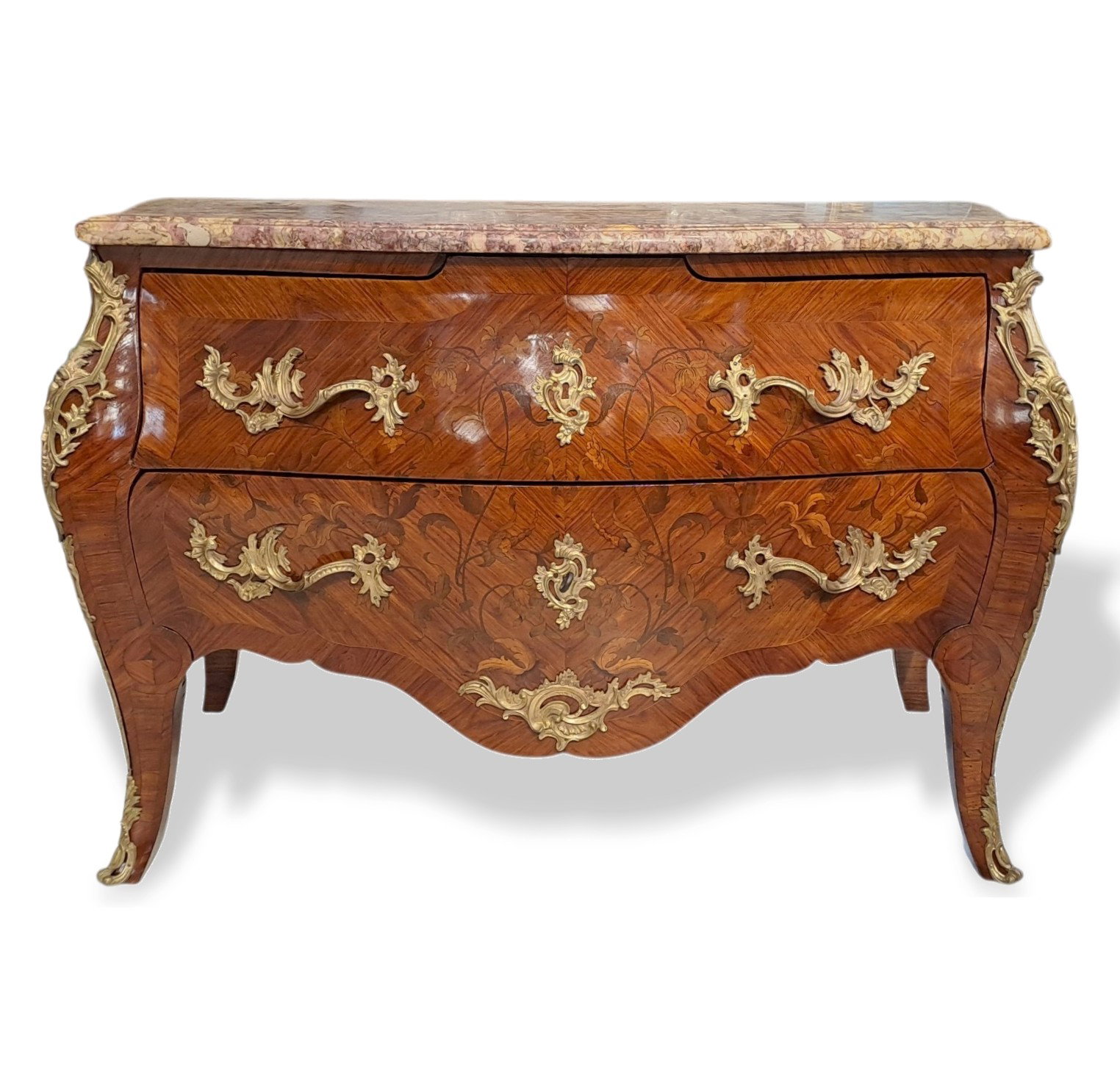
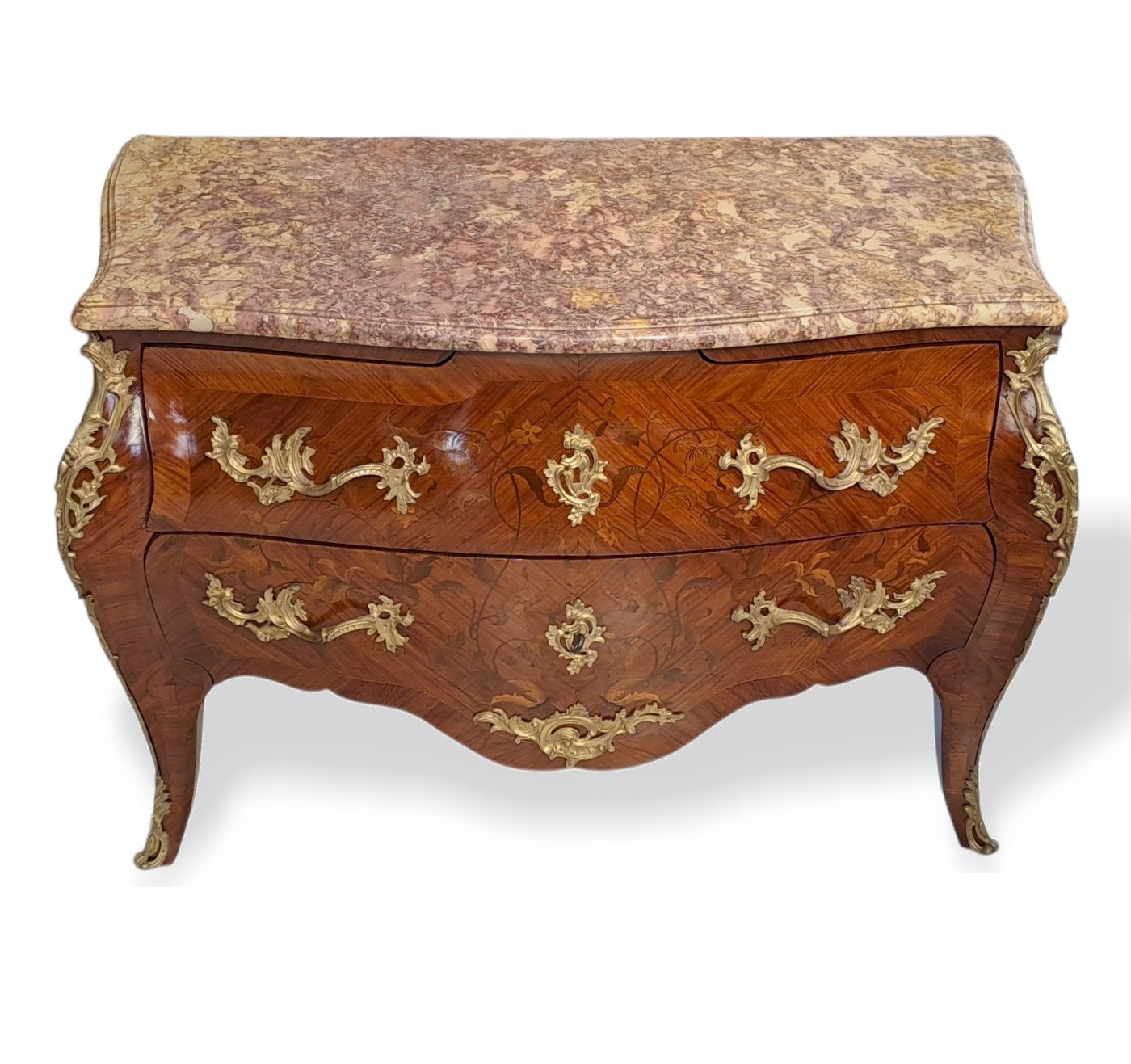
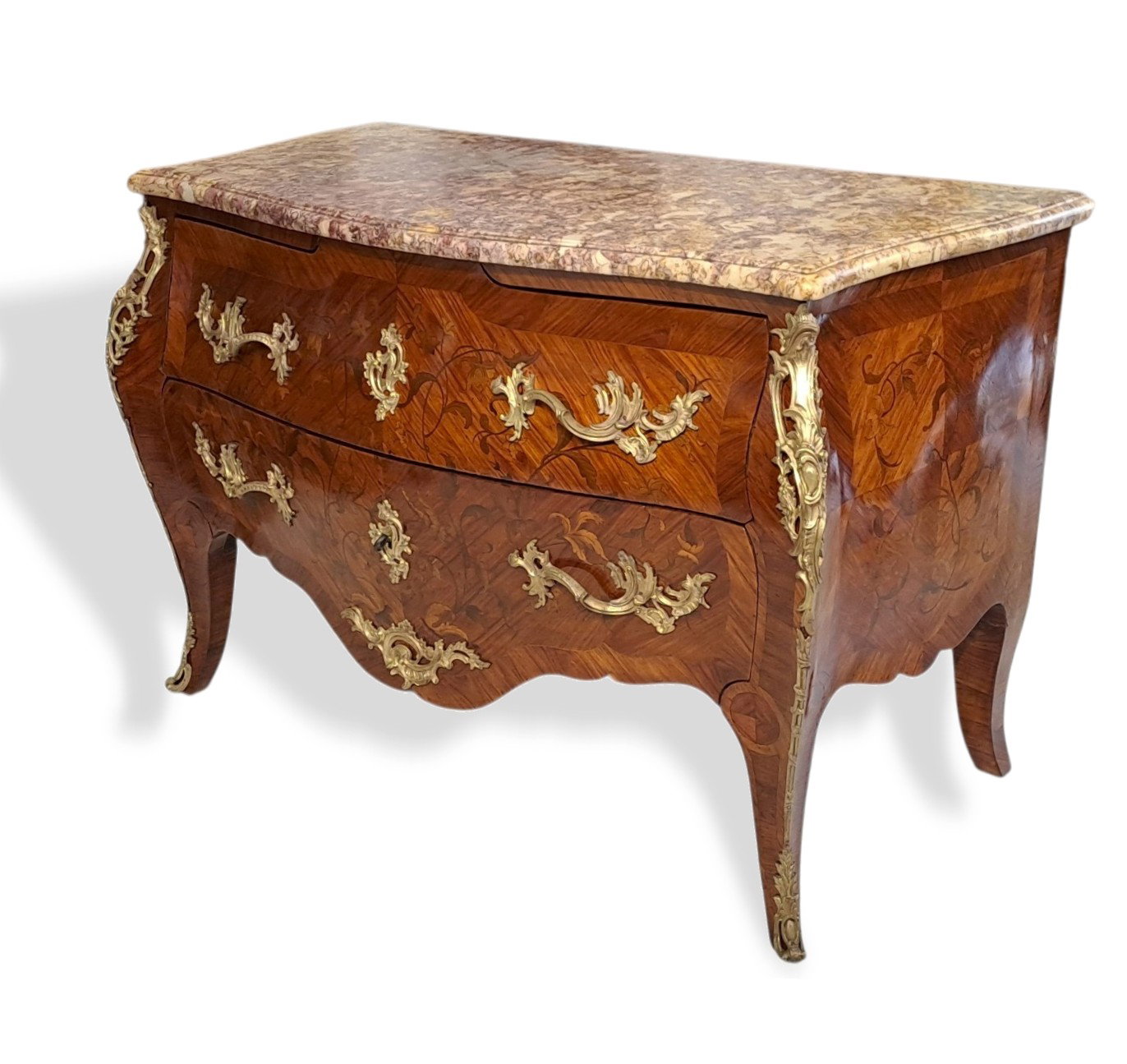
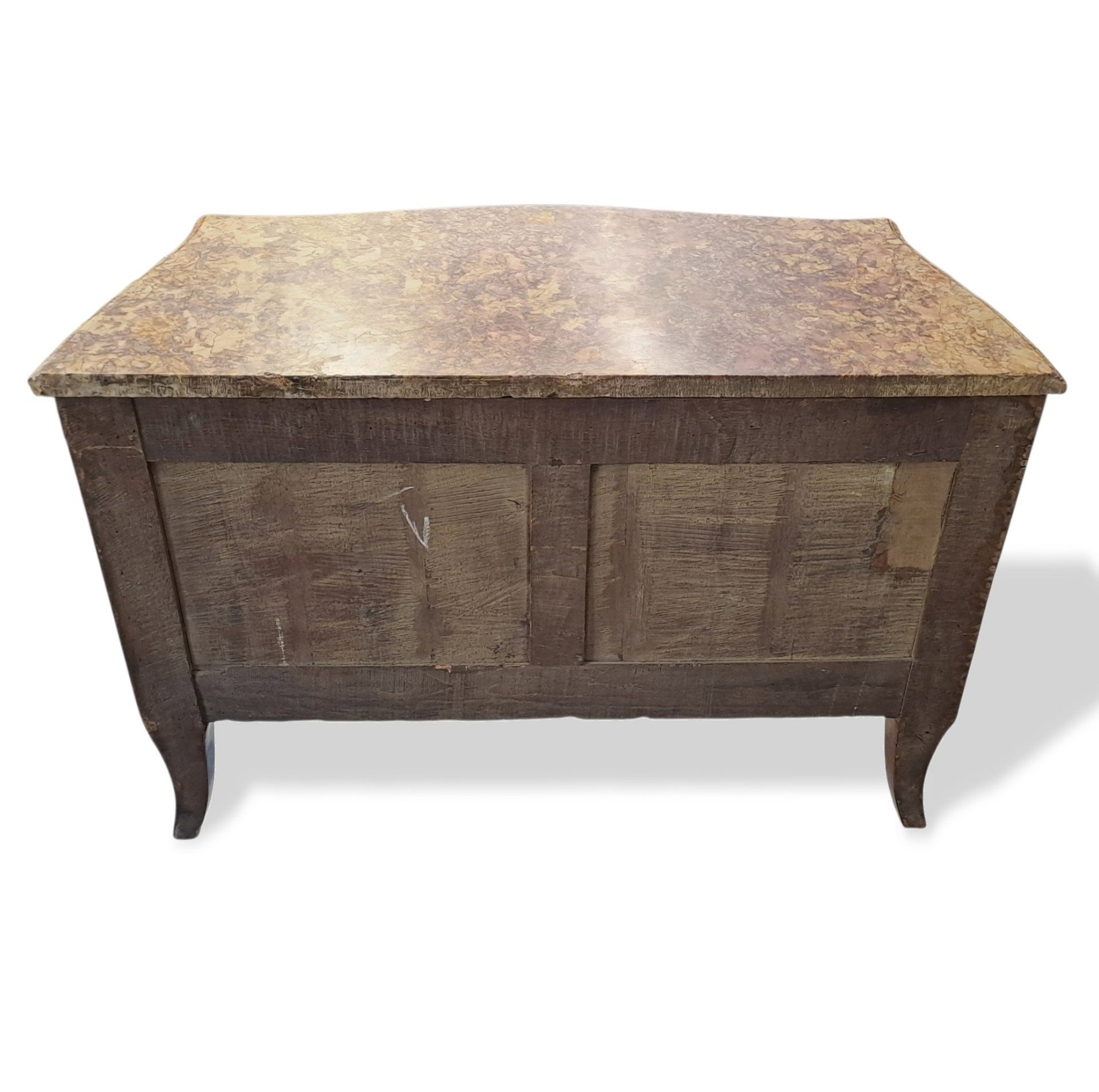
This piece of furniture is a superb example of cabinetmaking from the Napoleon III period (Second Empire, circa 1852-1870), which reinterprets the Louis XV (French Rococo) style with extraordinary richness and philological accuracy.
Technical and Descriptive Sheet
1. Type and Line (Commode "Tombeau" or "en Arbalète")
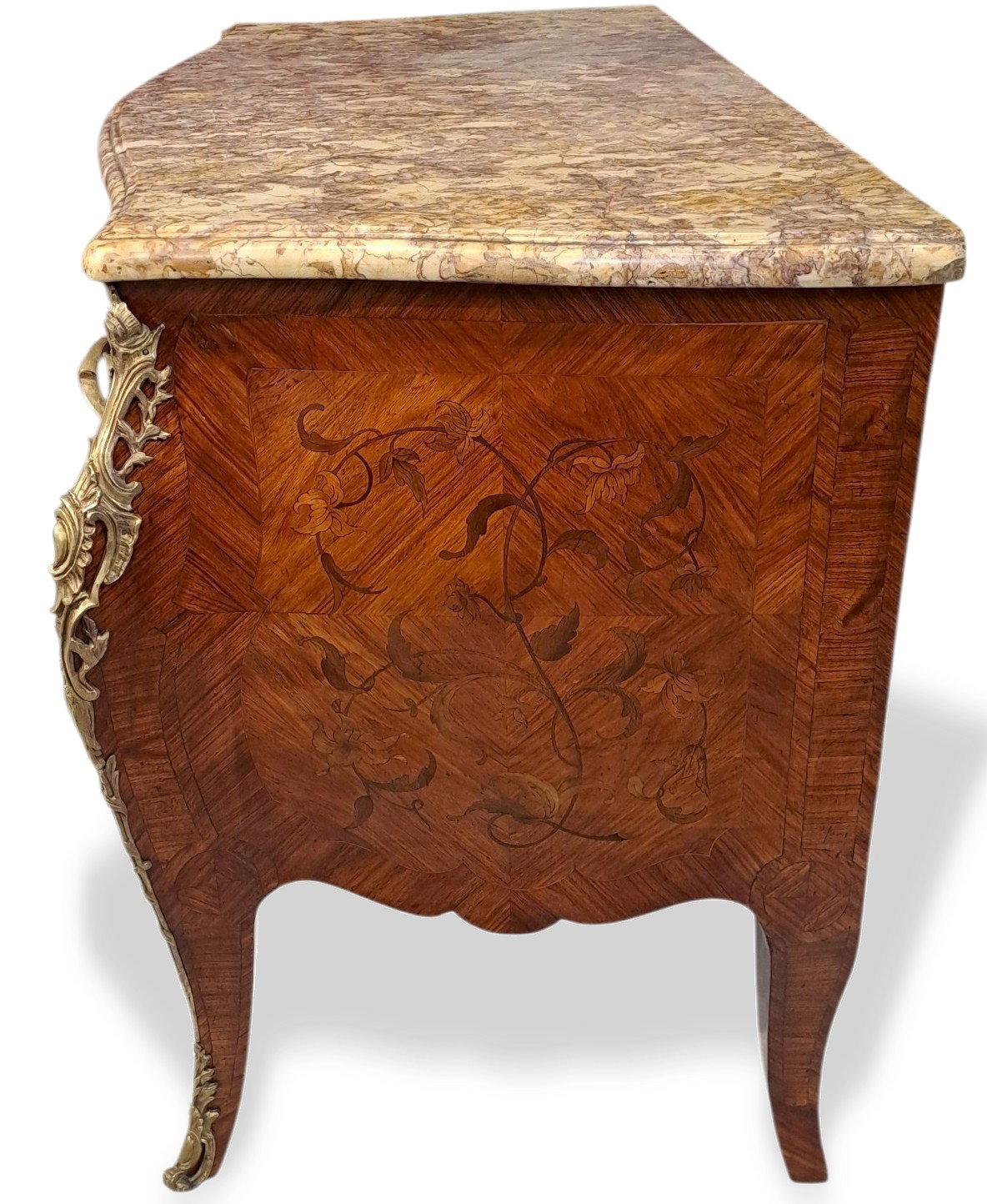
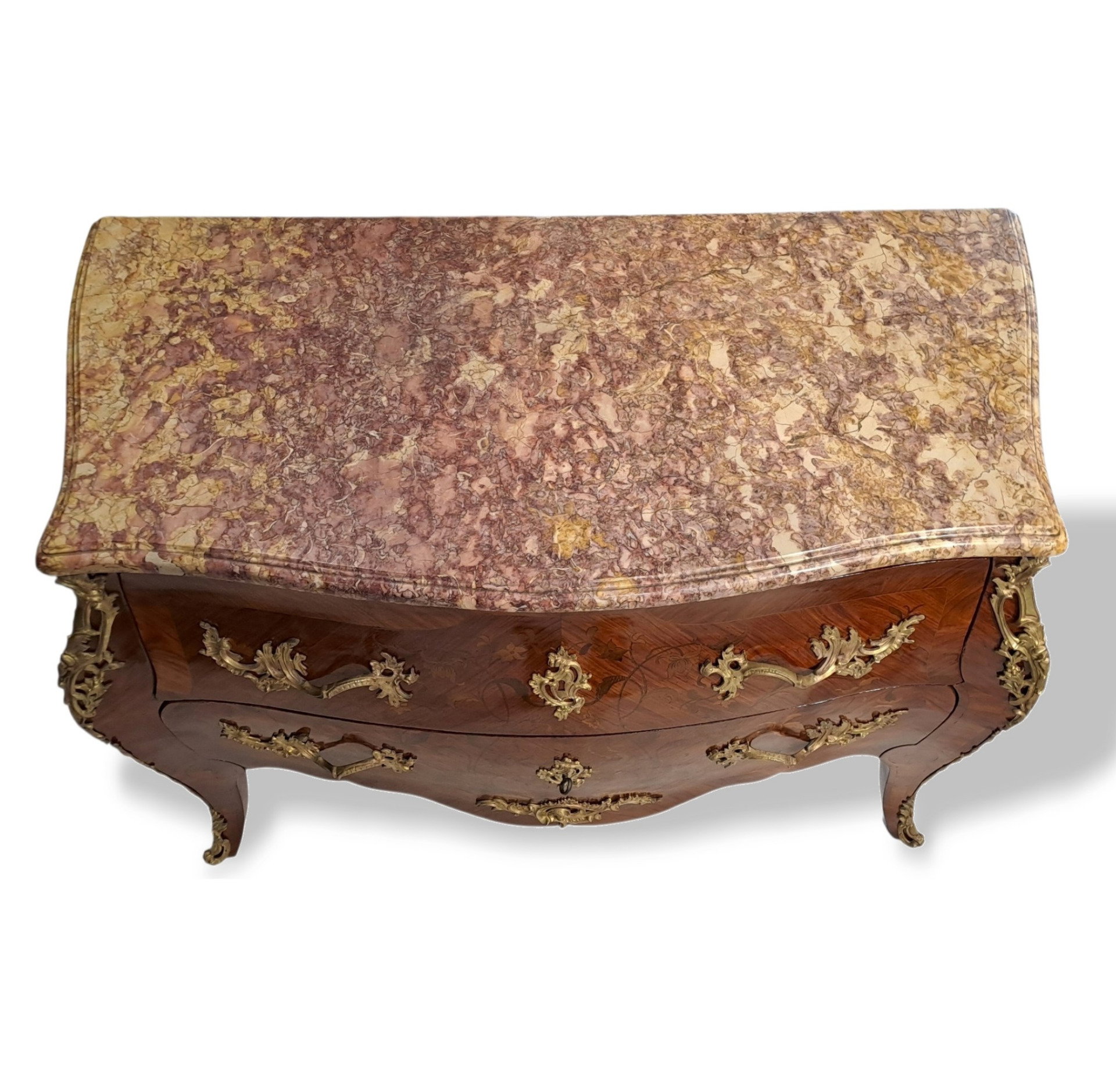
The furniture features a pronounced and sinuous curved line on both the front and sides (three-dimensional bulge). The lower apron is elegantly shaped with an "en arbalète" (crossbow) profile, typical of the most refined 18th-century chests of drawers. It rests on four slender and sinuous cabriole legs.
2. Structure and Opening
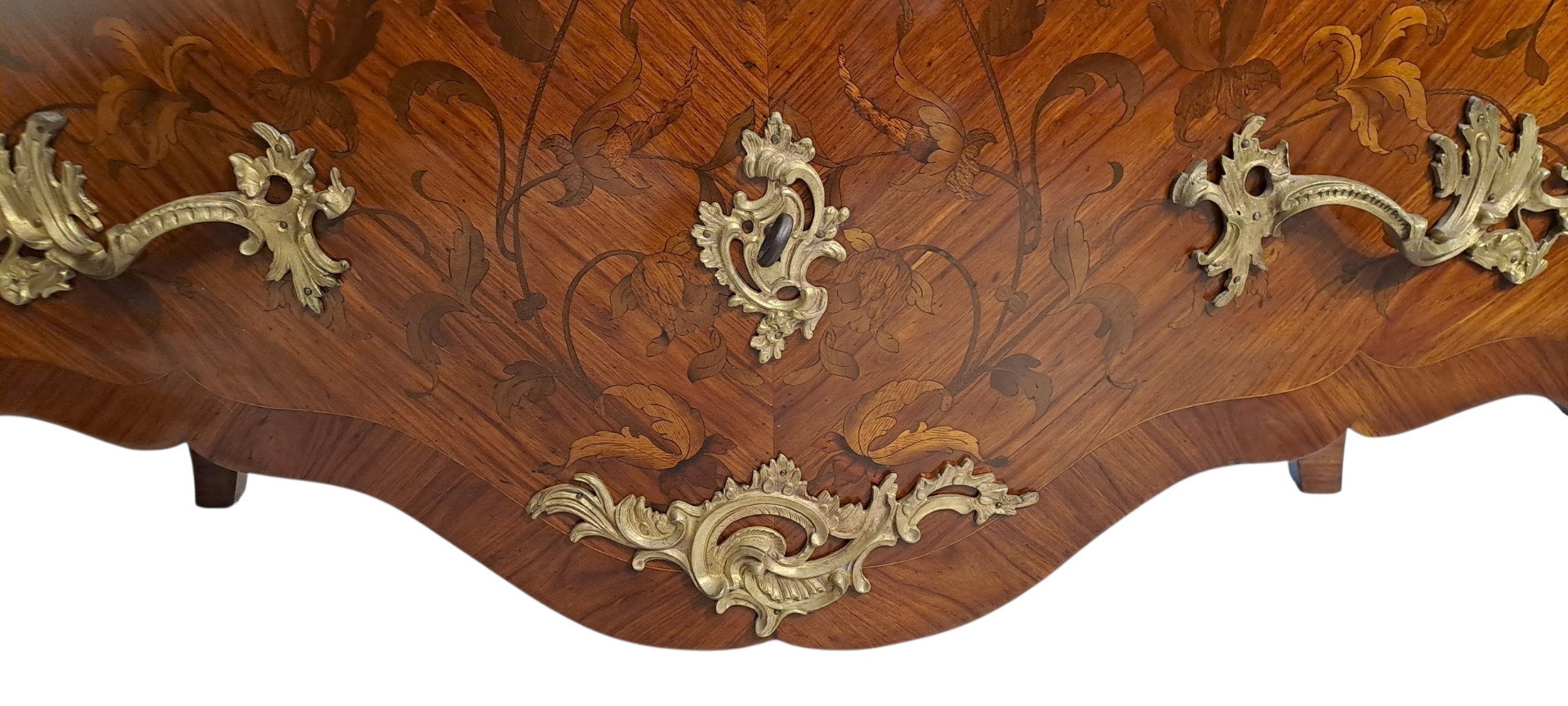
It is a two-drawer model without a visible crossbar (sans traverse). This highly complex technique allows the marquetry decoration and wood grain to flow uniformly across the entire frontal surface without visual interruptions, simulating a single large panel.
3. Materials and Marquetry
Veneer and Marquetry: The body is beautifully veneered in rosewood laid in a herringbone pattern to create geometric contrasts that capture light.
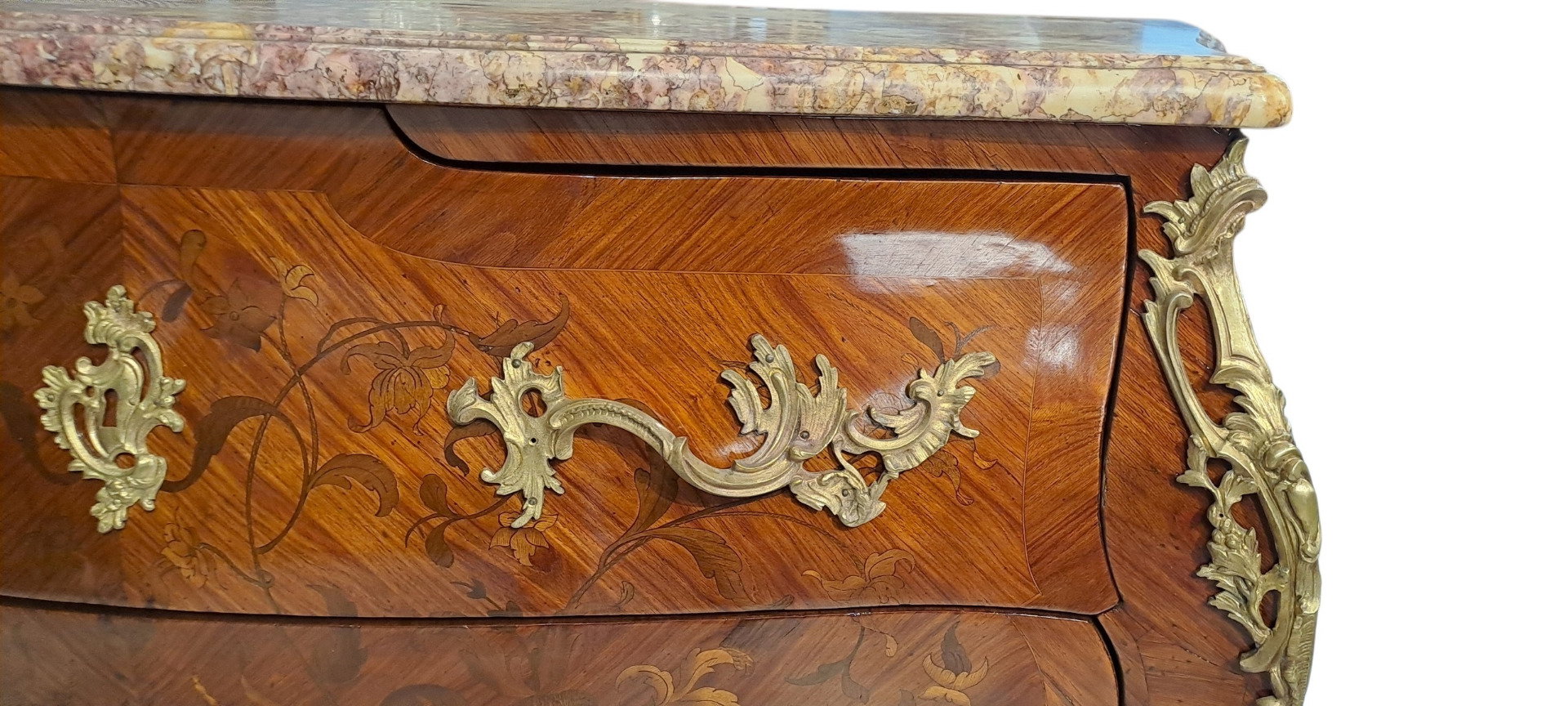
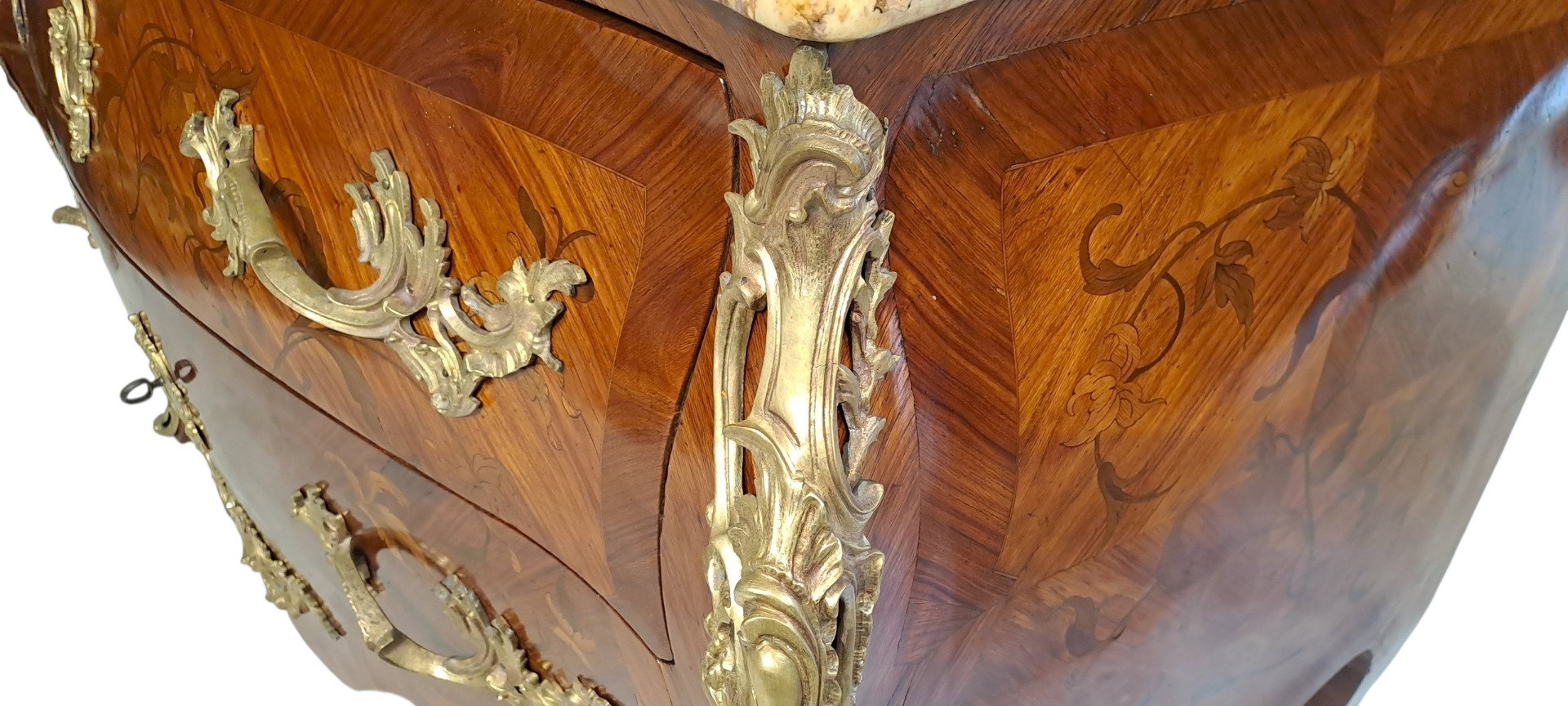
The Floral Decorations: The front and sides feature exquisite marquetry with floral and vegetal motifs (vines, leaves, and buds) made from exotic and dyed fruitwoods, executed with exceptional pictorial precision.
The Marble Top: The furniture is crowned with an original, thick, shaped marble top, characterized by a "bullnose" edge that faithfully follows the furniture's sinuous perimeter. This is a precious Broccatello di Spagna marble, renowned for its violet, red, and yellow hues.
4. Gilded Bronze Applications
The high quality of the object is evident in the richness of the finely chased gilded bronze castings:
Important leafy sabots on the feet.
Lush corner mounts (chutes) that run along the uprights and accentuate the furniture's sinuous line.
Handles shaped as large asymmetrical rococo volutes and imposing central escutcheons, perfectly integrated into the marquetry design.
5. Dimensions
127 x 63 cm, height 85 cm
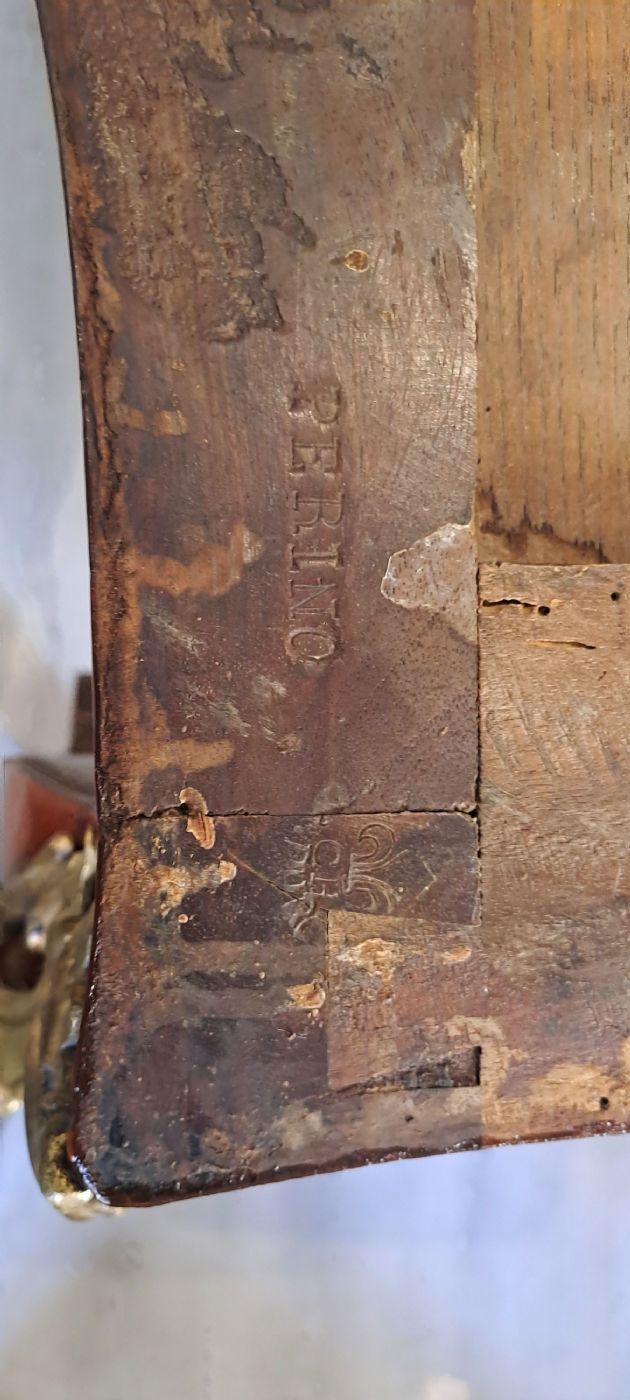
Analysis of the Stamping: "PERINO" and the Fleur-de-lis
The photo of the lower part of the frame (beneath the marble) reveals two fundamental elements for the authenticity and history of the piece:
The word "PERINO" cold-stamped into the wood: In the 19th century, particularly during the Napoleon III period, the practice of signing furniture experienced a strong revival, linked both to the proud tradition of 18th-century guilds and to the need to protect the creations of major Parisian and Turin ateliers from imitations. The Perino family (or individual cabinetmaker) belongs to that select circle of master cabinetmakers active in the second half of the 19th century. In particular, the surname is strongly associated with high-quality cabinetmaking in the pre-Alpine/Piedmontese region (Turin) or with the flow of Italian artisans working in close conjunction with the models of Parisian masters.
The Fleur-de-lis Mark with letters (CH...): Beneath the surname, a hot stamp or marking bearing a stylized fleur-de-lis alongside letters (which appear to include "CH") can be seen. This type of punch generally indicates a mark of origin or inventory: it could refer to a ducal/royal manufactory, an art exhibition of the period, or the control of a specific authorized guild/workshop that certified the quality of materials, particularly the bronzes or the finished artwork.
Note of Value: The presence of a clear and legible stamping like this dramatically increases the object's collector value. This is not a mass-produced item from the late 19th century, but the excellent work of a signed cabinetmaking atelier, originally intended for high bourgeoisie or noble clientele of the era.
Condition and Notes
The furniture displays an exceptional patina enhanced by shellac polishing; the marquetry is firmly attached, and the bronzes show the magnificent and warm opacity of antique, non-chemically polished gold. A piece of great presence, embodying the eclectic splendor typical of the French Second Empire.
A regular certificate of authenticity with photos will be issued. We guarantee a response to your emails within 24 hours. REGISTERED WITH THE BOARD OF EXPERTS AND COURT-APPOINTED EXPERTS AT THE COURT OF LA SPEZIA