Venice, 18th century
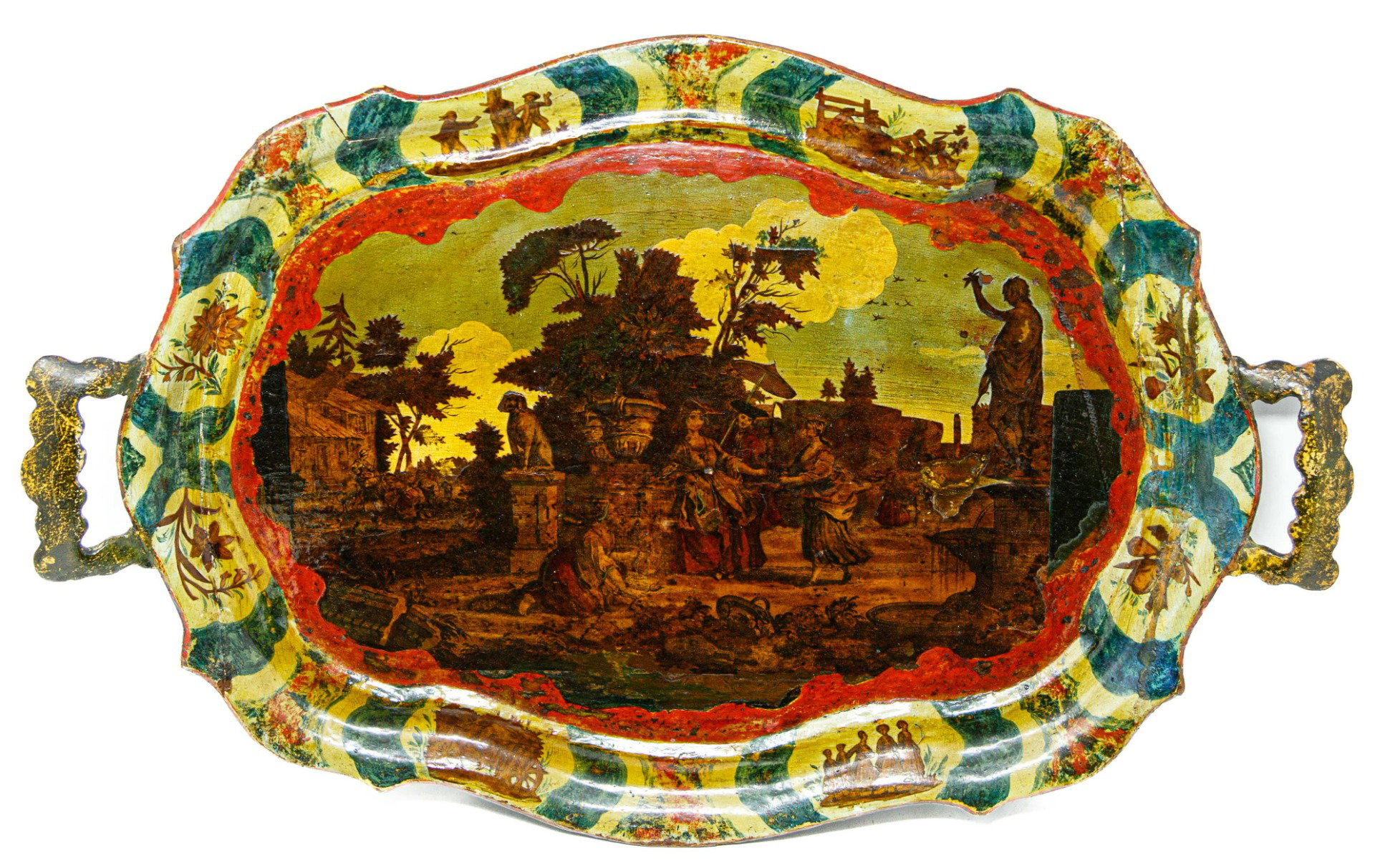
Decorated Tray
Carved, lacquered, and decorated wood, 65 x 36.5 cm
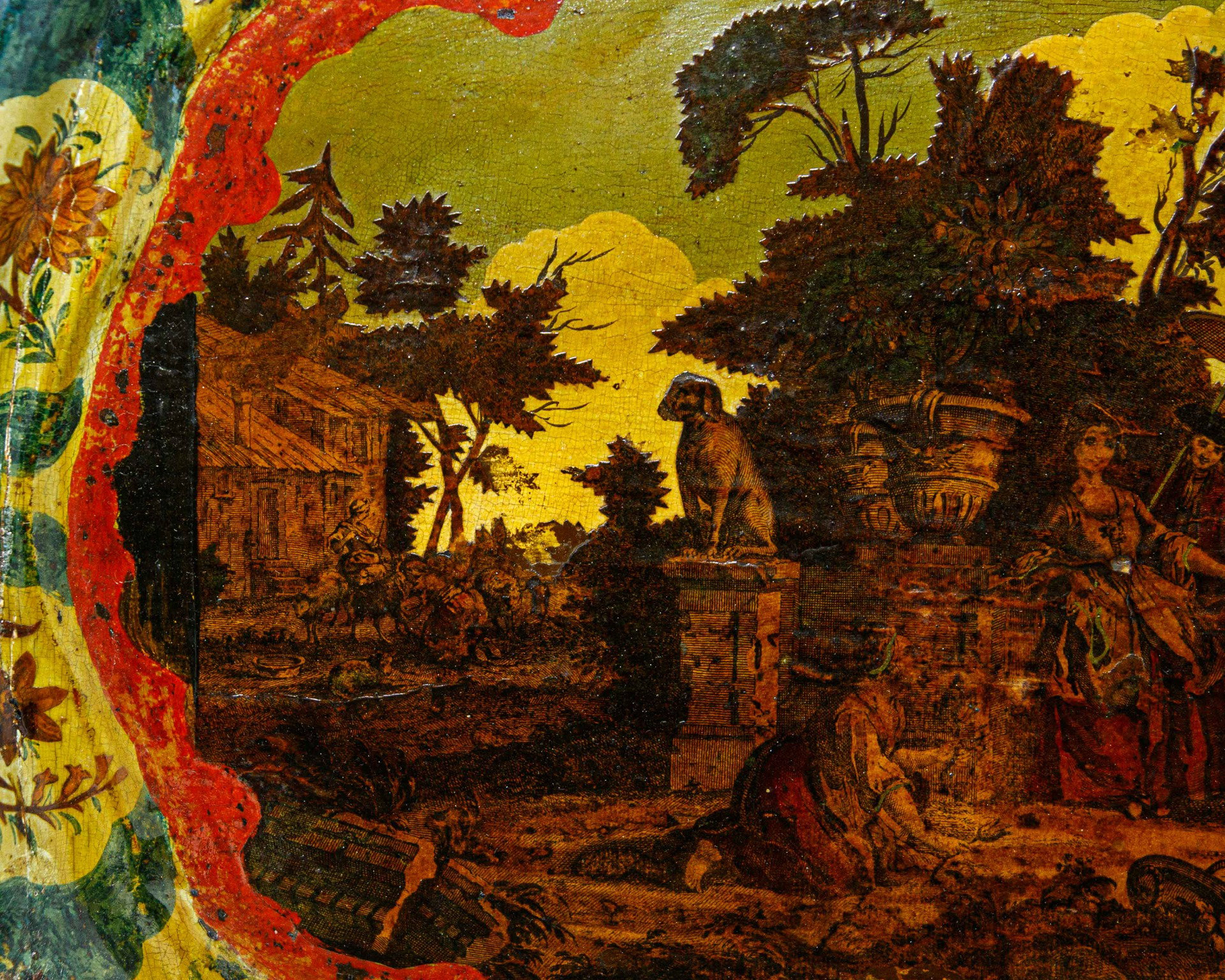
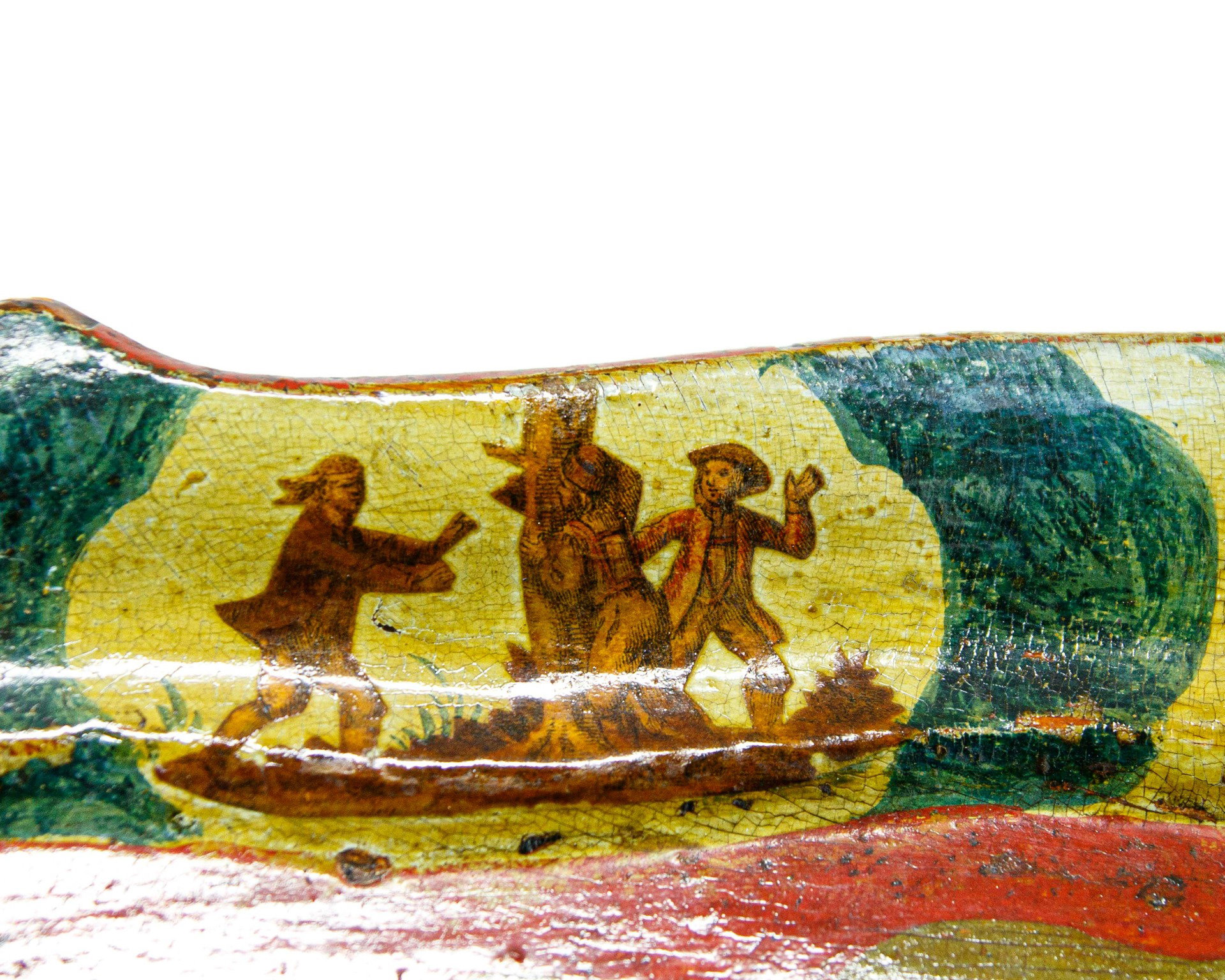
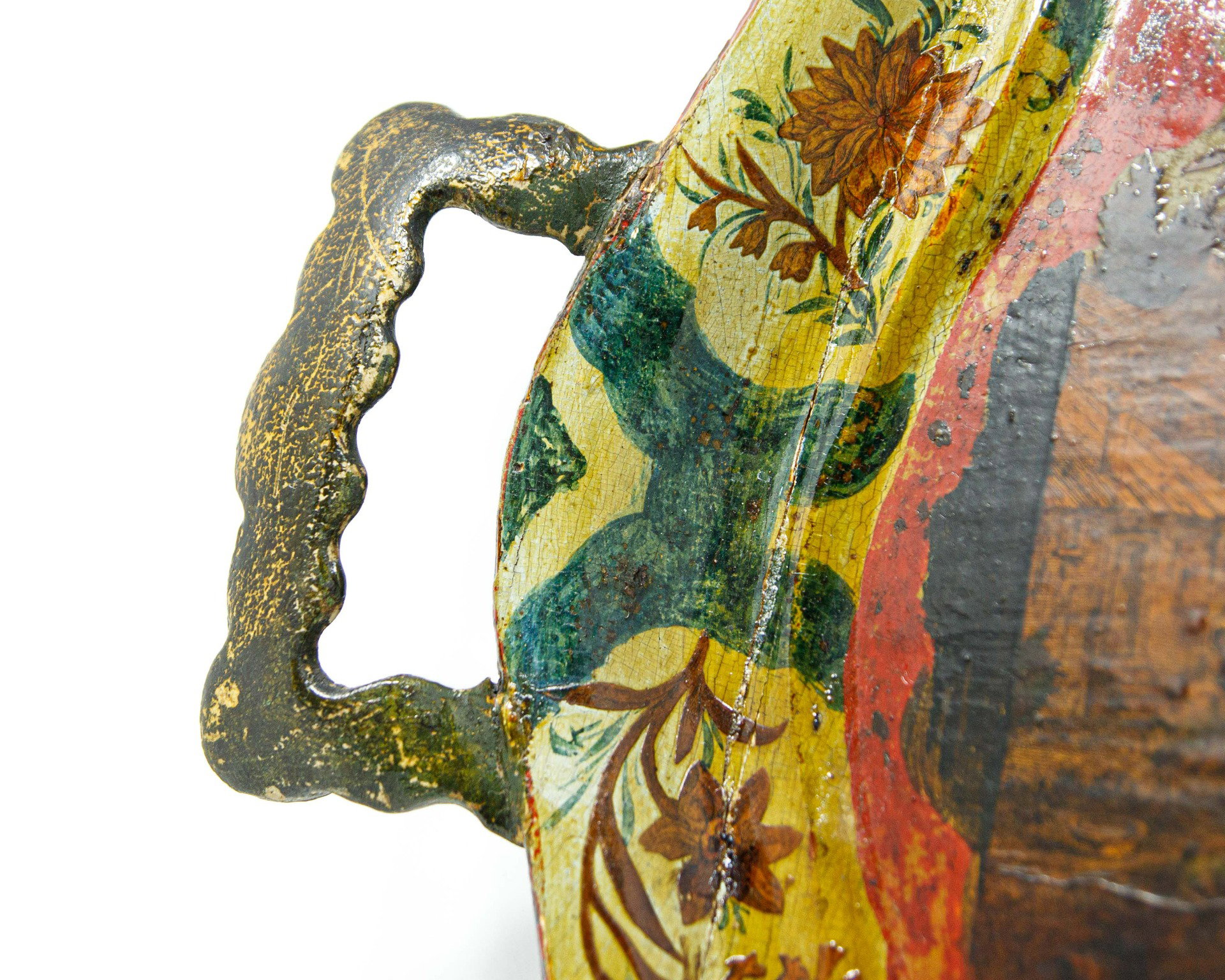
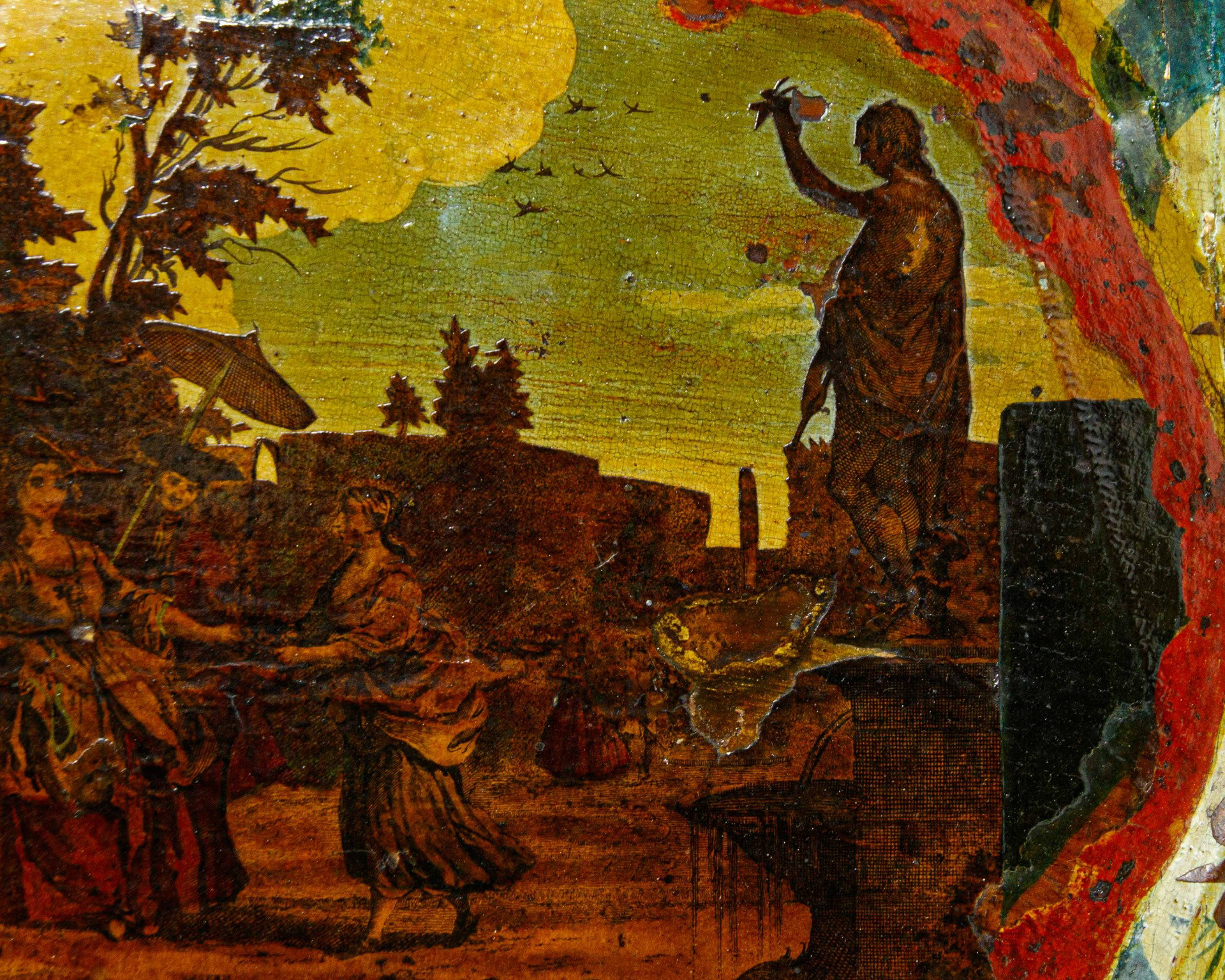
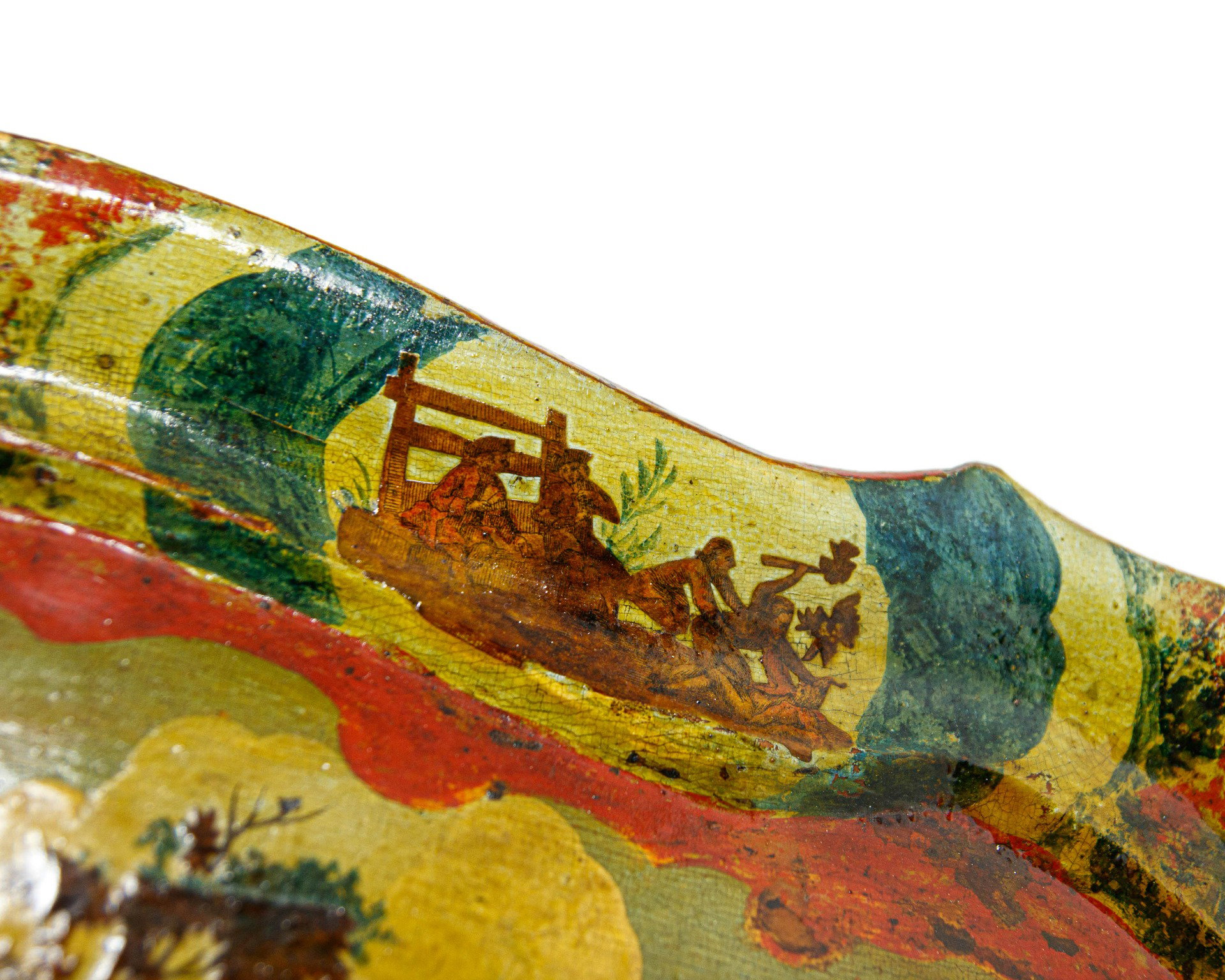
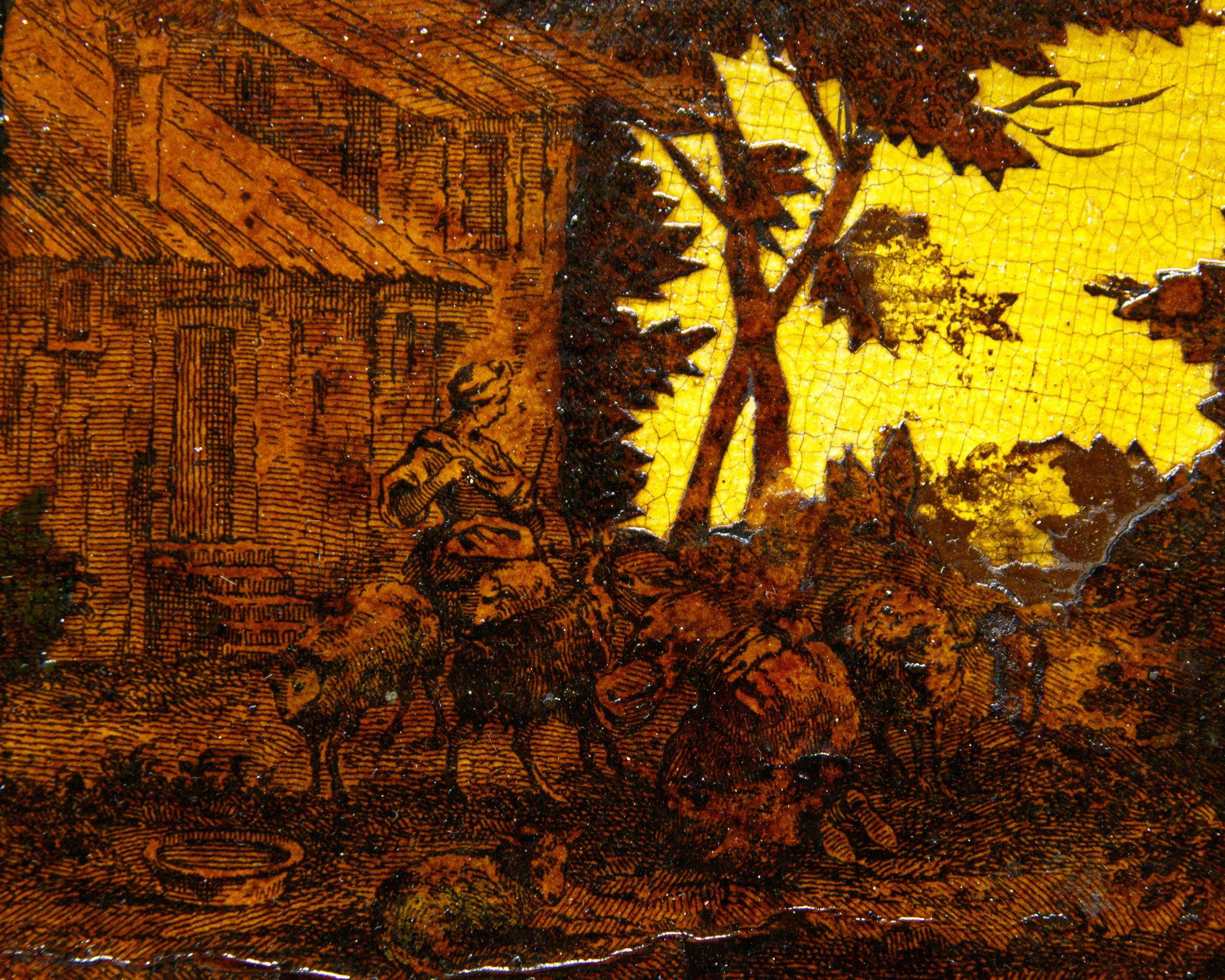
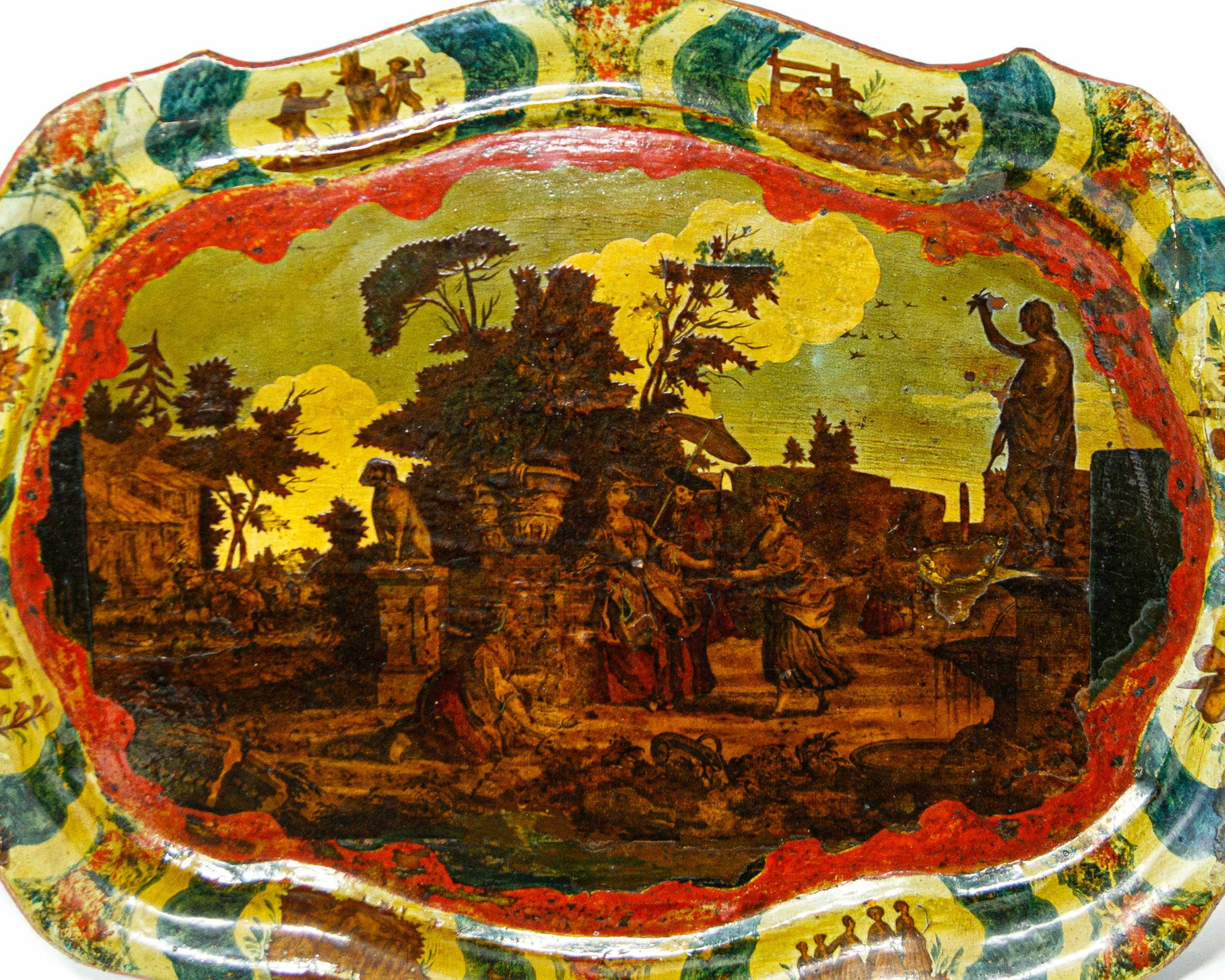
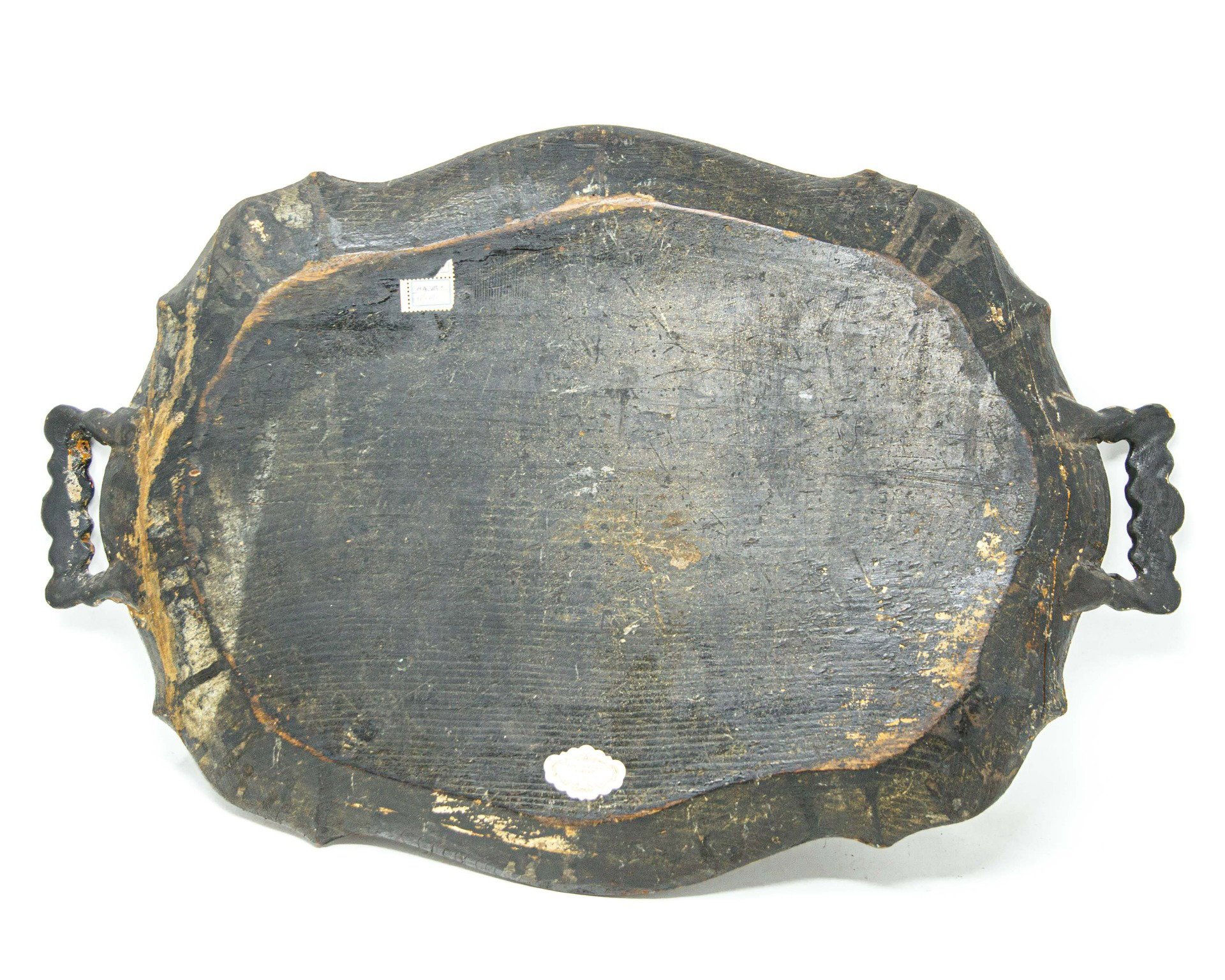
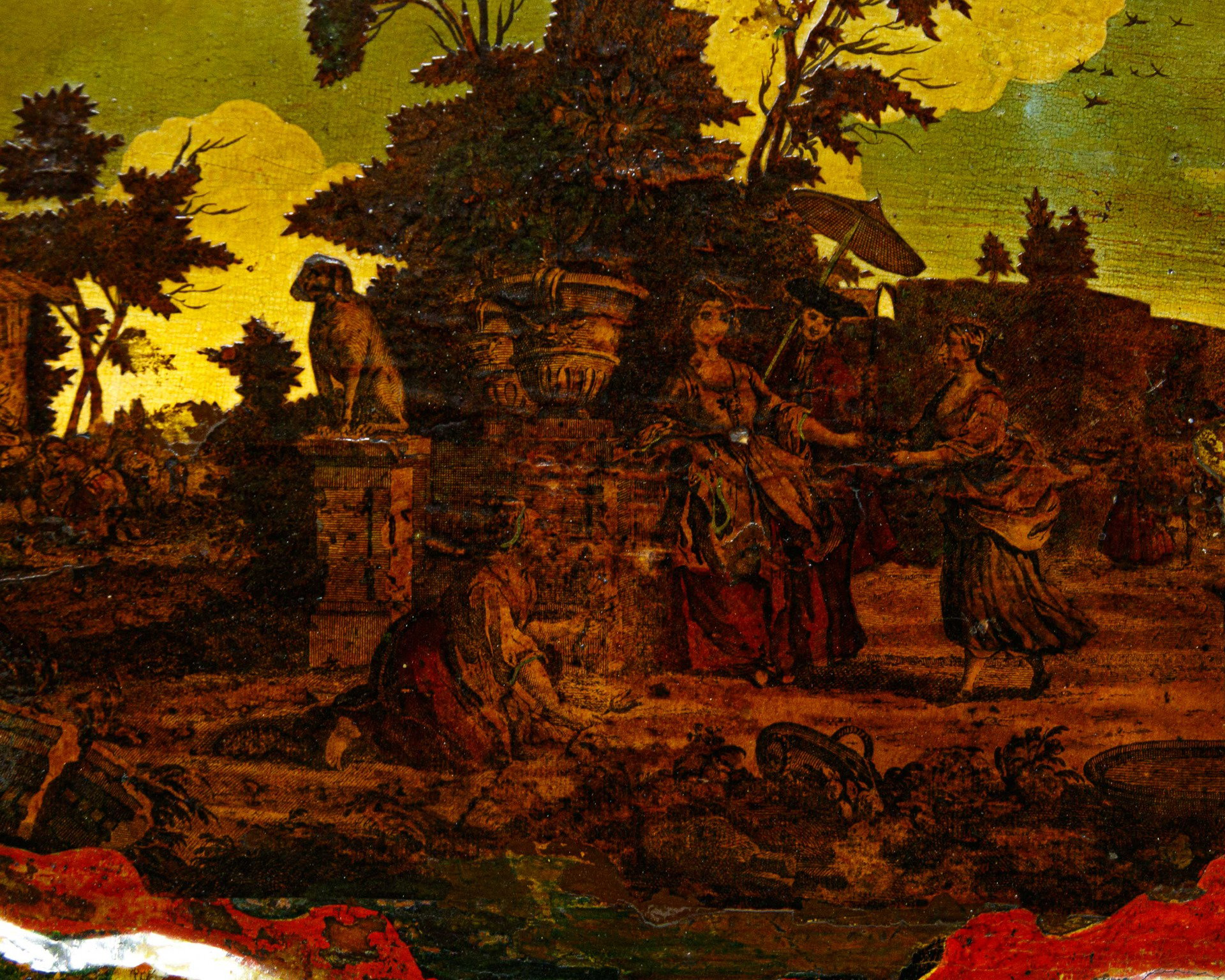
The object features a robust structure with a wavy and undulating edge, typical of 18th-century Venetian production, reflecting the Rococo taste for dynamic and asymmetrical forms. The pictorial decoration covers the entire surface of the tray, arranged in a central composition of great scenic effect, within a frame of alternating geometric and floral motifs in shades of green, ochre yellow, and carmine red. In the center, against a landscape background rendered with a skillful range of golden browns and dark greens, are narrative scenes of great vivacity. The edges of the tray feature smaller scenes, also figurative and landscape-oriented, set within oval or lobed reserves, completing a decorative program of great richness and complexity. The state of preservation reveals the authenticity and age of the work: the lacquer shows widespread losses and wear, the painted layer exhibits craquelure and abrasions, but the whole retains its extraordinary chromatic and narrative quality. Objects of this kind hold a prominent place in the history of Venetian decorative arts of the eighteenth century. Venice was then one of Europe's main centers for the production of lacquered furniture and objects, partly due to the influence of oriental lacquer that arrived in the lagoon through trade with the East, and partly due to the flourishing of artisan workshops specializing in the so-called "arte povera"—a technique involving the application of cut-out prints directly onto the wooden surface, subsequently veiled by layers of transparent lacquer. This technique, economically accessible compared to direct painting, allowed for refined decorative effects, replicating the figurative repertoire of great painting and engraving on furniture and everyday objects. On the back of the tray, a paper label from the Milanese gallery Alberto and Michele Subert is preserved, a precious testament to its provenance from the Lombard antique market and a useful clue for reconstructing the work's collecting history.