Nazzareno Sidoli (Rossoreggio (PC), July 19, 1879 – Piacenza, January 21, 1969)
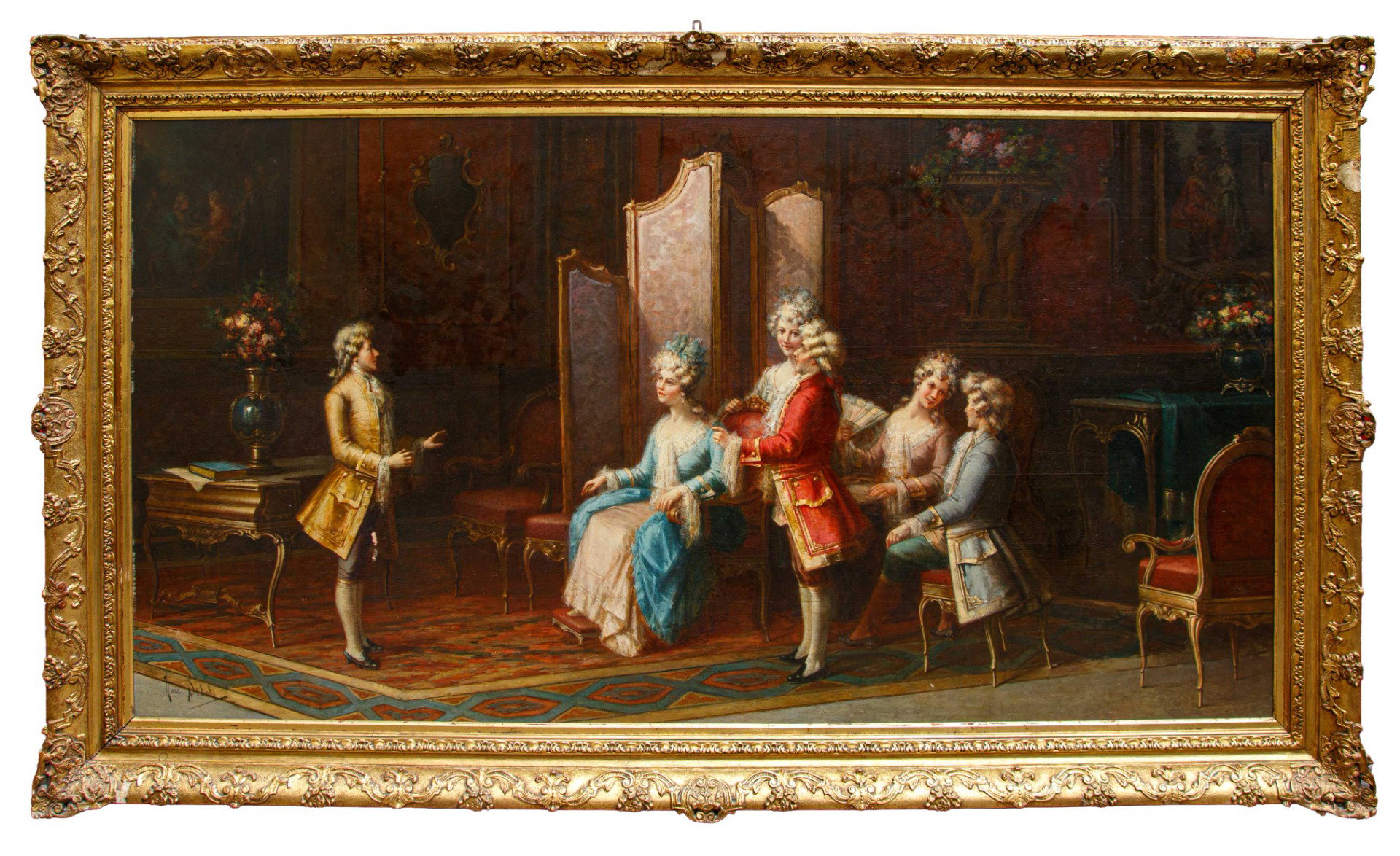
Performing in the Rococo Salon
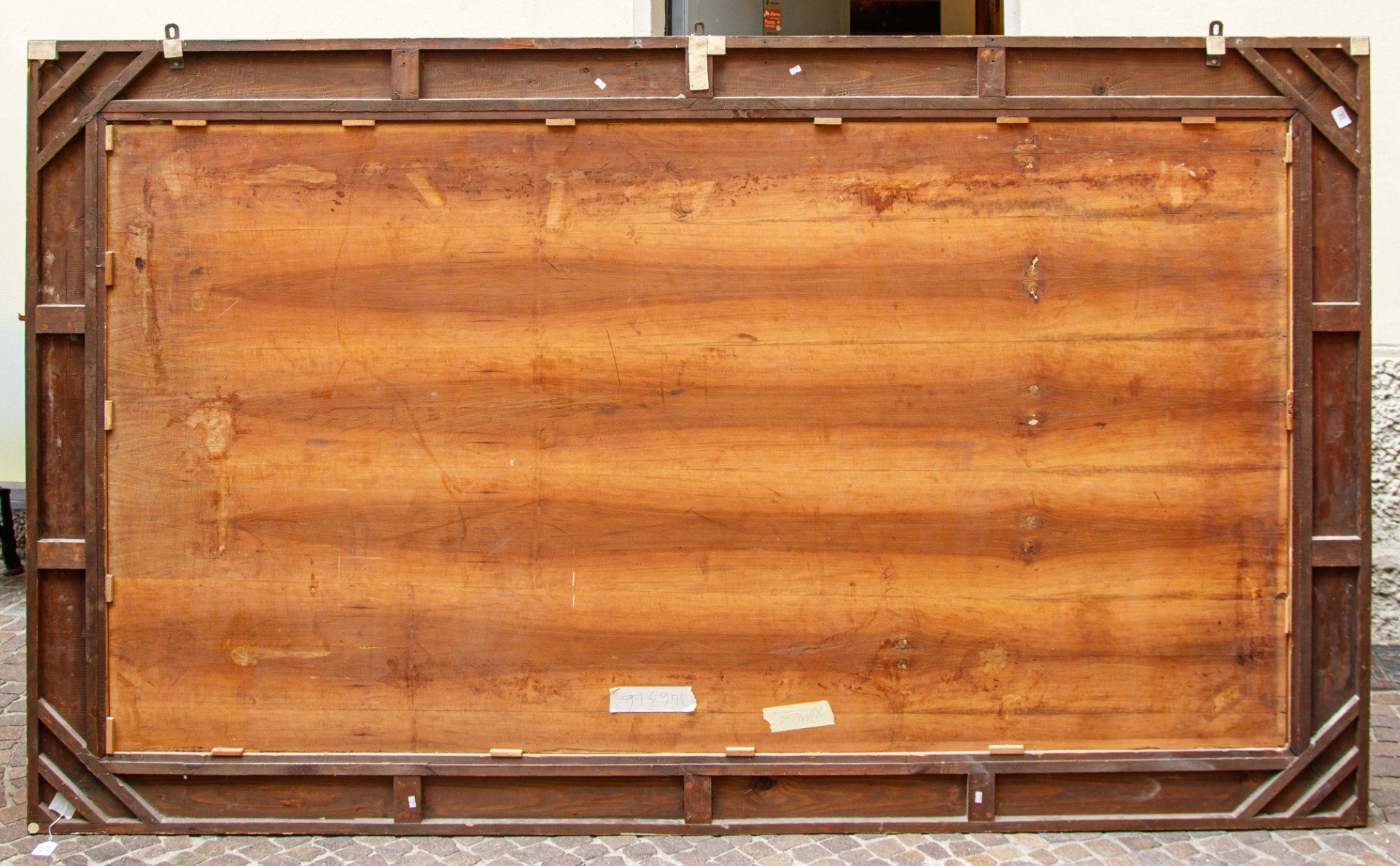
Oil on canvas, 127 x 234 cm – with frame, 158 x 267 cm
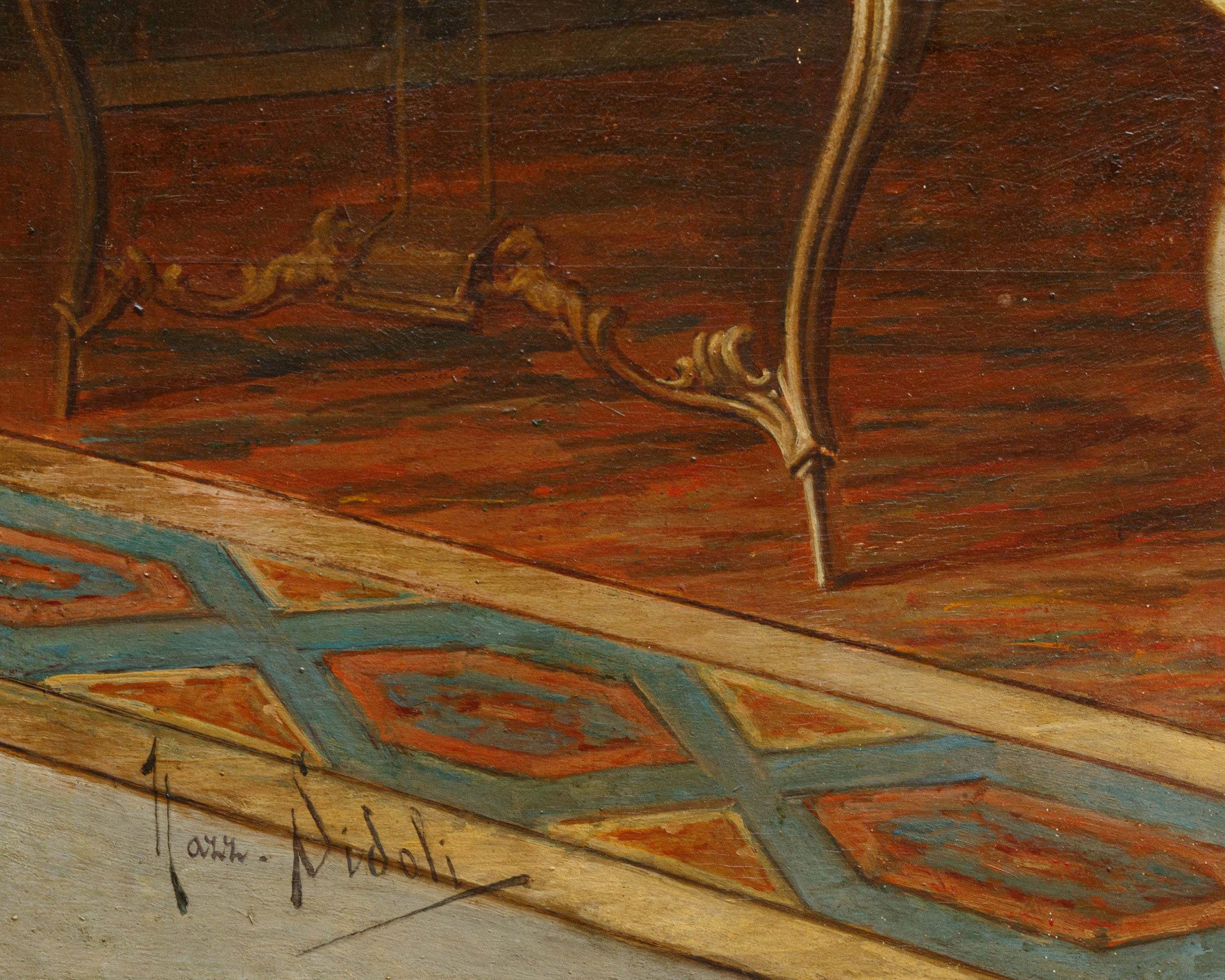
Signed lower left Nazz. Sidoli
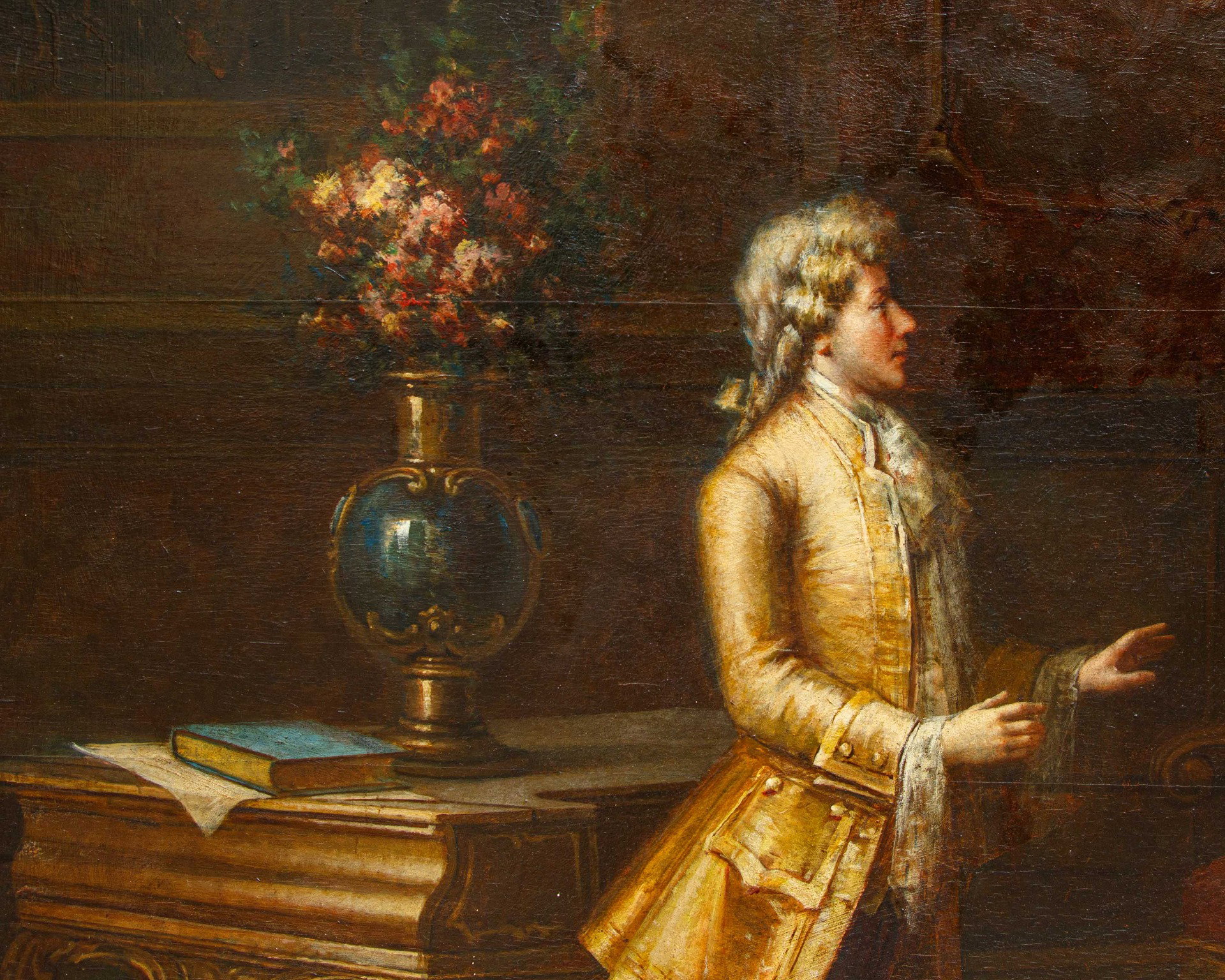
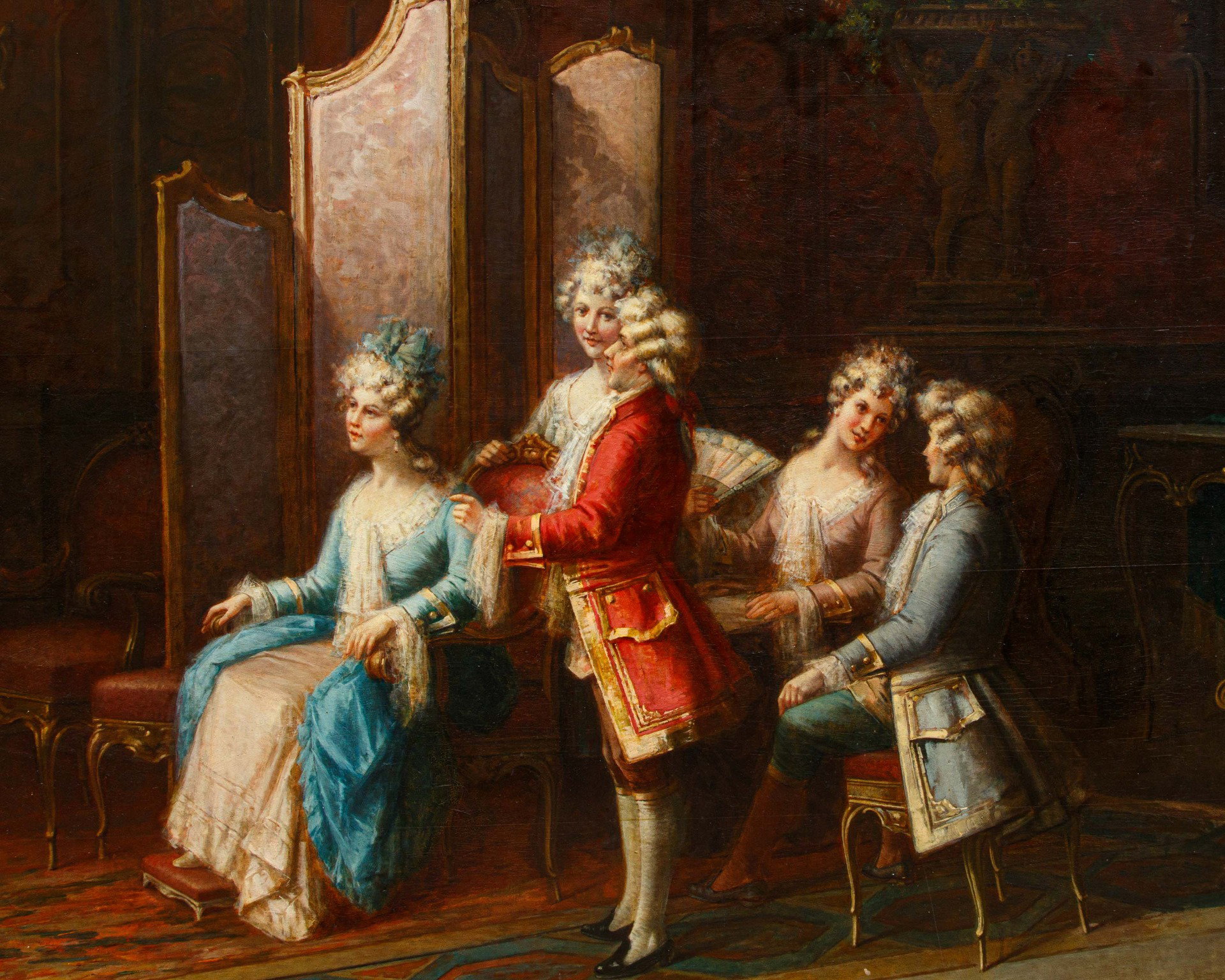
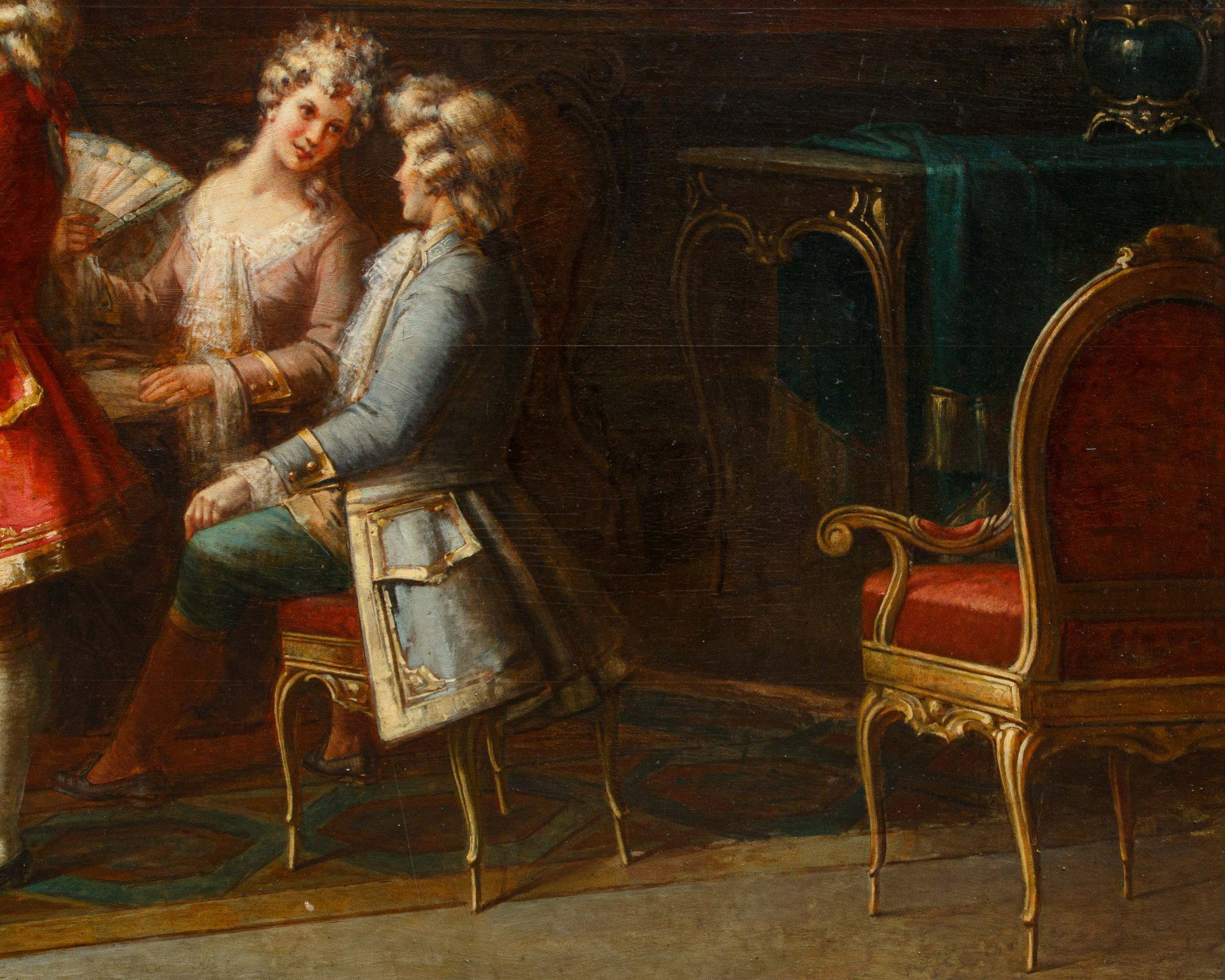
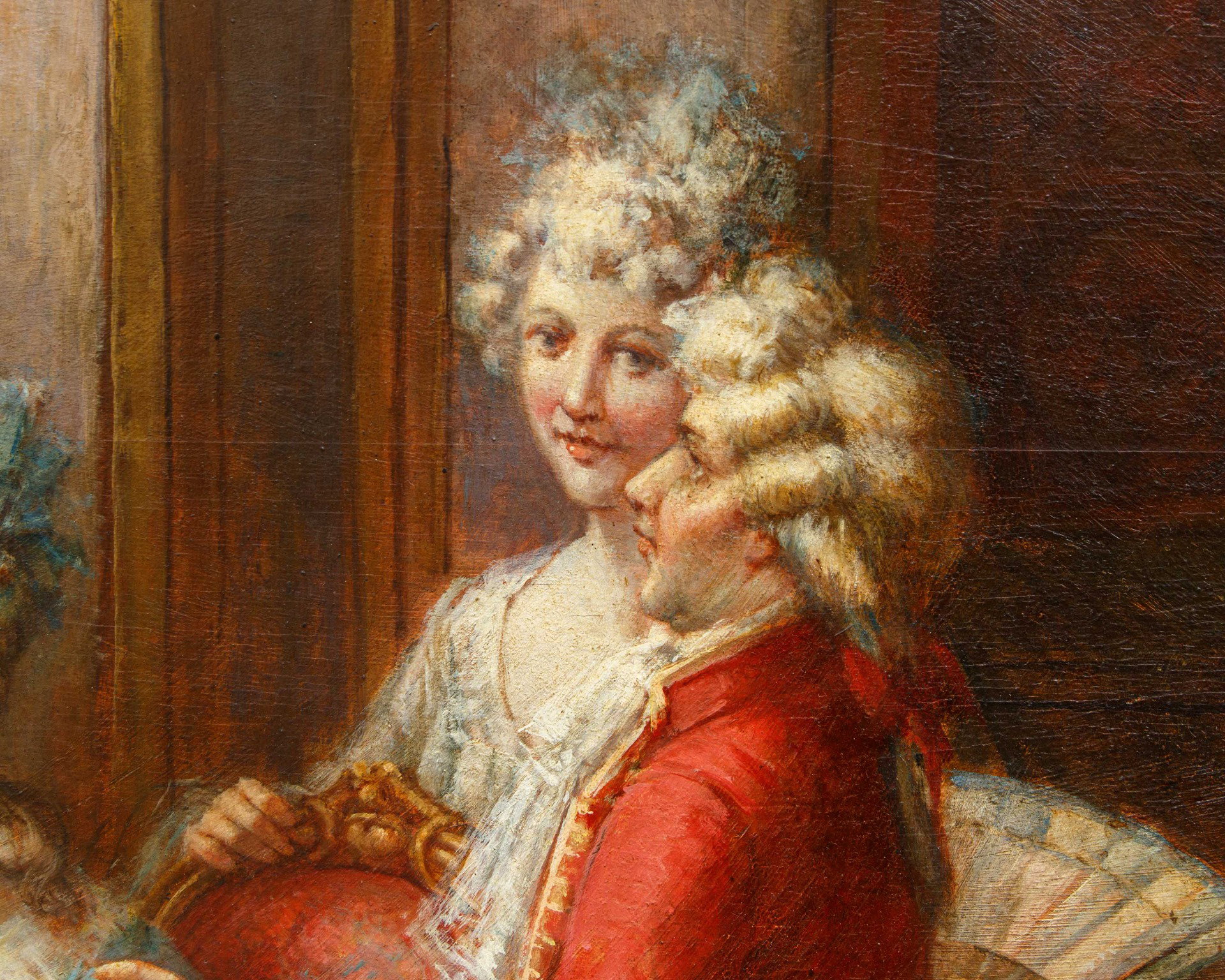
The oil painting on canvas presented here depicts a scene of gallant conversation set in an aristocratic interior of 18th-century taste, a genre in which Nazzareno Sidoli demonstrated excellent technical mastery and a marked narrative sensibility. In the center of the composition sits a young lady clad in a light blue and pink silk dress with a lace décolleté and cuffs, her hair styled in an elaborate 18th-century wig adorned with a blue ribbon. To the right, seated on gilded chairs in the Louis XV style, are two other figures, also in light silk attire with powdered wigs; one holds an open fan, the other observes the scene. The furnishings of the room precisely define the noble tone of the setting. In the background, a pink screen serves as a backdrop to the scene.
Nazzareno Sidoli was born on July 19, 1879, in Rossoreggio, a small village in the Piacenza Apennines, to Luigi and Elisabetta Repetti. He was the second of three brothers, all destined for the arts: the eldest, Pacifico, would become an acclaimed international portraitist and landscape artist, and the youngest, Giuseppe, the first director of the Galleria d'Arte Moderna Ricci Oddi in Piacenza. Having shown an early aptitude for drawing, Nazzareno enrolled at the Gazzola Institute of Art in Piacenza in 1894, where he was a student first of the elder Bernardino Pollinari and then of Stefano Bruzzi. He completed his academic training at the Academies of Milan and Parma, where in 1900 one of his paintings was accepted for the Triennale. Two long stays in Paris, before and after World War I, were fundamental to his development. He stayed with his brother Pacifico, who enjoyed high esteem from critics and the market in the French capital. In Paris, he exhibited at the Salons and delved into the miniaturist techniques of 17th-century Dutch masters, as well as the innovations of Ernest Meissonier, whose influence he deeply felt in his historical costume genre scenes. The painting under consideration fits into the genre of 18th-century costume painting, which was highly popular among the European bourgeoisie and high society from the late 19th to the early decades of the 20th century. A direct comparison can be made with Meissonier, the recognized master of this genre: his small genre paintings and interiors, animated by one or more figures, rendered with extraordinary accuracy in physiognomy and pose, possessed remarkable atmospheric qualities and served as an widely imitated model. Similarly, Italian painters like Vittorio Reggianini and Giuseppe Signorini tackled similar subjects. Sidoli shares with these artists the same dedication to meticulous description and the pleasure of historical reconstruction of the environment.
In Sidoli's repertoire, alongside his gallant scenes, are works of diverse inspiration. 'Interior with Figures,' now in a private collection, directly connects to the canvas presented here in its taste for narrative settings, attention to furnishings, and characterization of figures through gestures and costumes. On the religious front, Sidoli, often in collaboration with his brother Giuseppe, created significant decorations for churches in the Piacenza region: the decoration with Angels and the Cross for the church of Rivergaro in the province of Piacenza reveals his ability to move with equal mastery in the devotional register, with monumental figures and a handling of light of academic derivation.
The work presented here thus constitutes a valuable document of the versatility and quality of Nazzareno Sidoli, a painter capable of combining rigorous academic training with the influences of great European genre painting, offering the bourgeois and aristocratic patrons of his time that elegant and nostalgic vision of an idealized 18th century that the market increasingly demanded.