18th-century Trapani sculptor
Saint Rosalia
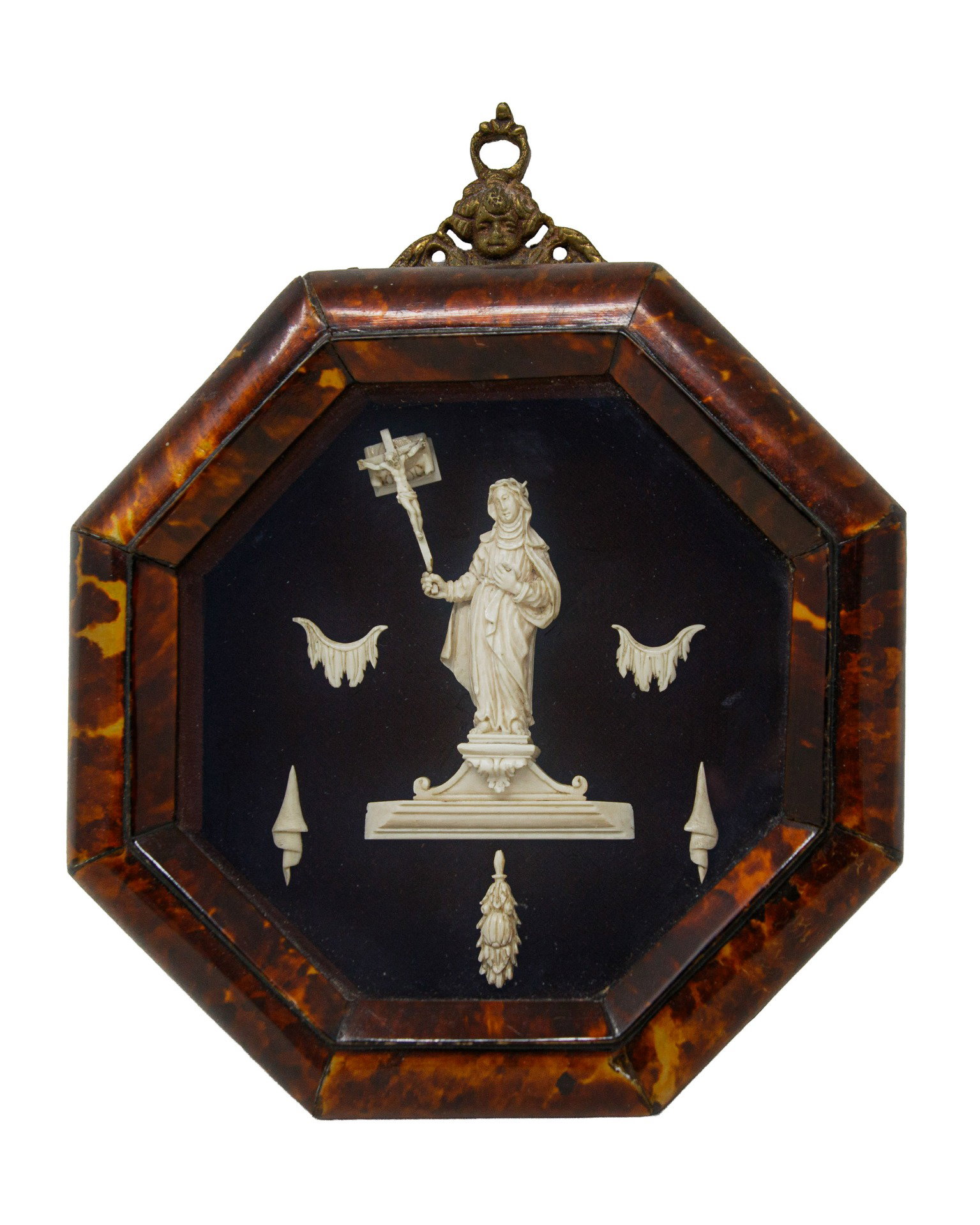
Ivory (tortoiseshell frame), 10 x 7 cm – with frame, 24 x 22 cm
The artwork is accompanied by its CITES certificate.
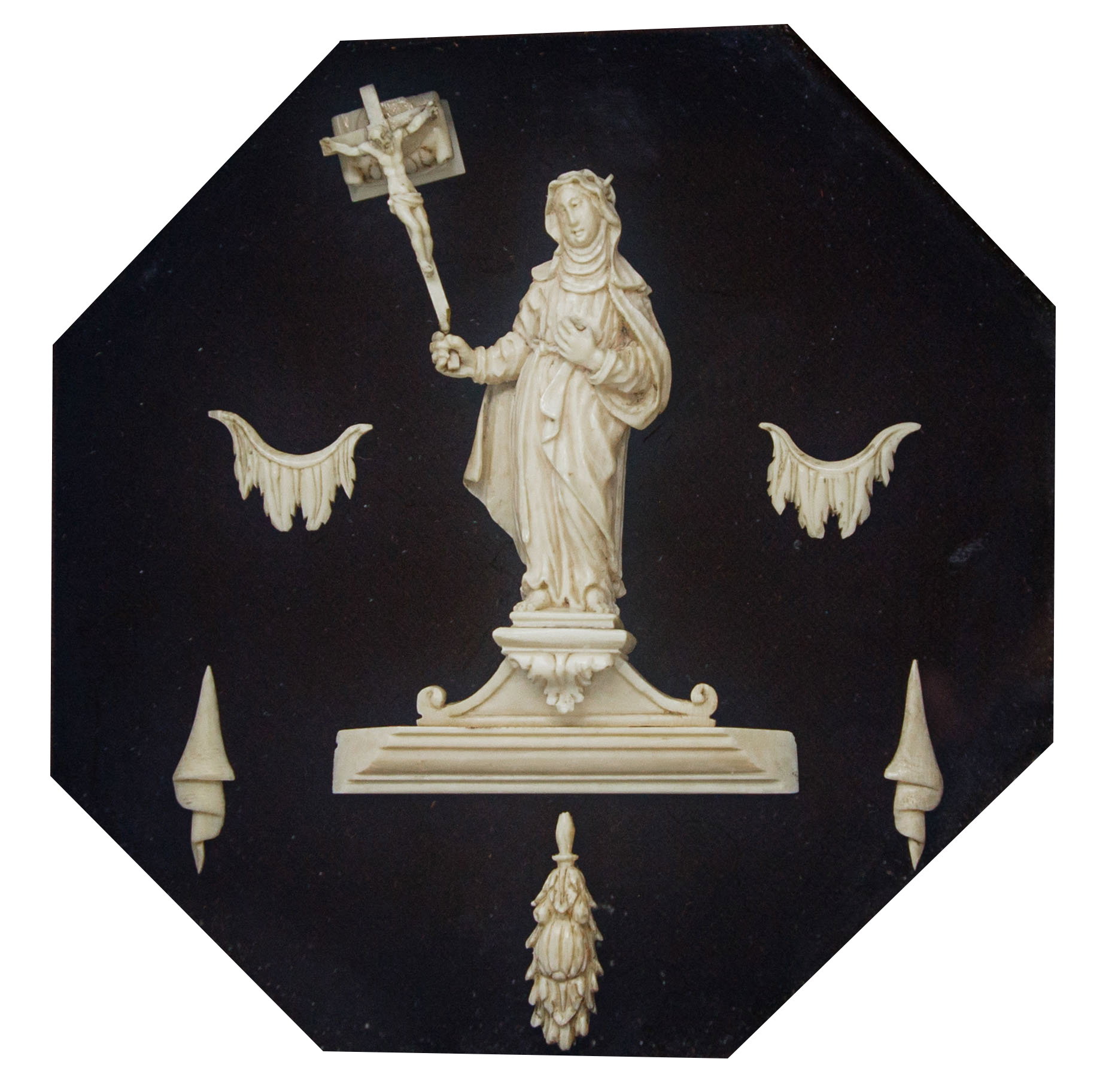
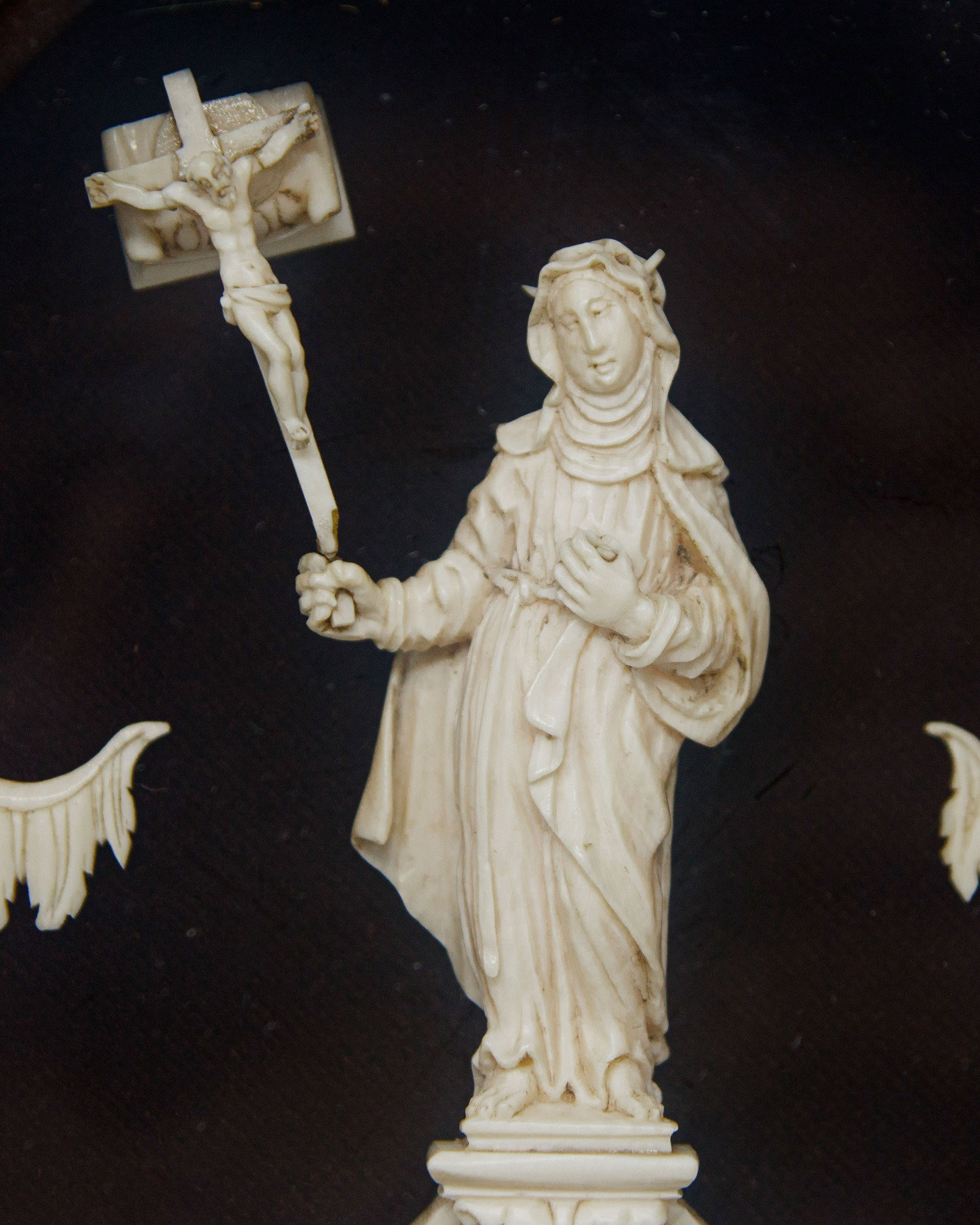
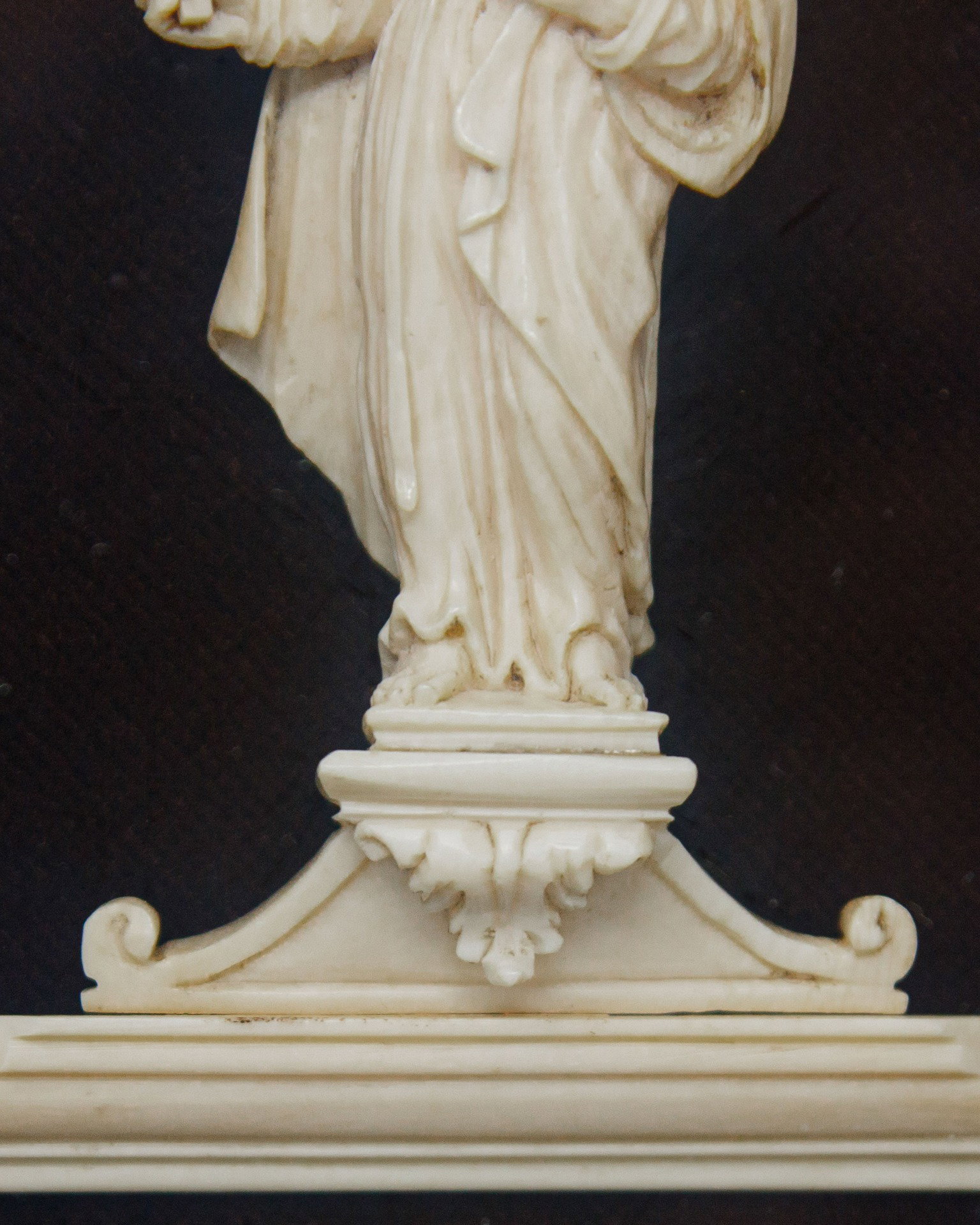
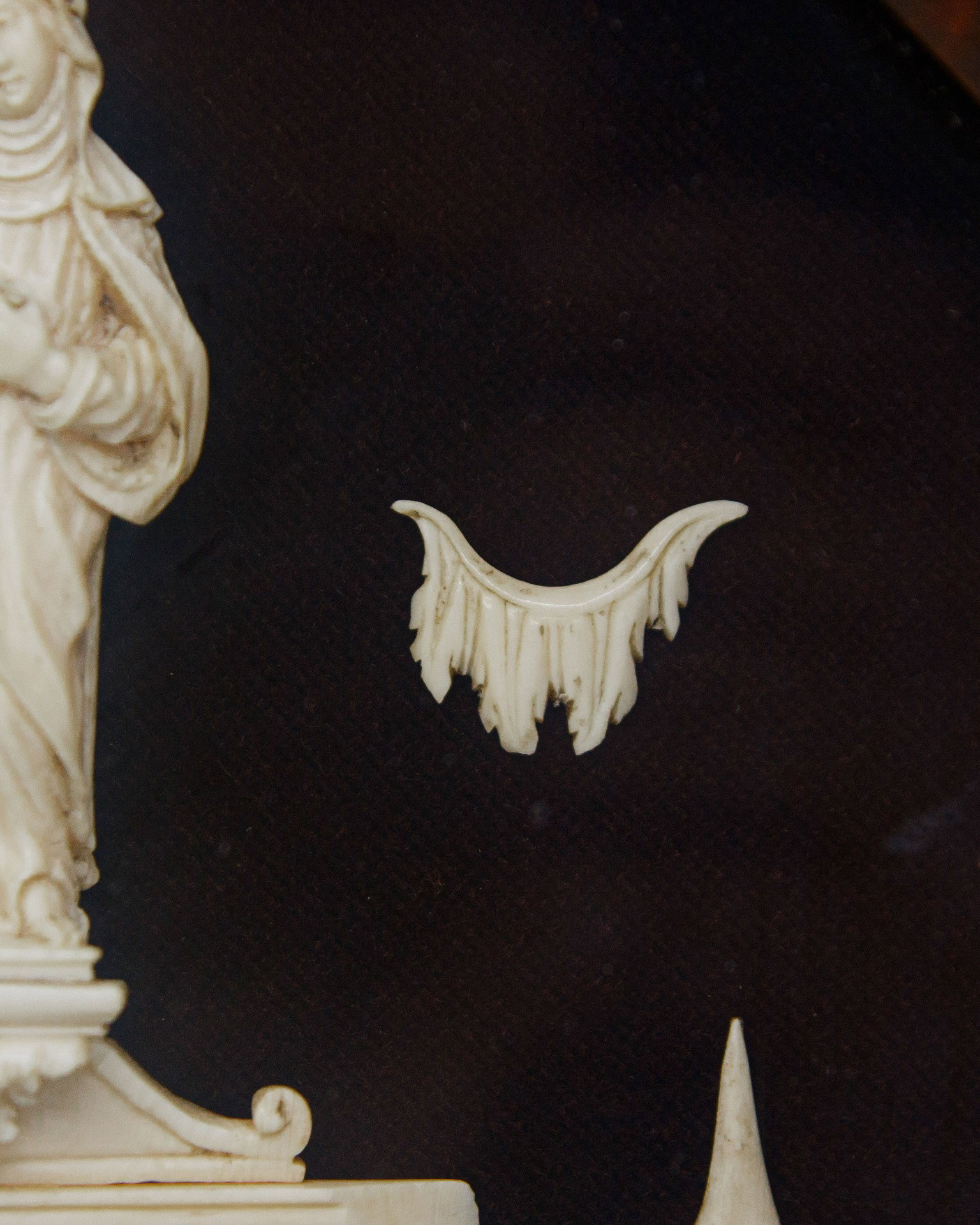
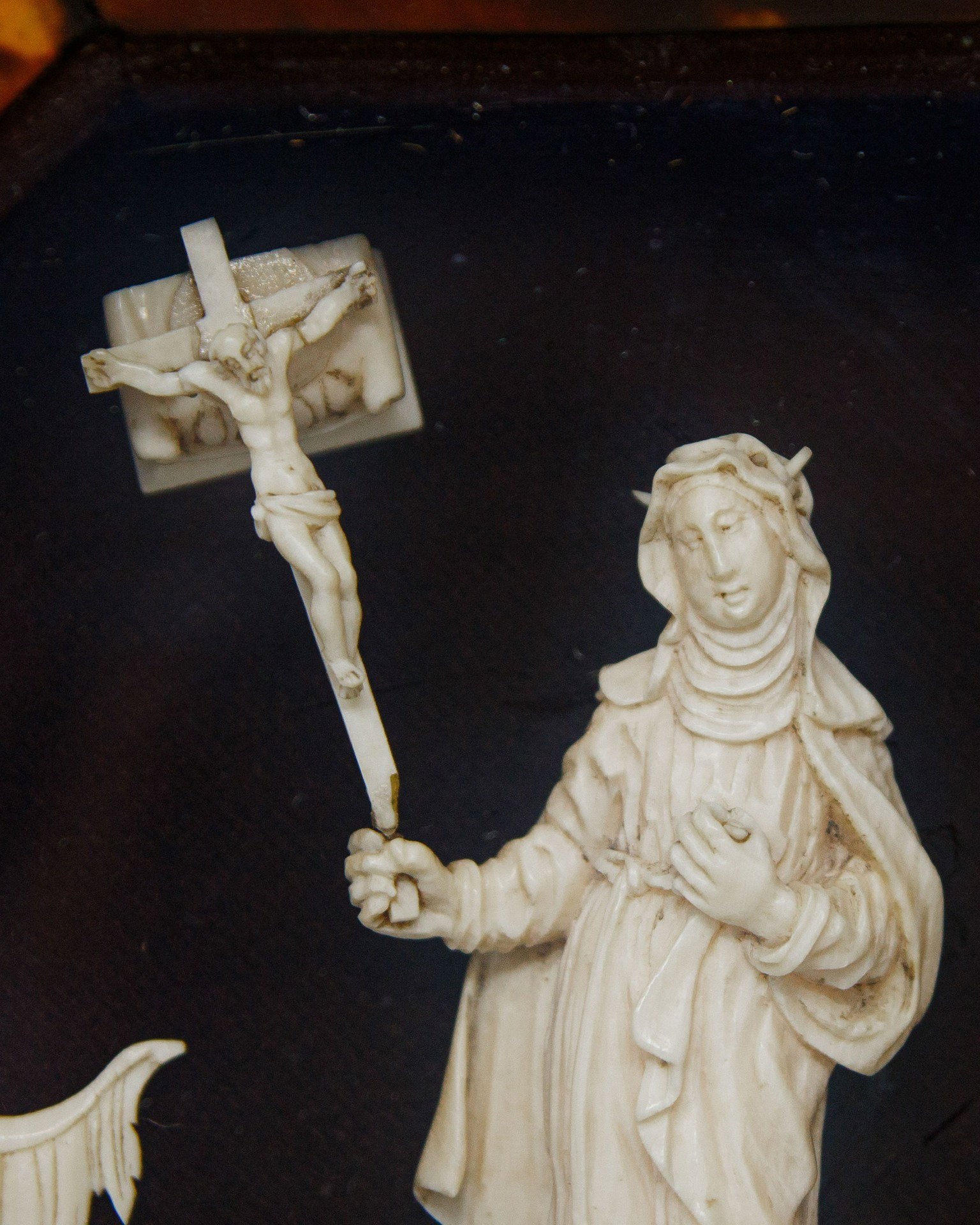
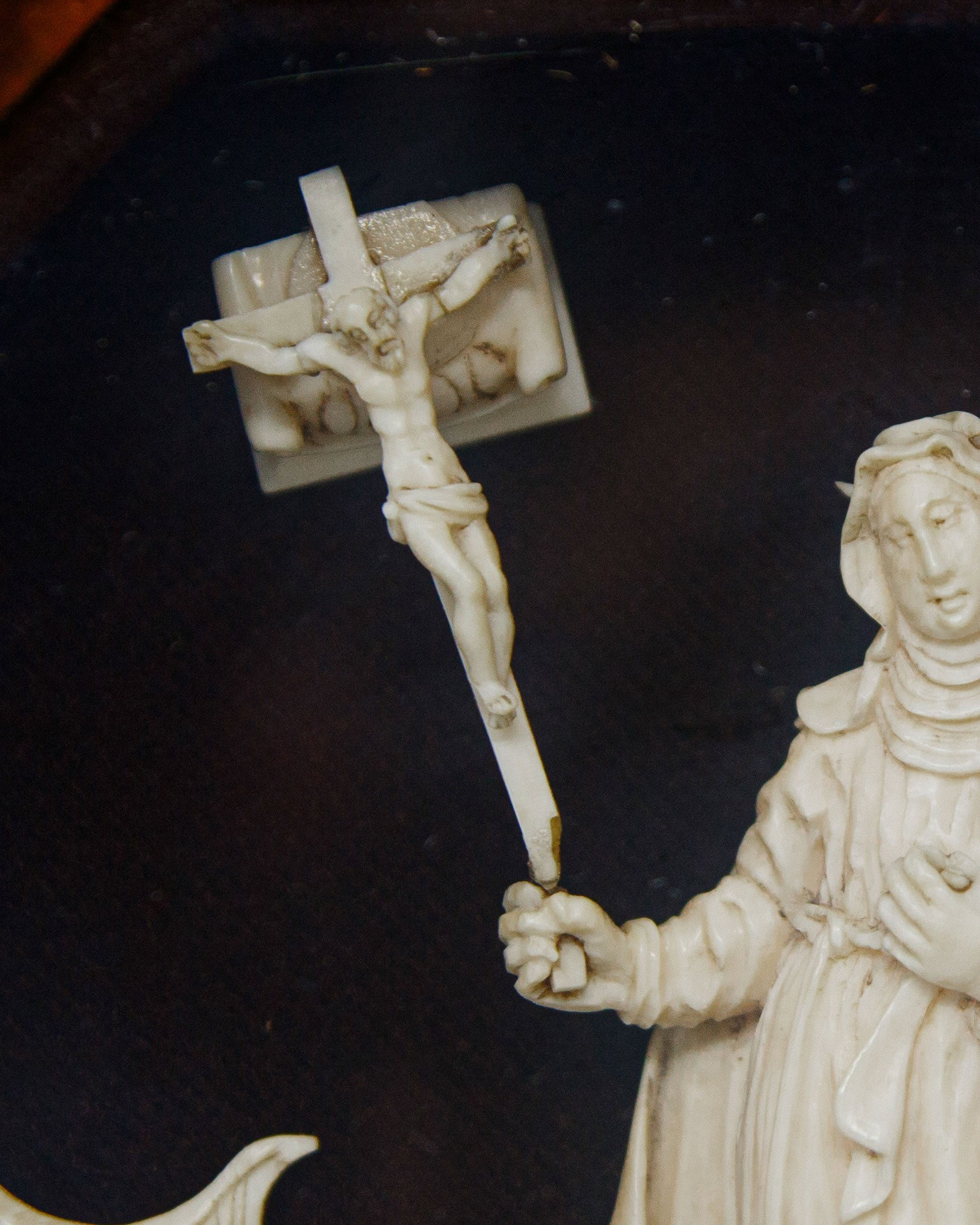
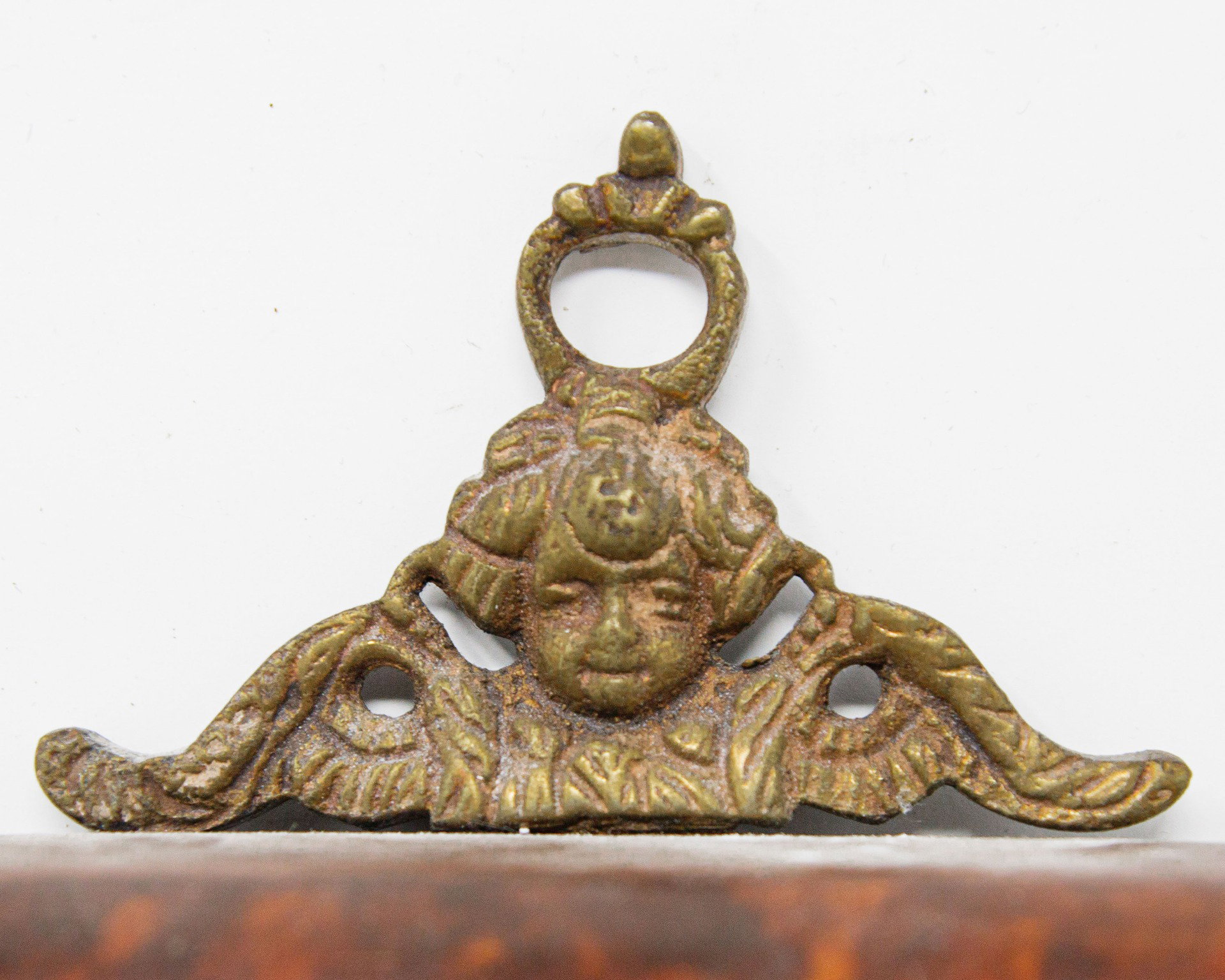
This refined 18th-century bedside devotional object is an emblematic testament to the excellence achieved by Trapani artisans in the art of micro-sculpture and the assembly of precious materials. The piece is enclosed in an octagonal frame covered in fine brown tortoiseshell, whose warm and mottled surface acts as a chromatic threshold to the sacred scene within. The visual contrast is sharp and deliberate: the whiteness of the finely carved ivory stands out against the dark midnight blue fabric background. At the center of the composition stands the figure of Saint Rosalia, patron saint of Palermo and an icon of Sicilian devotion, depicted standing on an elegant classicizing pedestal. The Saint is shown with her head crowned with roses and her gaze fixed on the crucifix she firmly holds in her right hand. The figure is surrounded by a series of accessory ivory elements that, far from being purely decorative, complete the symbolic and scenographic apparatus of the small domestic altar. At the top, on either side of the Saint, two stylized festoons or drapes can be seen, simulating an invisible canopy, ennobling the central figure according to the canons of Baroque staging. The top of the frame is adorned with a gilded crest depicting a winged cherub, which also served as a hook for suspension. In the 18th century, Trapani established itself as one of the most prosperous centers in the Mediterranean for the processing of exotic materials, thanks to its strategic position and its long tradition linked to the fishing and coral industries. Trapani sculptors developed a specialized technique for combining ivory, tortoiseshell, and gilded metals to meet the growing demand for objects for private devotion from the aristocracy and the upper bourgeoisie. These bedside devotional objects were not simple furnishings but spiritual microcosms intended for bedrooms, where the preciousness of the materials underscored the importance of domestic worship. The ability to carve ivory with millimeter precision allowed for the translation of grand Baroque statuary models into pocket-sized dimensions, making these artifacts masterpieces of artistic craftsmanship sought after throughout Europe and today preserved as rarities in museum and antique collections.