Refined Antique Alabaster Sculpture signed Pugi – Young Embroiderer – Early 20th Century
Object Description
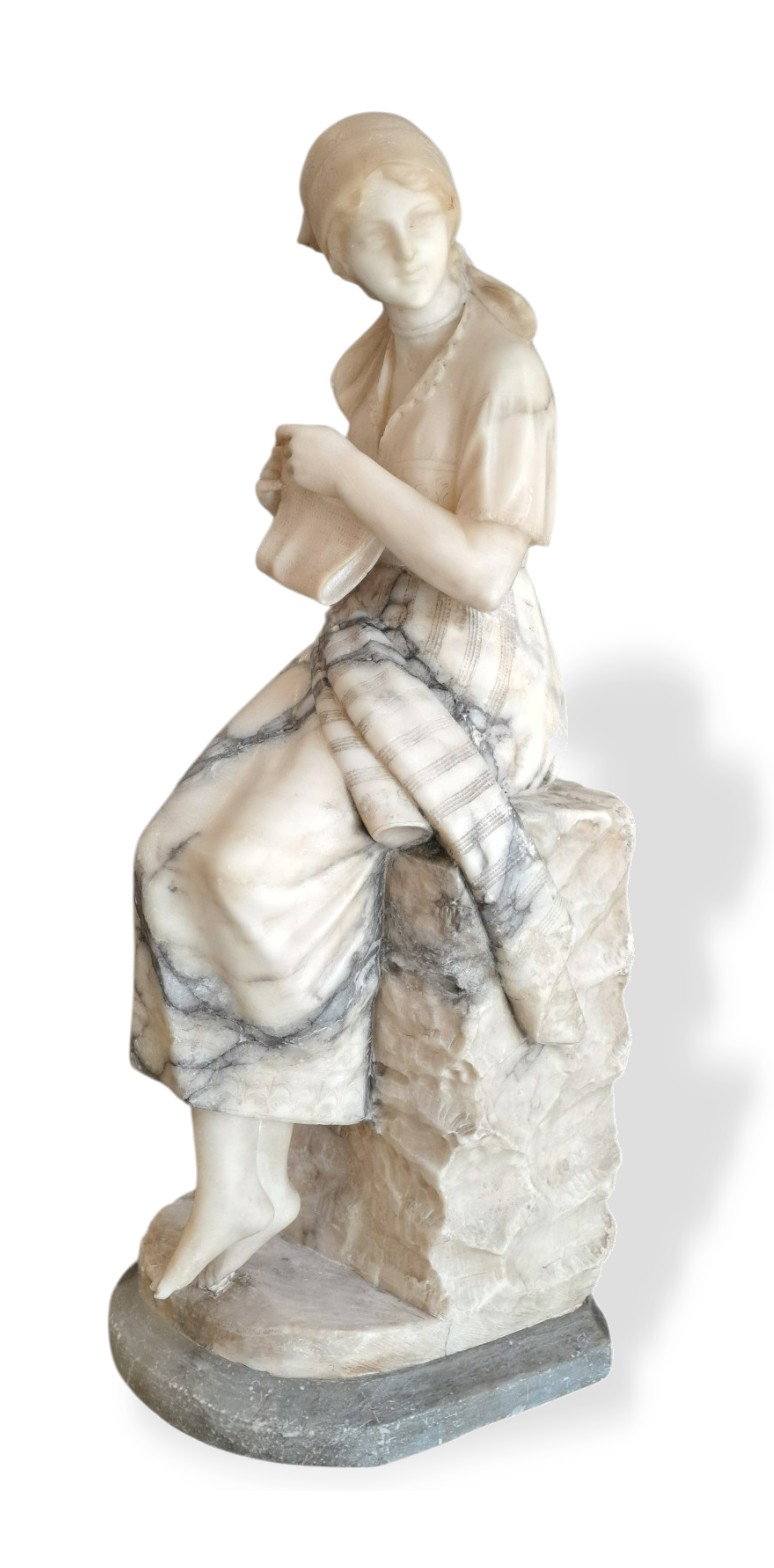
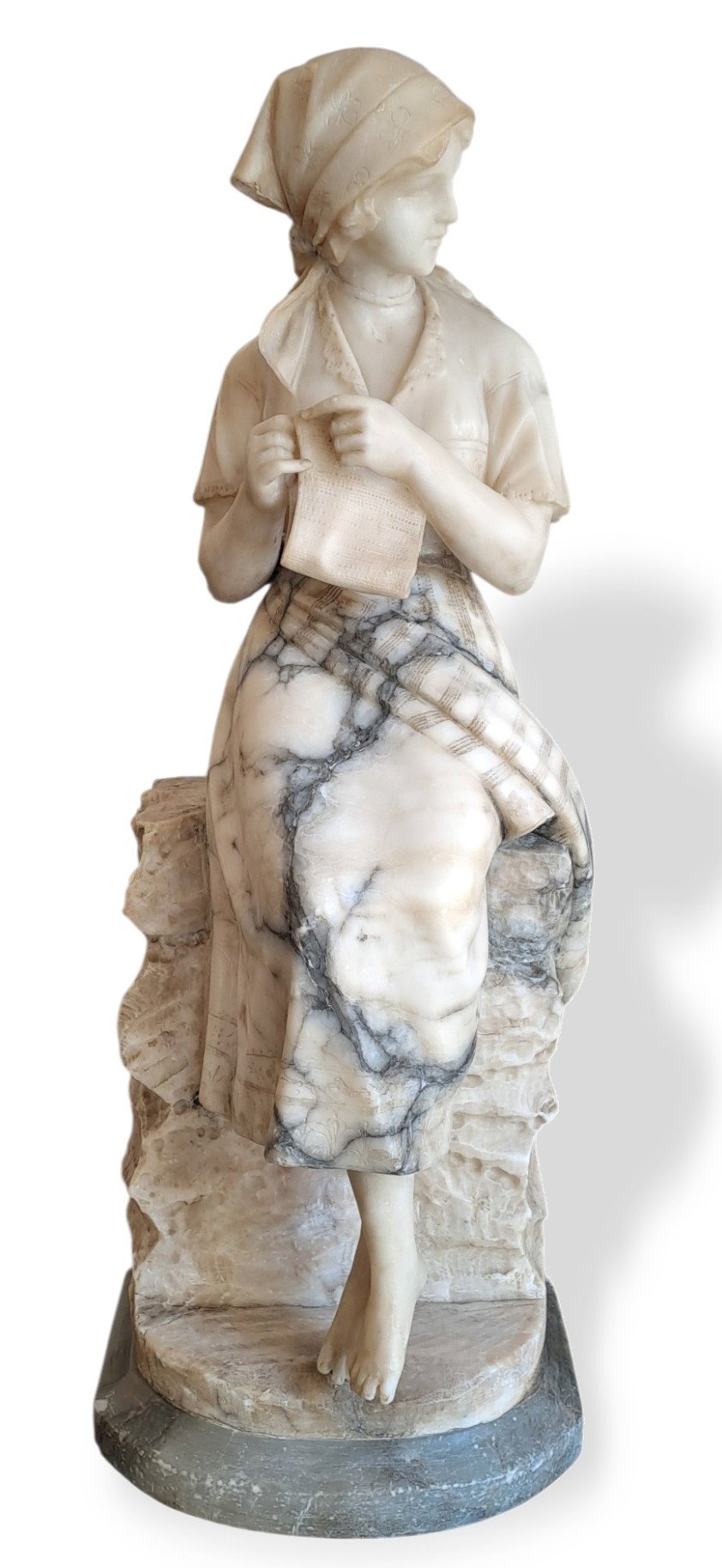
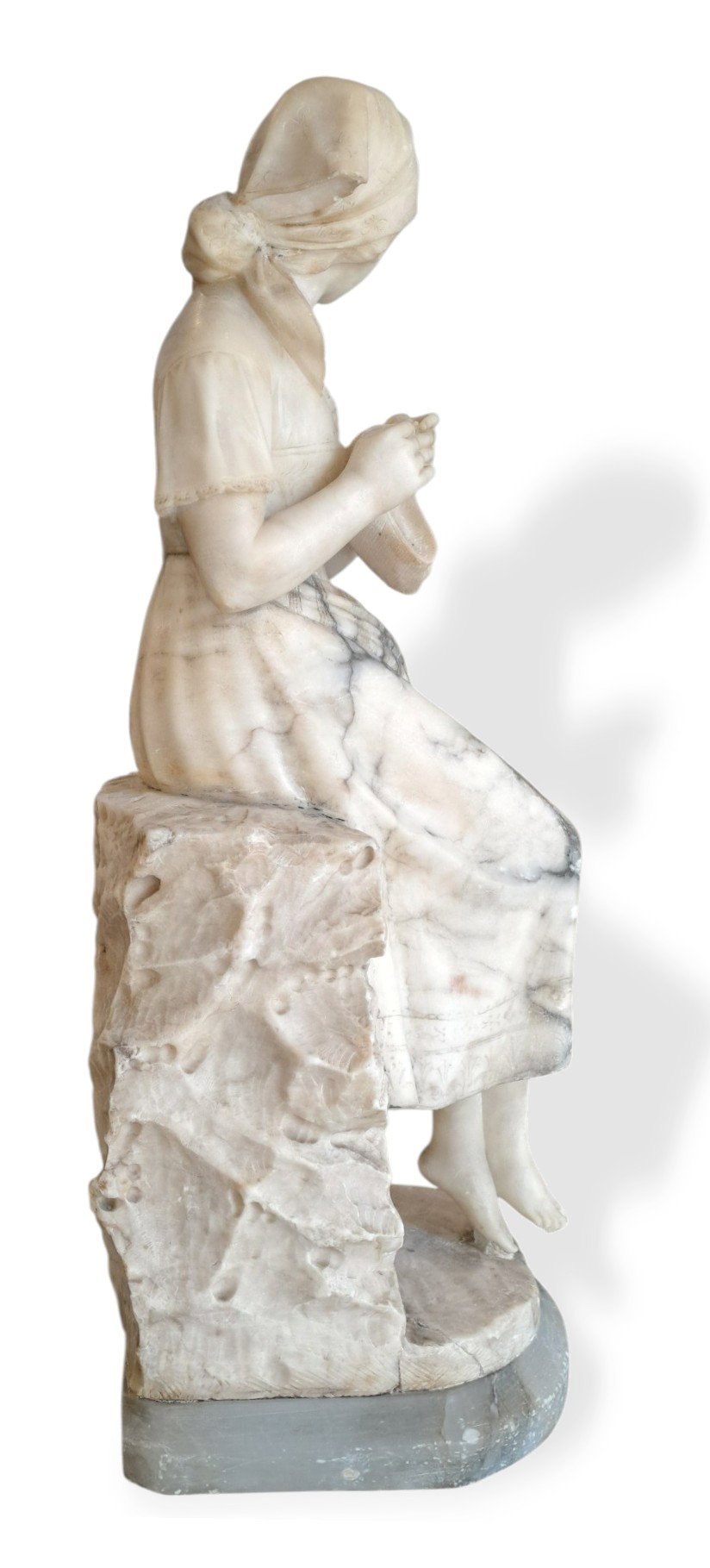
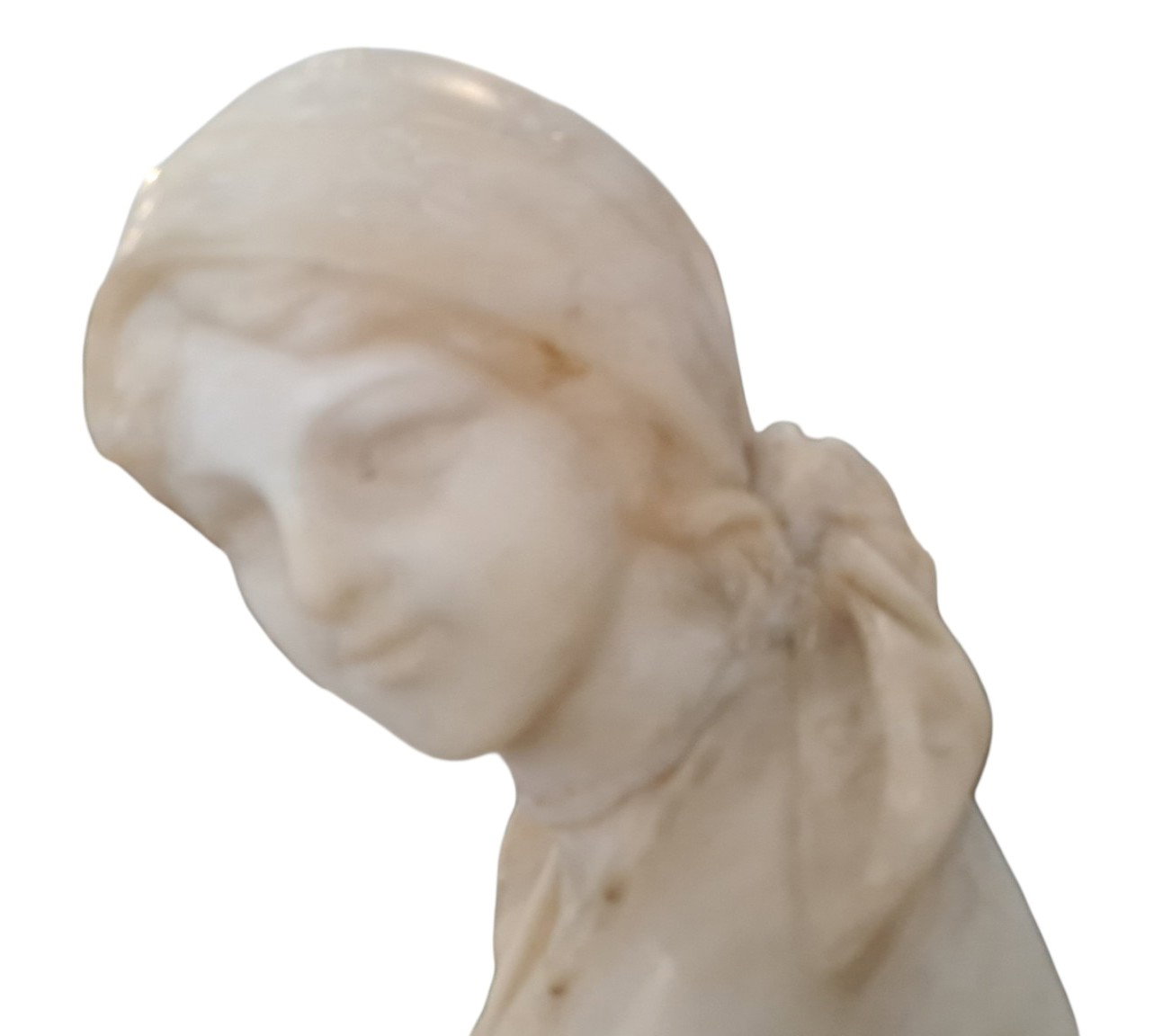
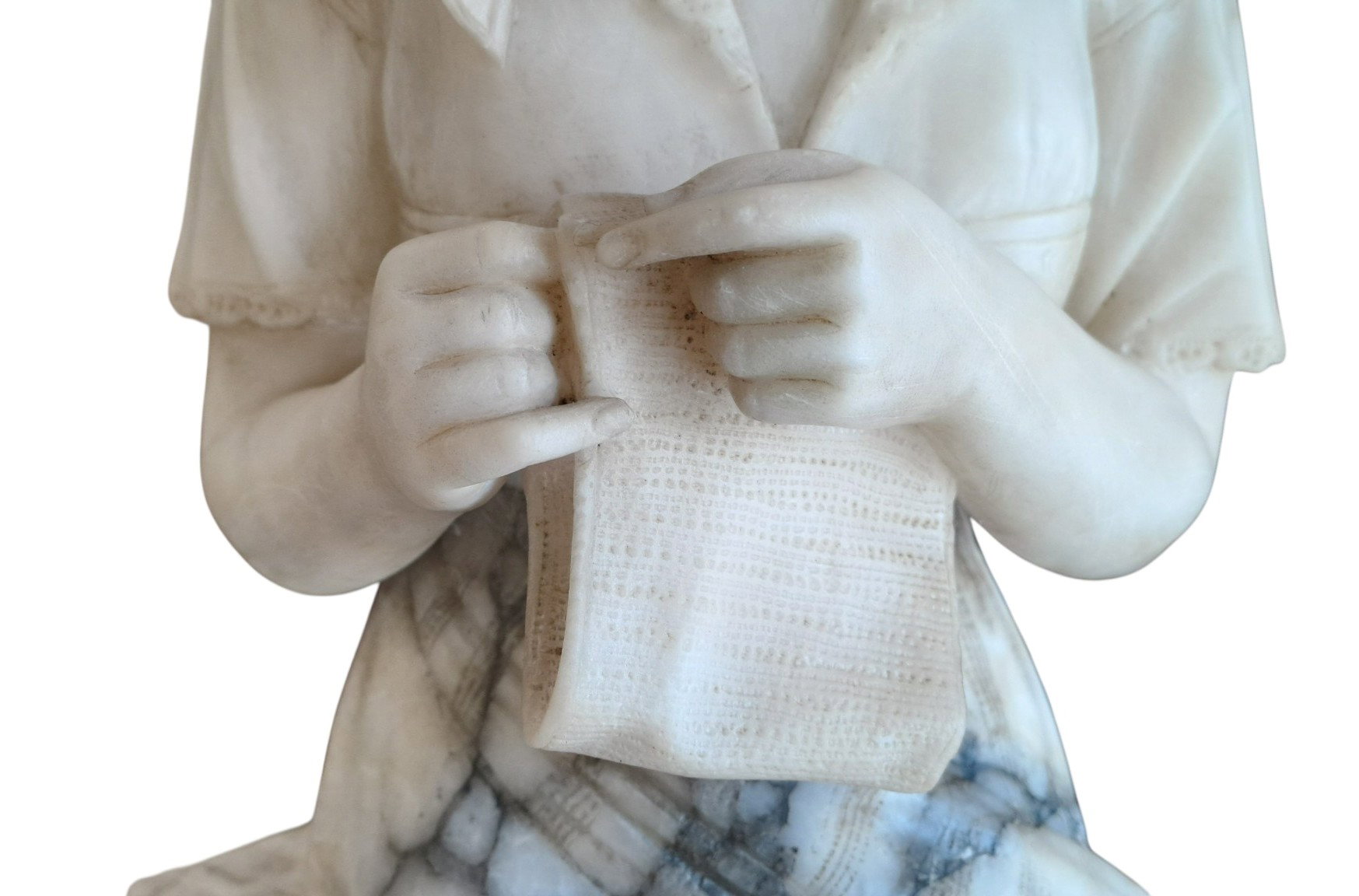
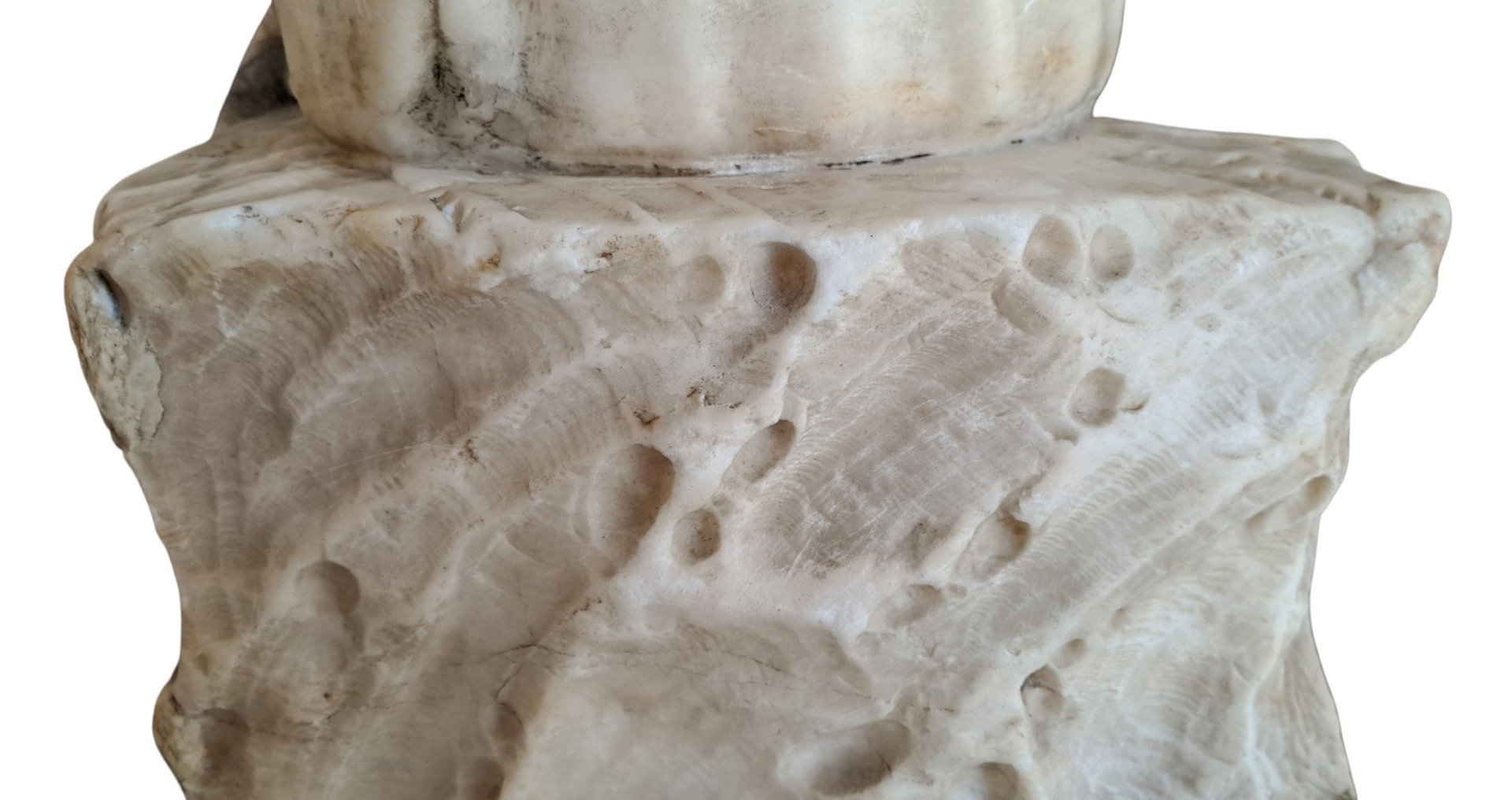
Splendid period sculpture in polychrome and veined alabaster, depicting a young maiden seated on a rock, engrossed in the delicate work of embroidery or lacemaking.
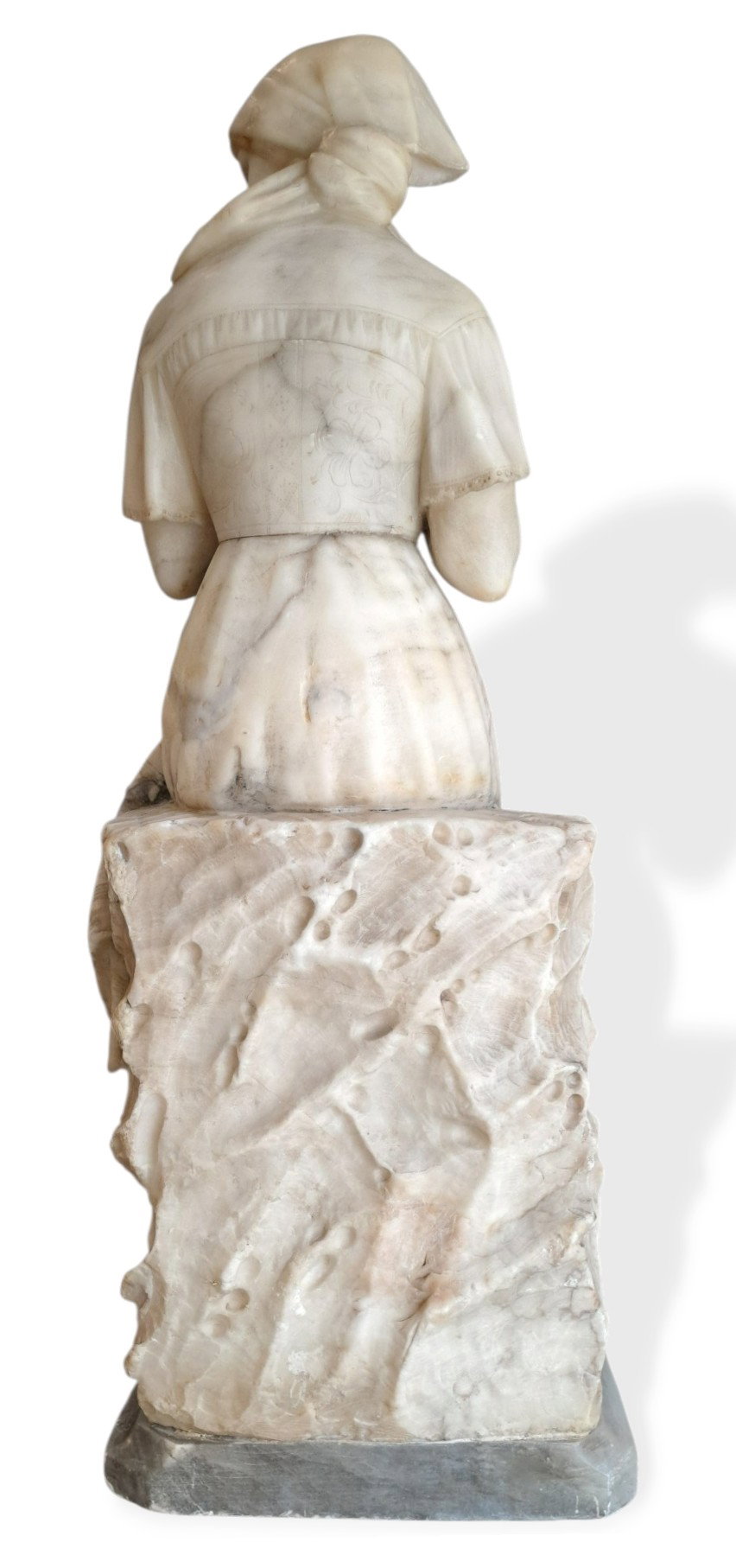
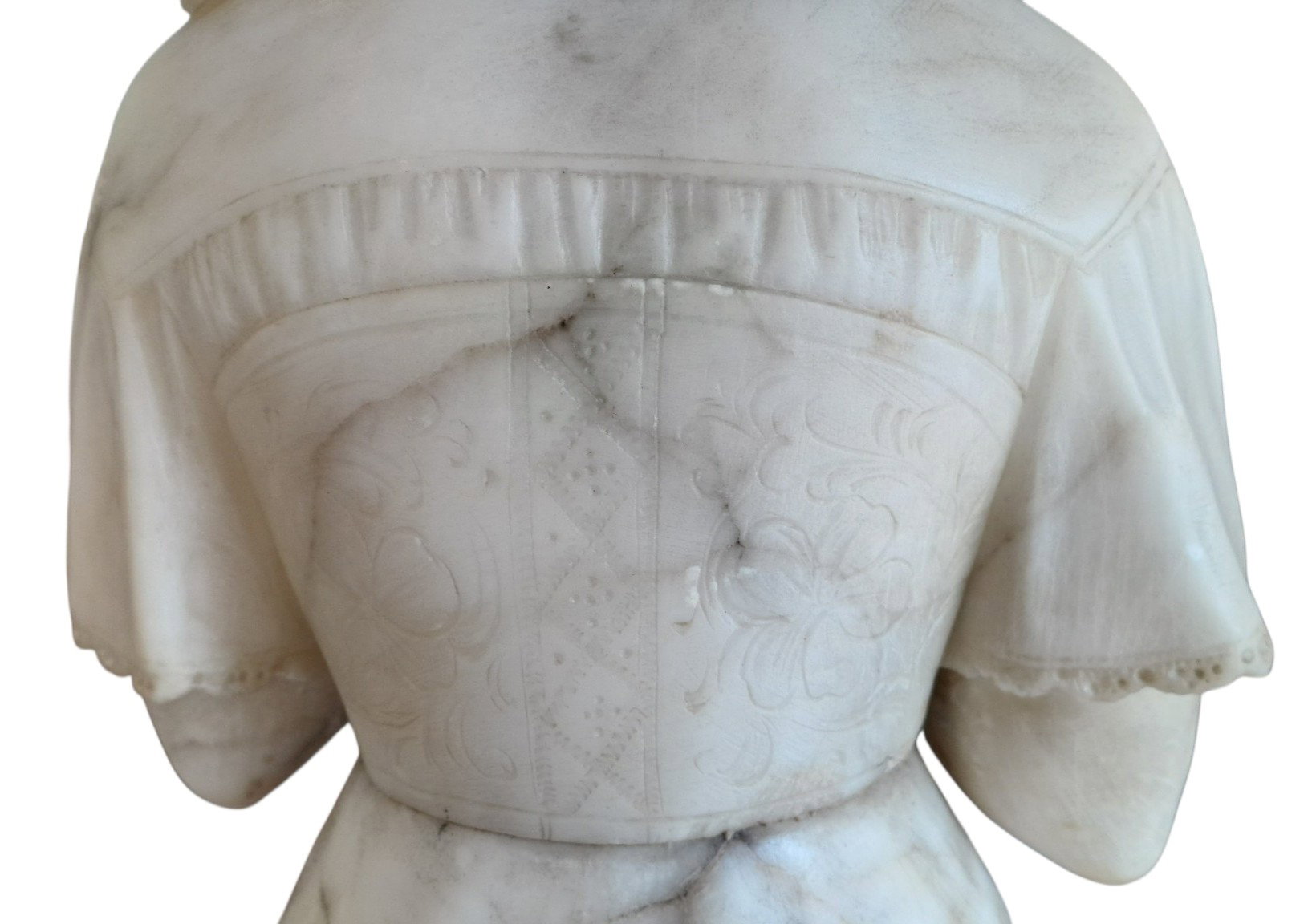
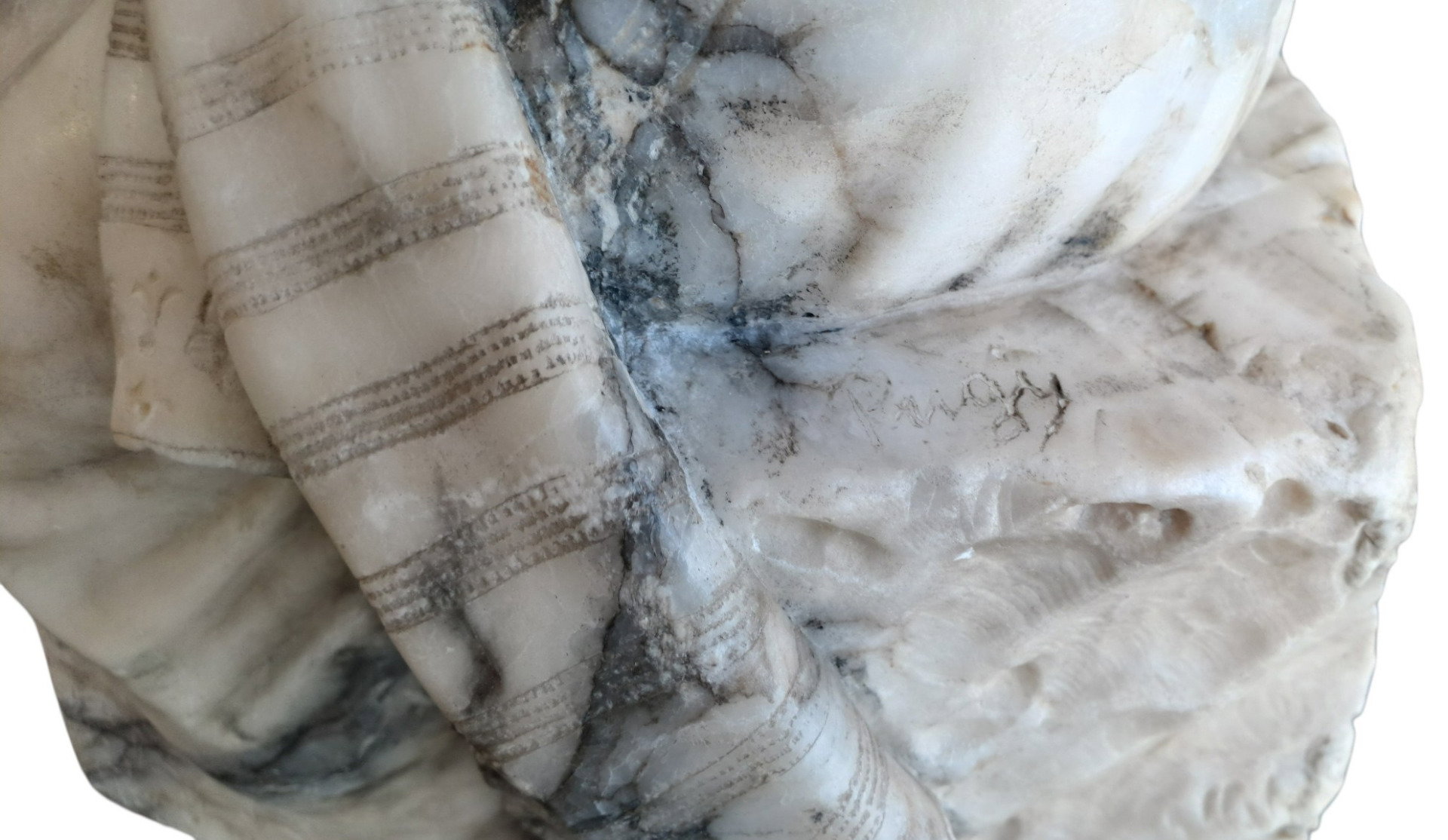
The work is an excellent example of Italian genre portraiture from the early 20th century. The mastery of execution is evident in the contrast between the different textures of the alabaster: the maiden's skin is smooth and diaphanous, while her dress and apron utilize the natural veins of the stone to simulate the folds and texture of the fabric.
Artistic Details:
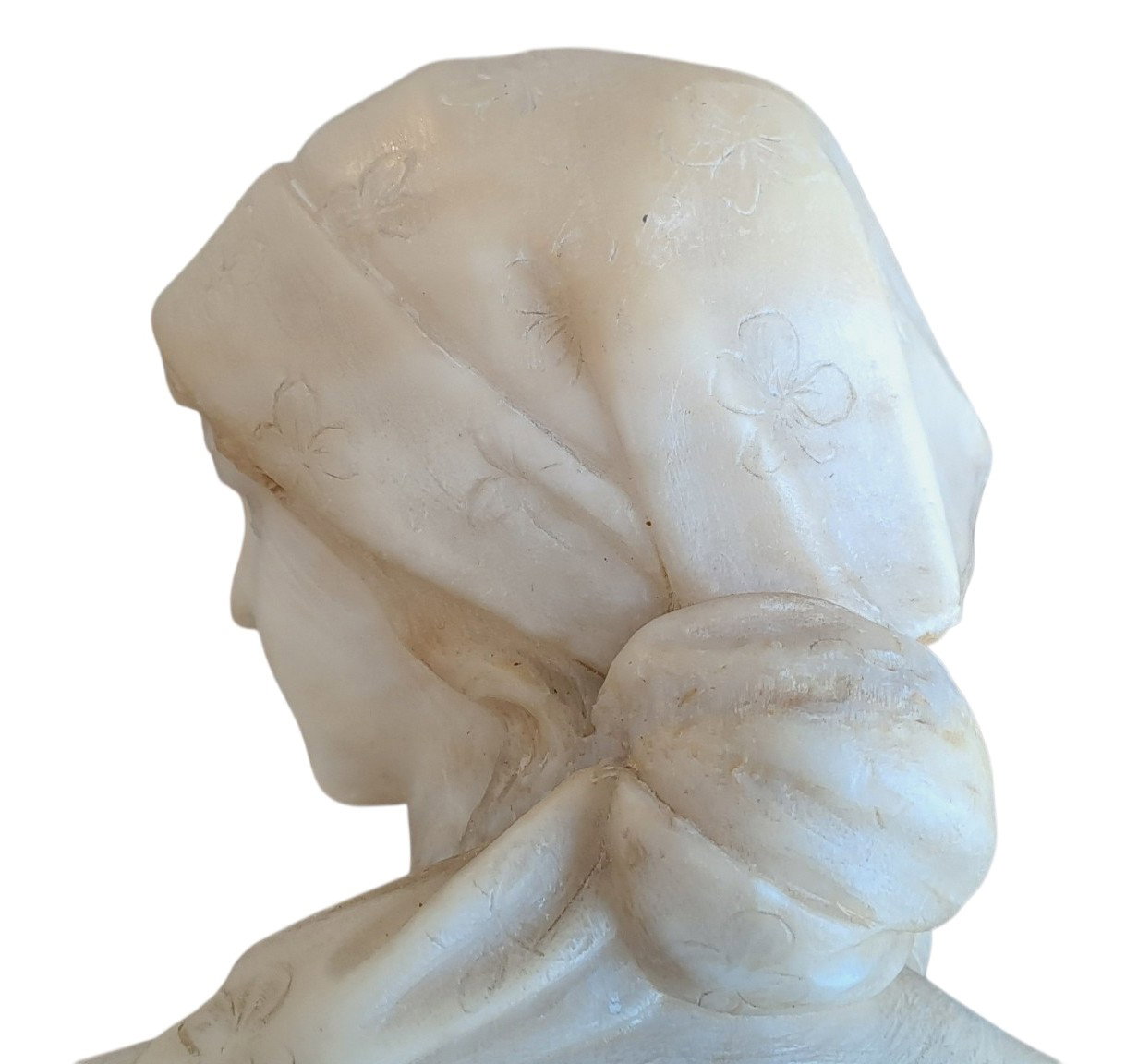
Face and Hairstyle: The face has a sweet and absorbed expression. The head is wrapped in a finely engraved scarf with floral motifs, tied with realism.
Clothing: The attention to detail is extraordinary; note the lace trim on the sleeve and the meticulous working of the piece of fabric the young woman holds in her hands, where every stitch appears almost real.
Material: Natural alabaster with dark gray veins that give depth and character to the piece, making each example unique.
Signature: The work bears the engraved signature "Pugi", a guarantee of authenticity and artistic value attributable to the renowned Florentine workshop of the Pugi.
Dimensions and State of Conservation:
Dimensions: height 60, base 22 x 20 cm.
Condition: The sculpture is in excellent general condition. The patina is original.
Guglielmo Pugi (1850–1915), one of the most significant representatives of Italian decorative sculpture at the turn of the 19th and 20th centuries.
Biographical Profile of Guglielmo Pugi
Activity in Florence: Pugi lived and worked in Florence, where he founded a highly successful atelier, "Guglielmo Pugi e Figli". The studio specialized in the working of marble and alabaster, materials sculpted with virtuoso technique to meet growing international demand.
International Success: He was highly appreciated abroad, particularly in the United States.
Style and Themes: His style blends academic Realism with the soft lines of Liberty (Art Nouveau). He distinguished himself by his ability to portray female subjects of great sweetness, historical busts, and genre scenes. His peculiarity was "painting on stone": he knew how to use the natural veins of alabaster to give color and movement to clothing and details, exactly as seen in the sculpture presented.
Legacy: After his death, the activity was continued by his sons, Gino and Fiorenzo, maintaining the high reputation of the Pugi name in the decorative arts market.
A regular certificate of authenticity with photos will be issued. We assure a response to your emails within 24 hours. REGISTERED WITH THE REGISTER OF EXPERTS AND COURT-APPOINTED EXPERTS AT THE COURT OF LA SPEZIA