Venice, 19th century
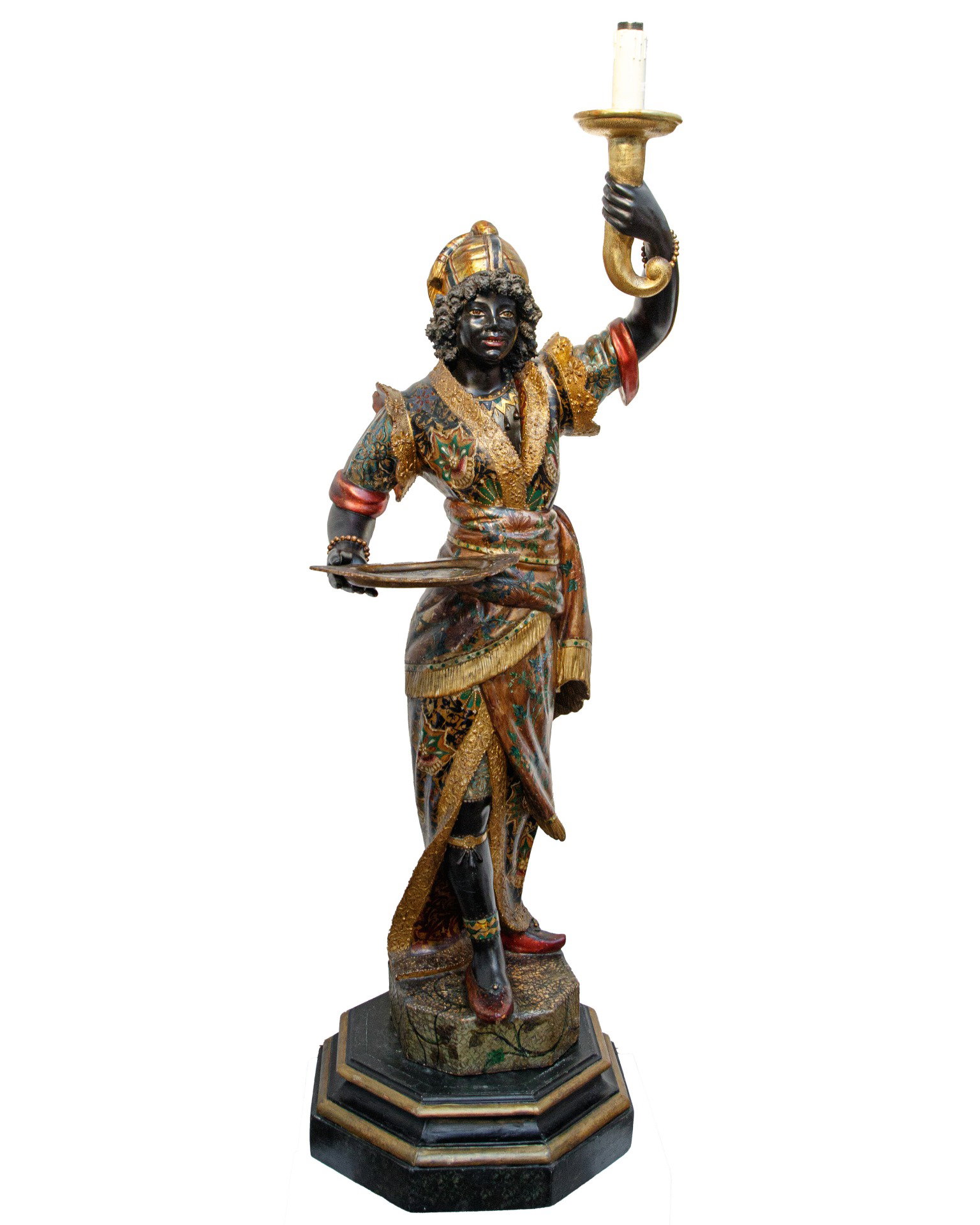
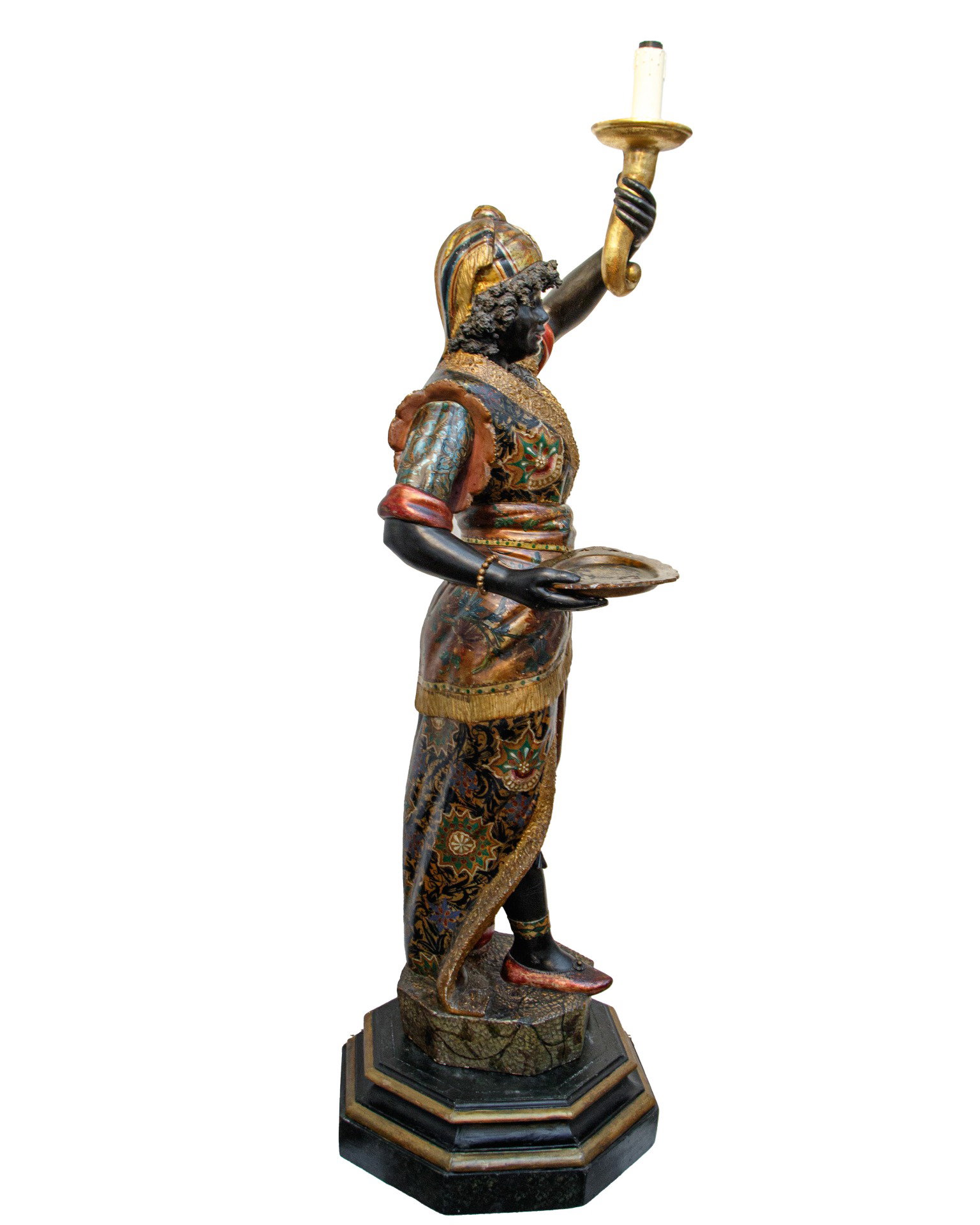
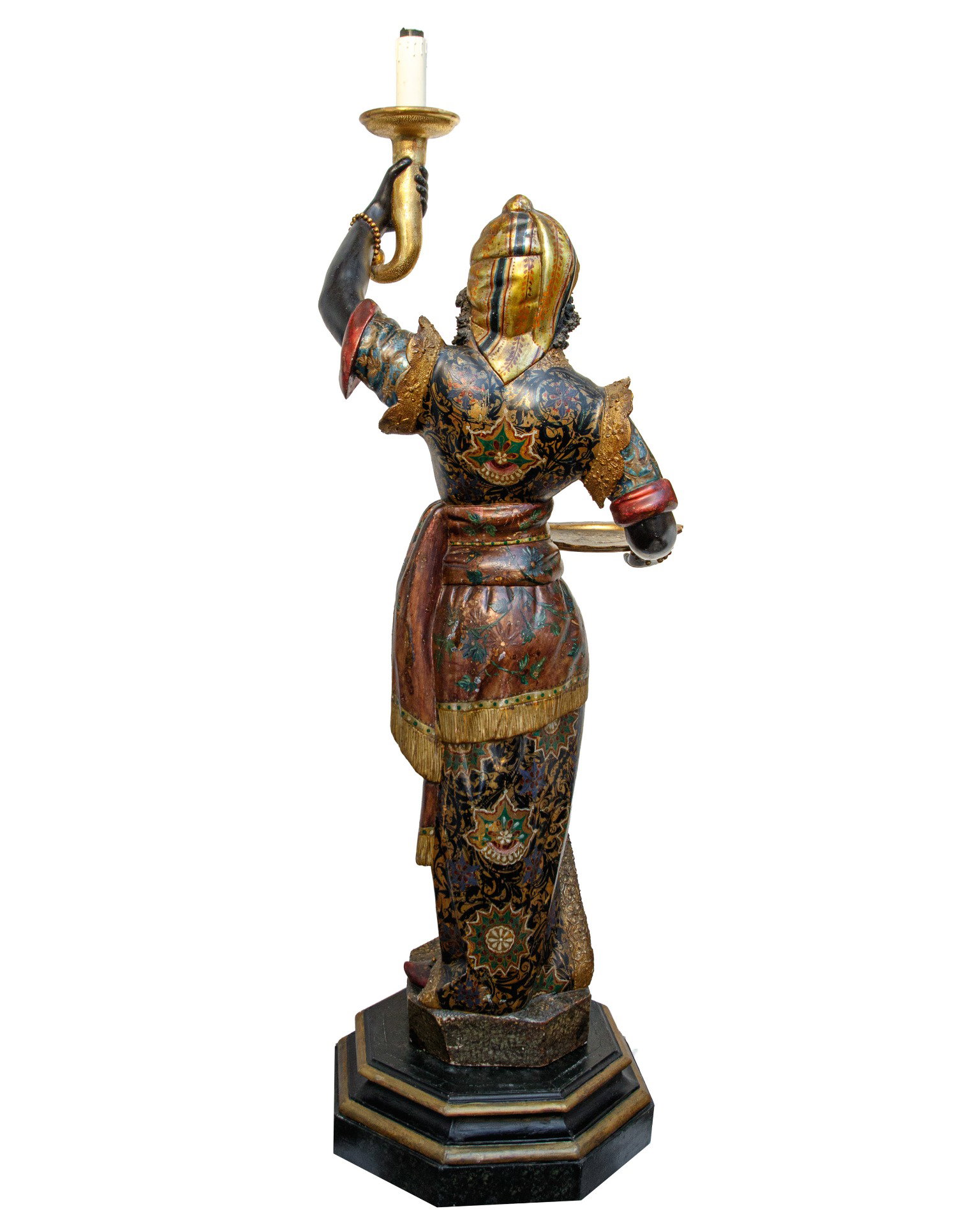
Moretta lantern stand
Wood, lacquered and gilded, height 178 cm
base, 50 x 56 cm
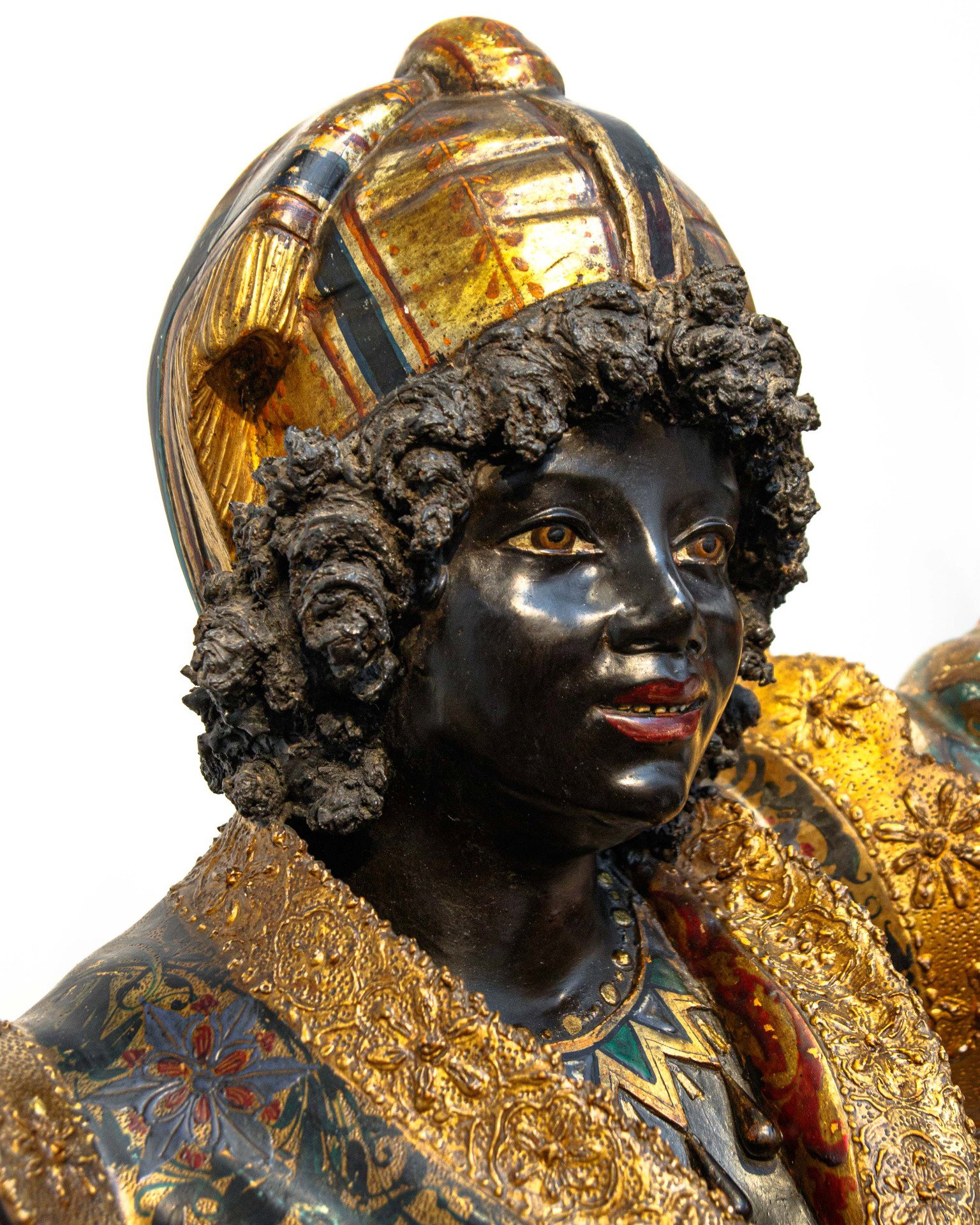
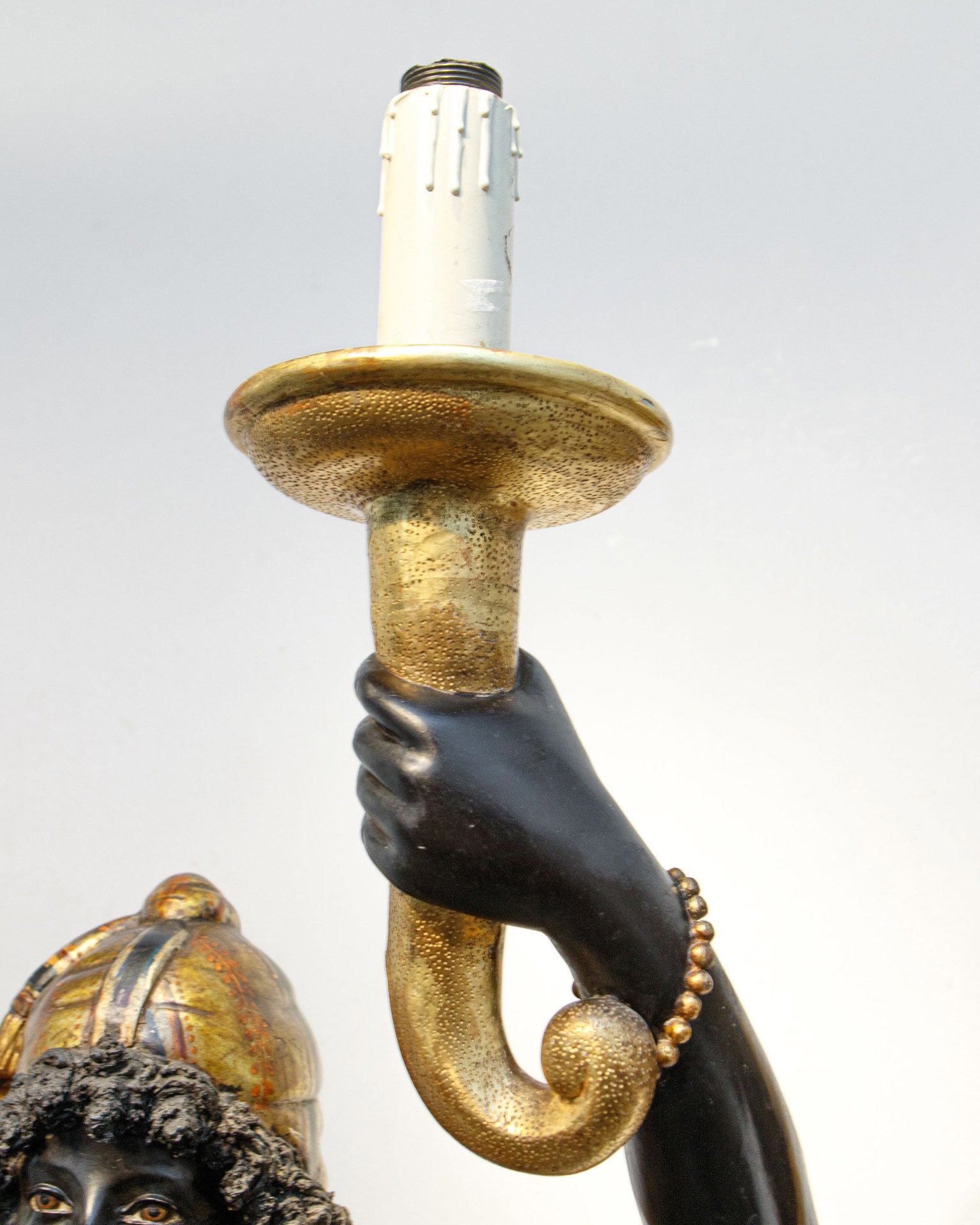
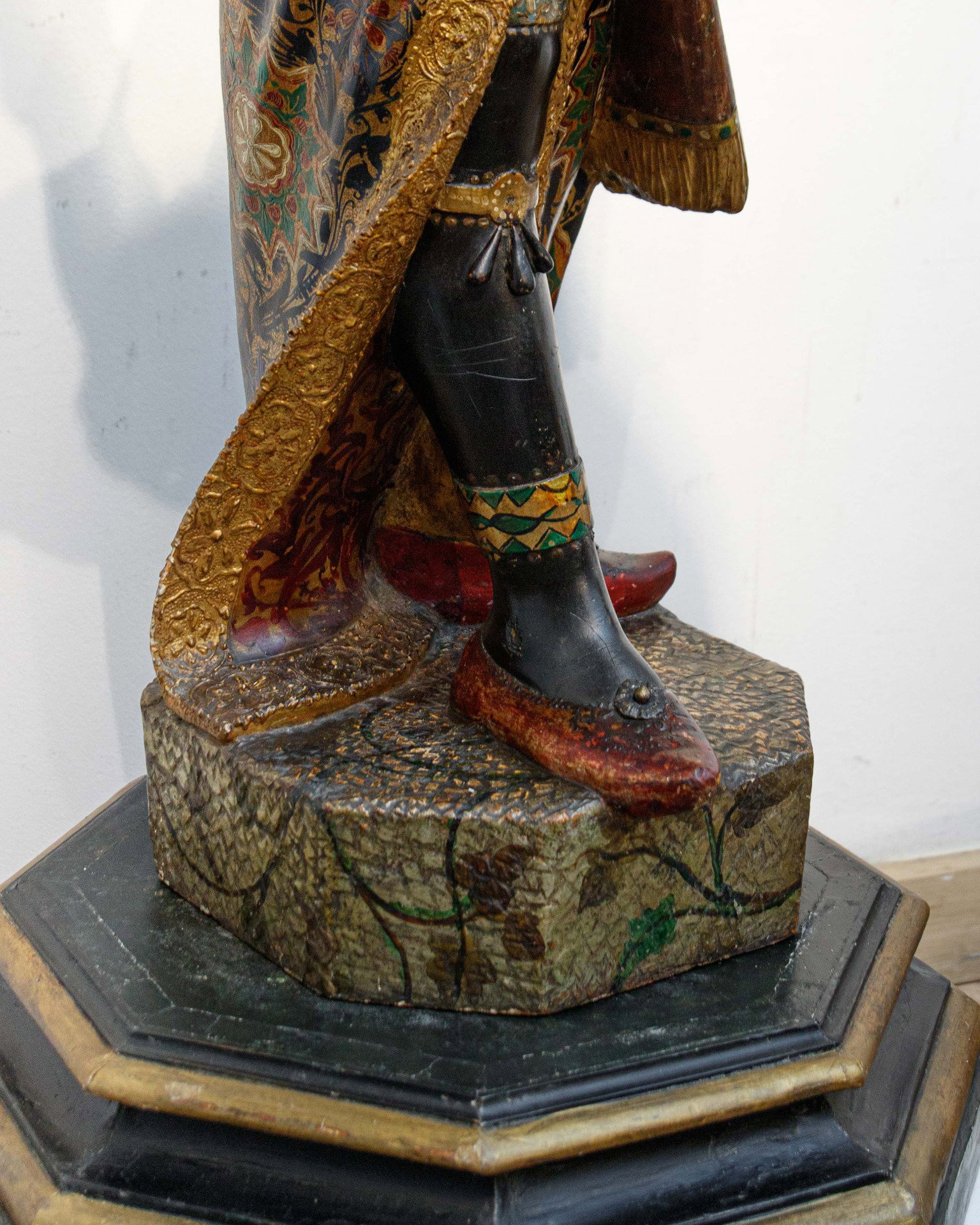
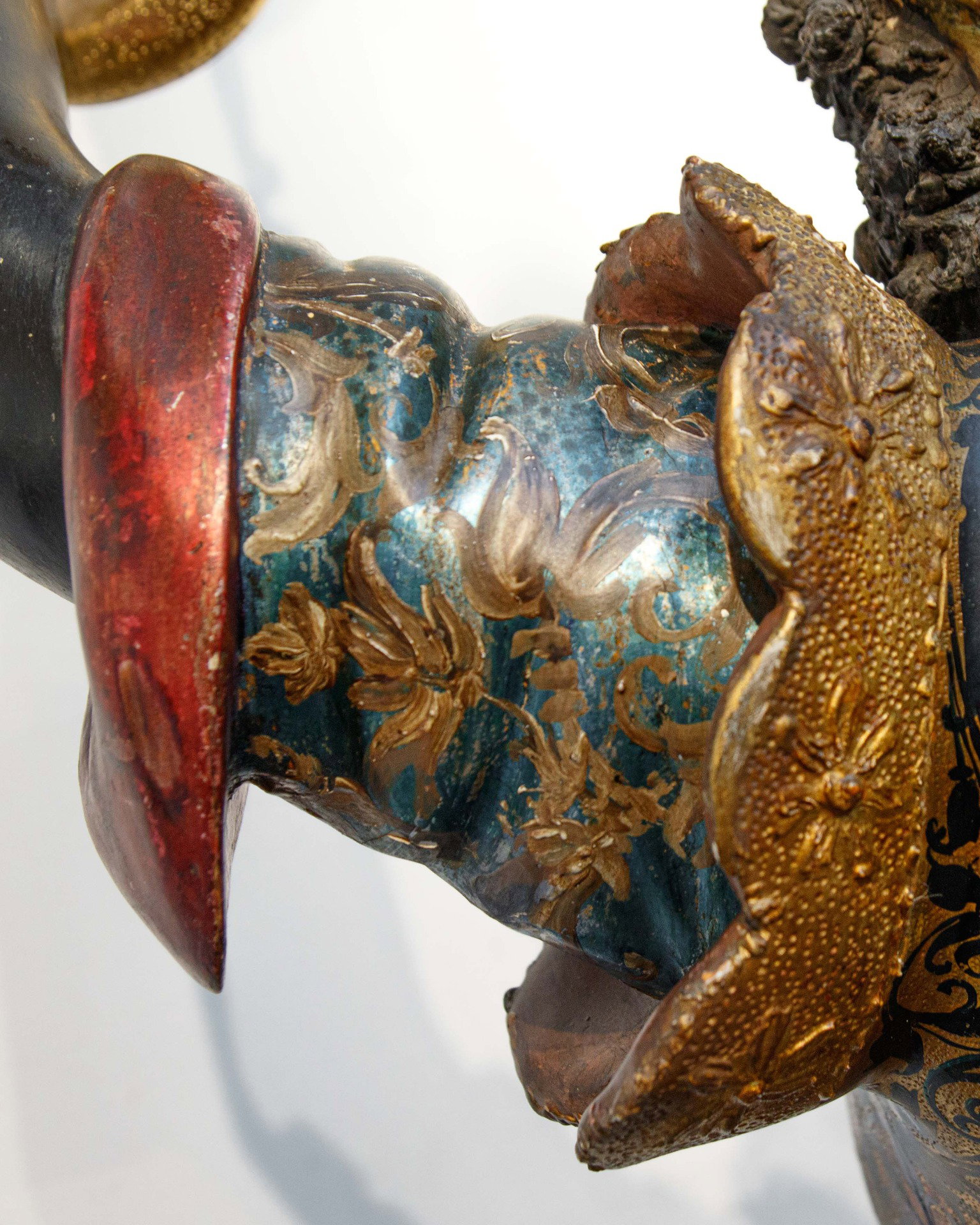
This sculpture of a Black attendant holding a lamp is an exemplary testament to 19th-century Venetian craftsmanship, distinguished by its exceptional size and a decorative richness of rare value. Made of polychrome wood, the figure presents itself as a refined blend of the odalisque and a modern Amazon, draped in a tunic adorned with an iridescent arabesque motif that covers the entire drapery, which falls softly at the hips and is tied on the right in a conspicuous bow. The masterful woodworking is enhanced by gilded touches that, melting into two-dimensional geometric lines, reveal a meticulous love for detail, evident in both the tonal variations and the sculptural definition of the thick necklace and matching bracelets. The figure's elegant pose, captured in a moment of delicate repose with one leg slightly bent, accentuates its compositional dynamism as it extends an offering gesture with a decorated tray and a lamp holder. The cheerful smile illuminating its face imbues the sculpture with a vibrant veristic character, fully consistent with the inventive tradition of the Venetian school, which has its roots in the 16th century.
The tradition of Venetian Black figures dates back to the heart of the Serenissima, between the 17th and 18th centuries, originating as a plastic expression of the international prestige of a dominant maritime power. Initially conceived to celebrate military and commercial victories against the Ottoman Empire and Barbary corsairs, these figures transformed the image of the "vanquished" into a decorative element of the highest value, destined to adorn noble palaces.
Over time, the purely political connotation gave way to a cultured and scenographic exoticism: the "Moor" became a symbol of cosmopolitan luxury, rendered in splendid polychrome wood sculptures as candelabra, silent servants, or furniture supports. This iconography, which merges the mastery of Venetian carving with a fascination for the East, reached its peak in the 19th century, when the figure of the moretta was reinterpreted with a sweeter and more idealized aesthetic, transforming the character into a sort of ambassador of a distant, luxurious, and mysterious world.