Neapolitan School, 17th century
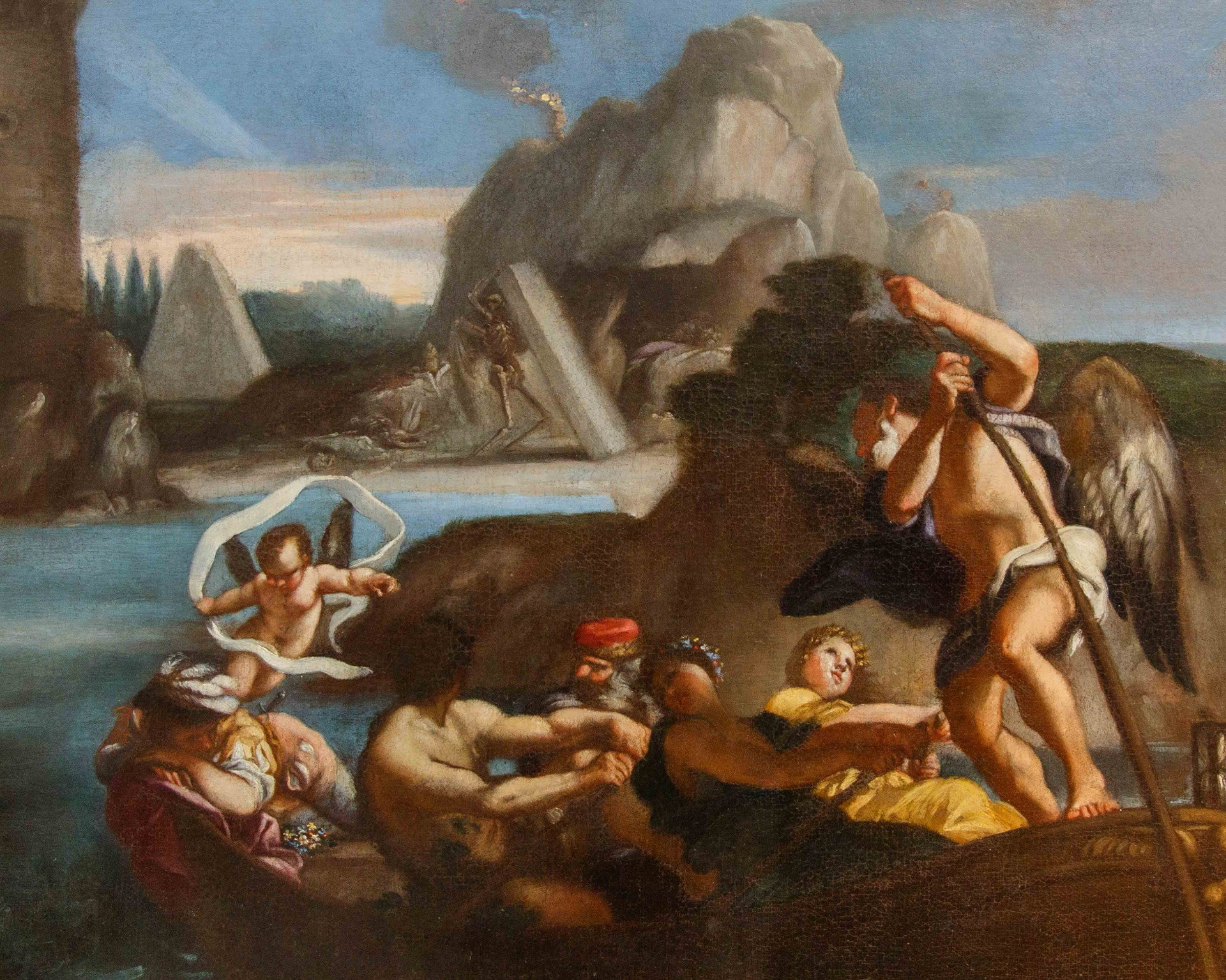
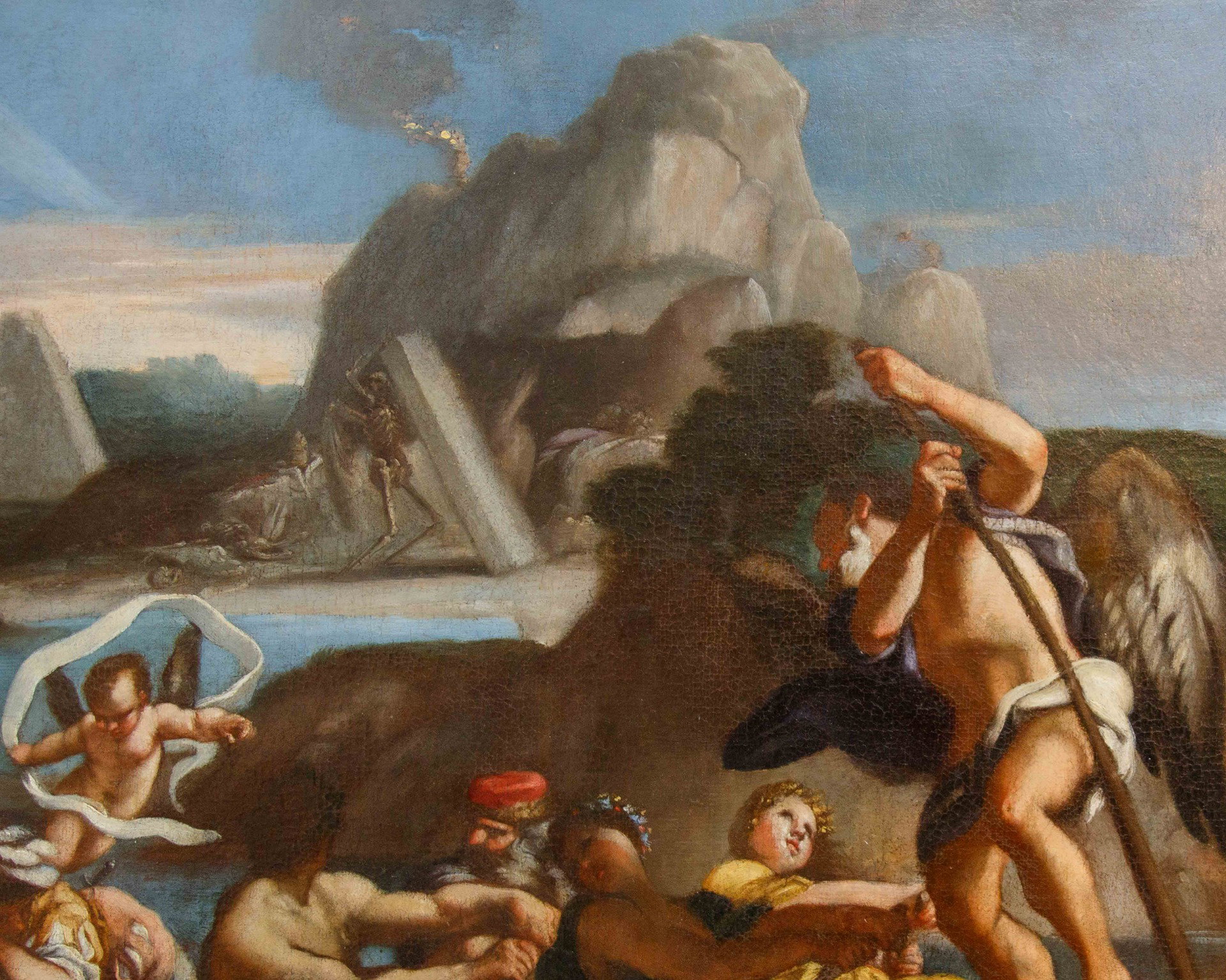
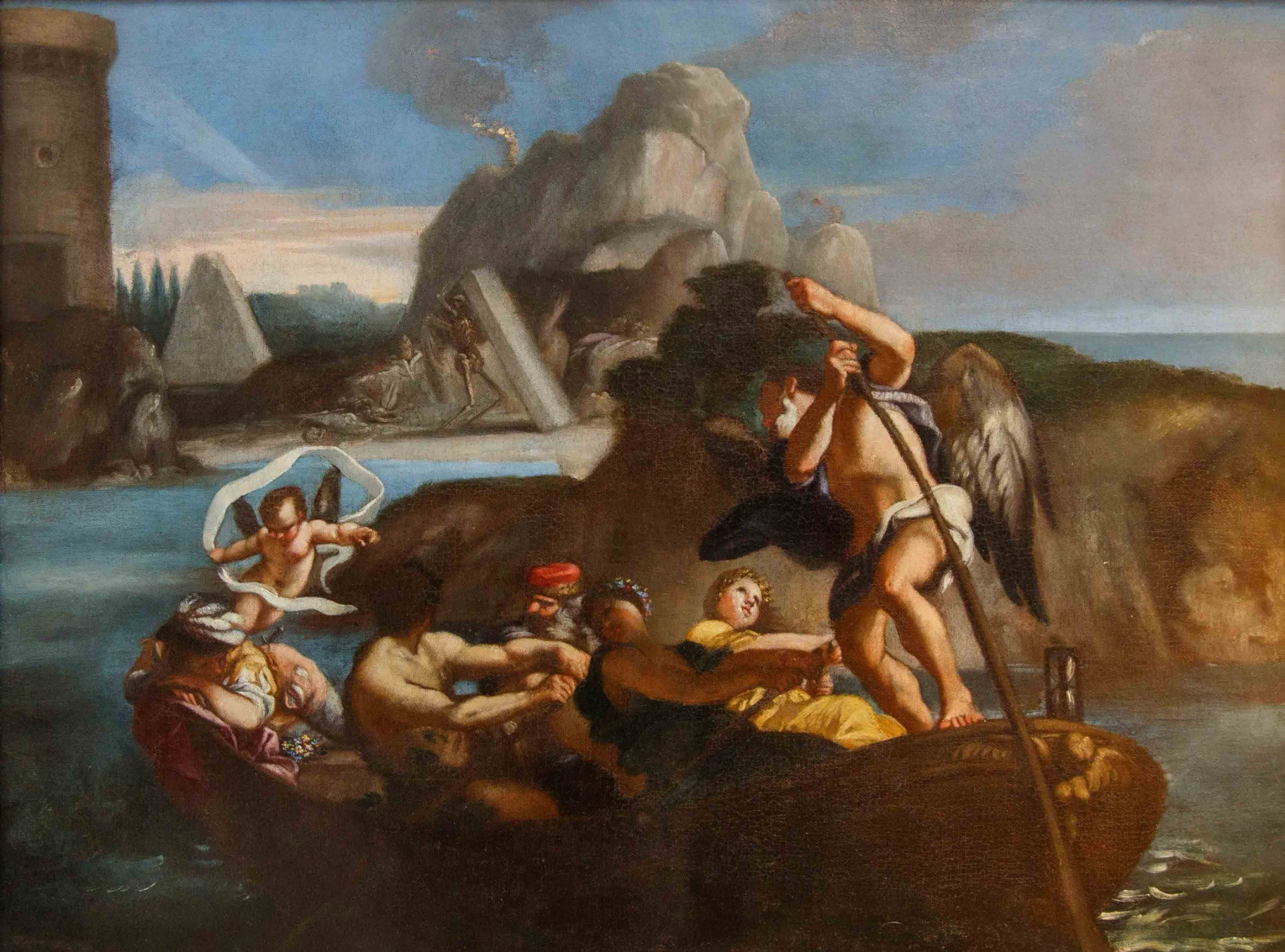
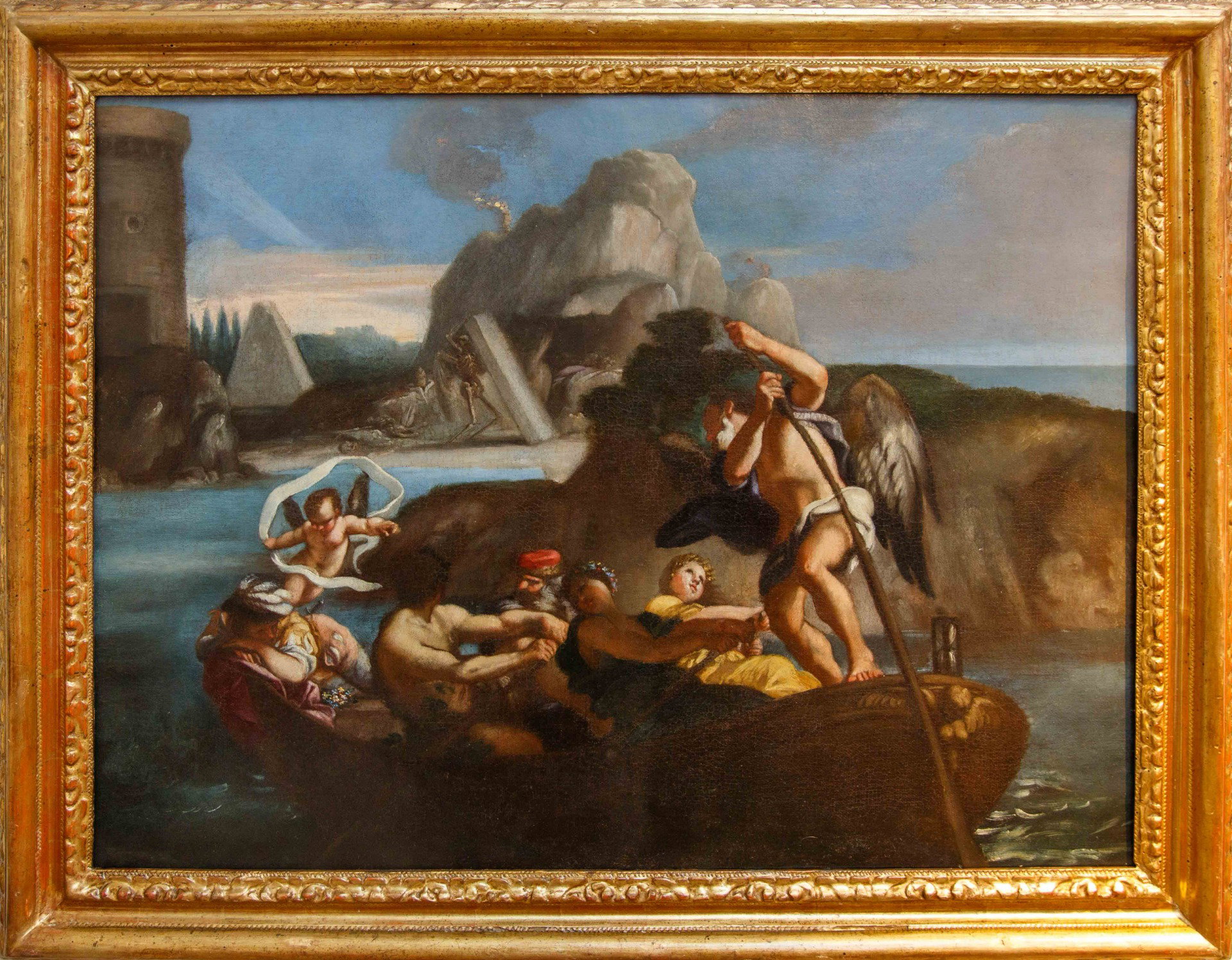
Charon ferries the souls
Oil on canvas, 66 x 87 cm
With frame: 83 x 106 cm
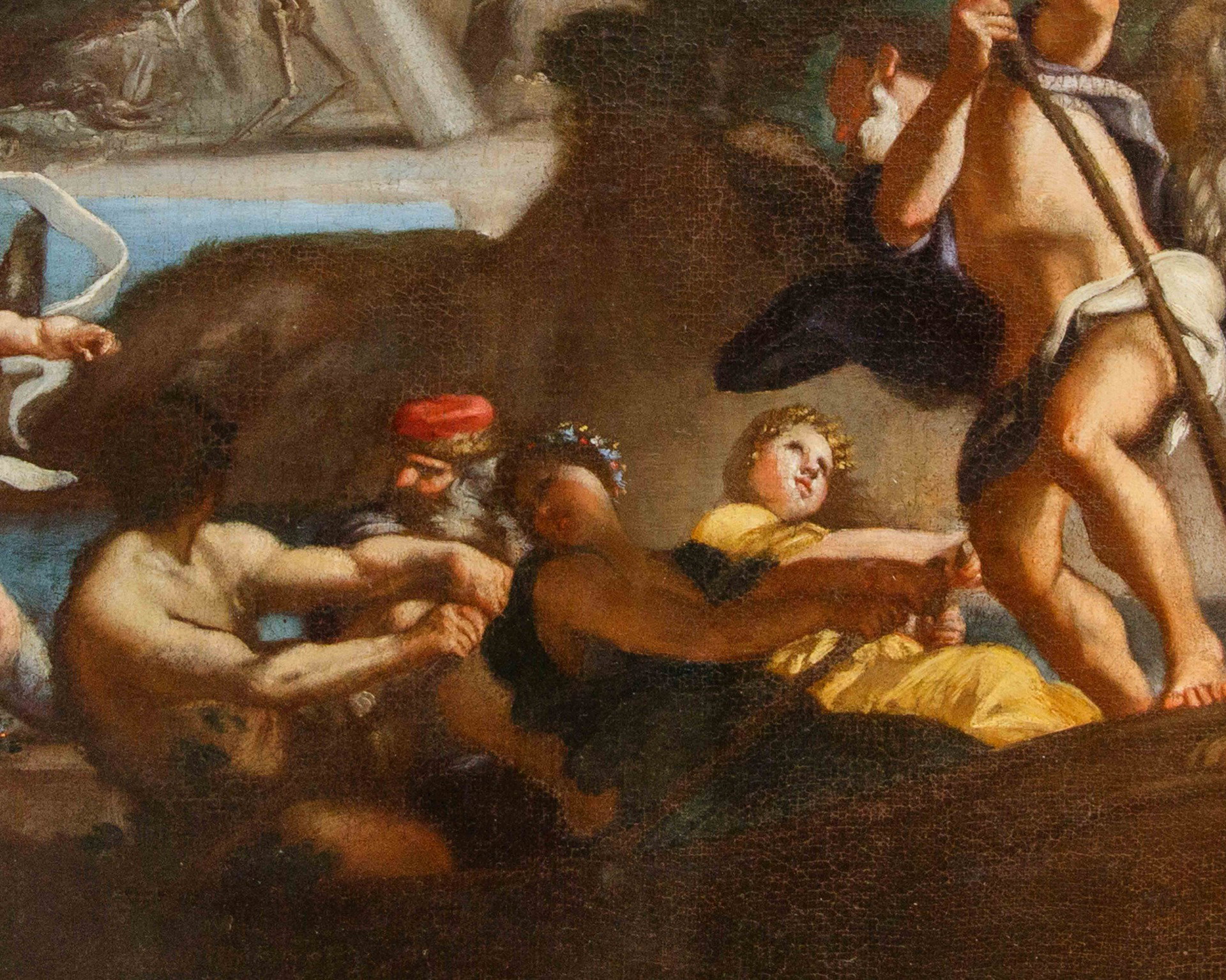
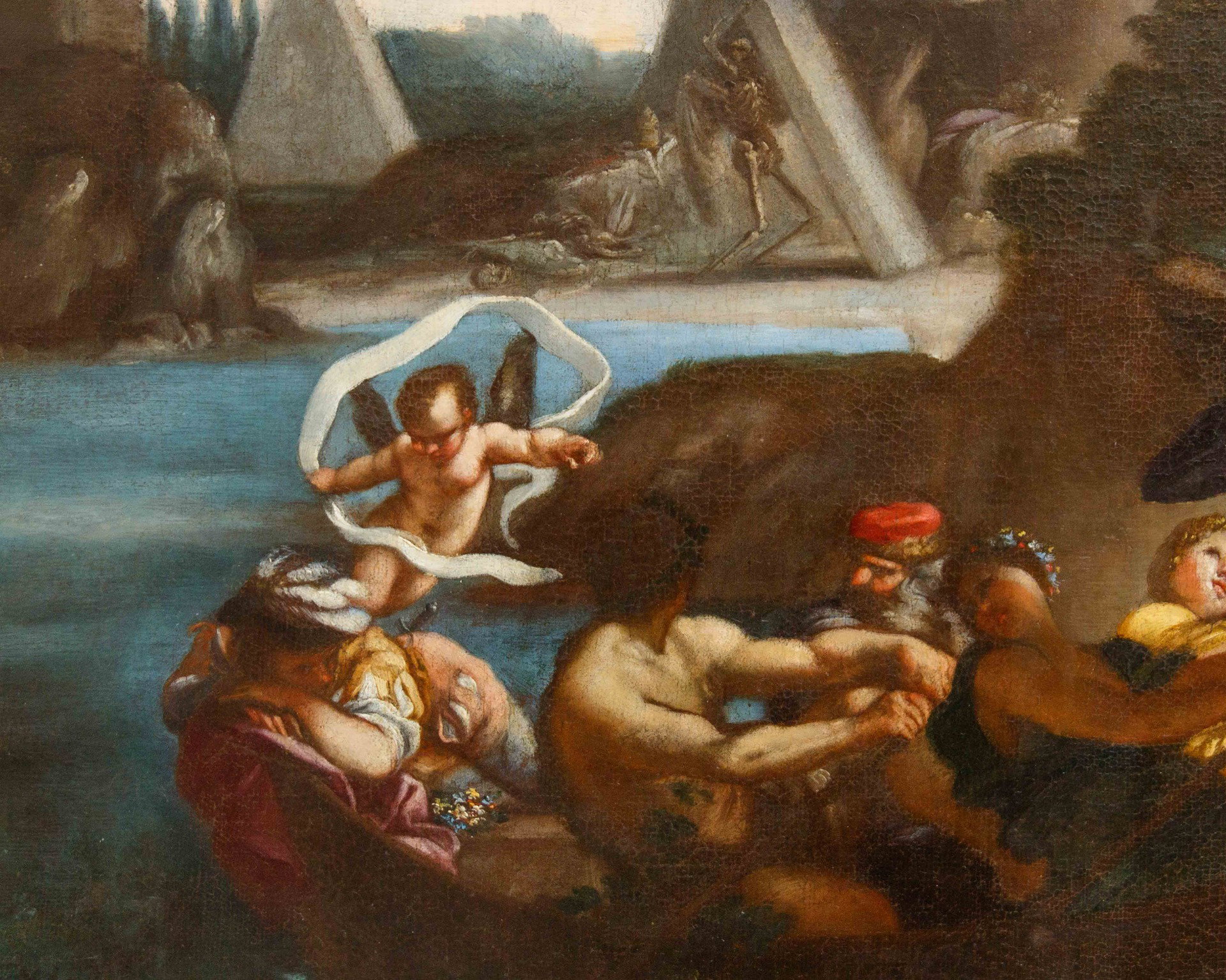
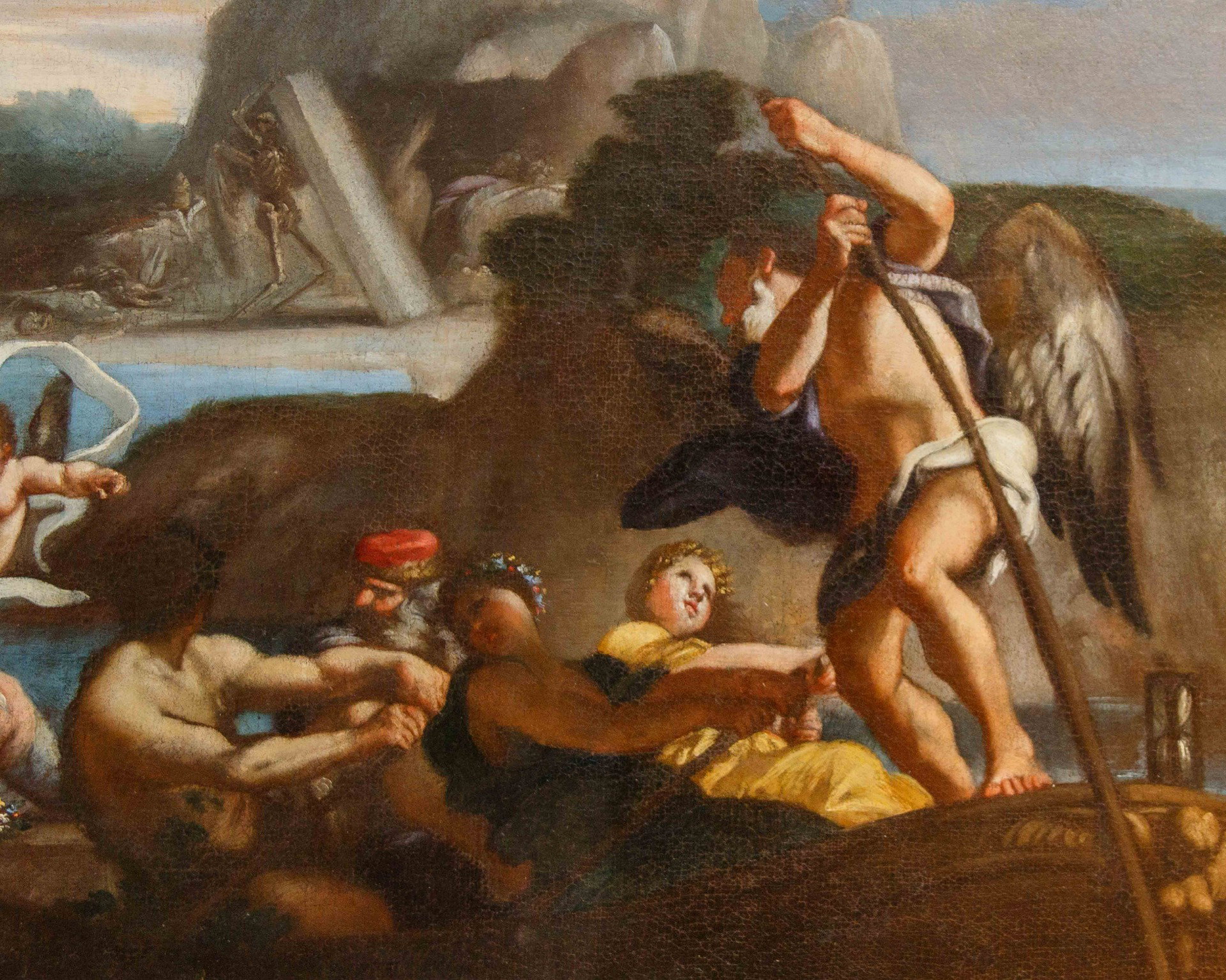
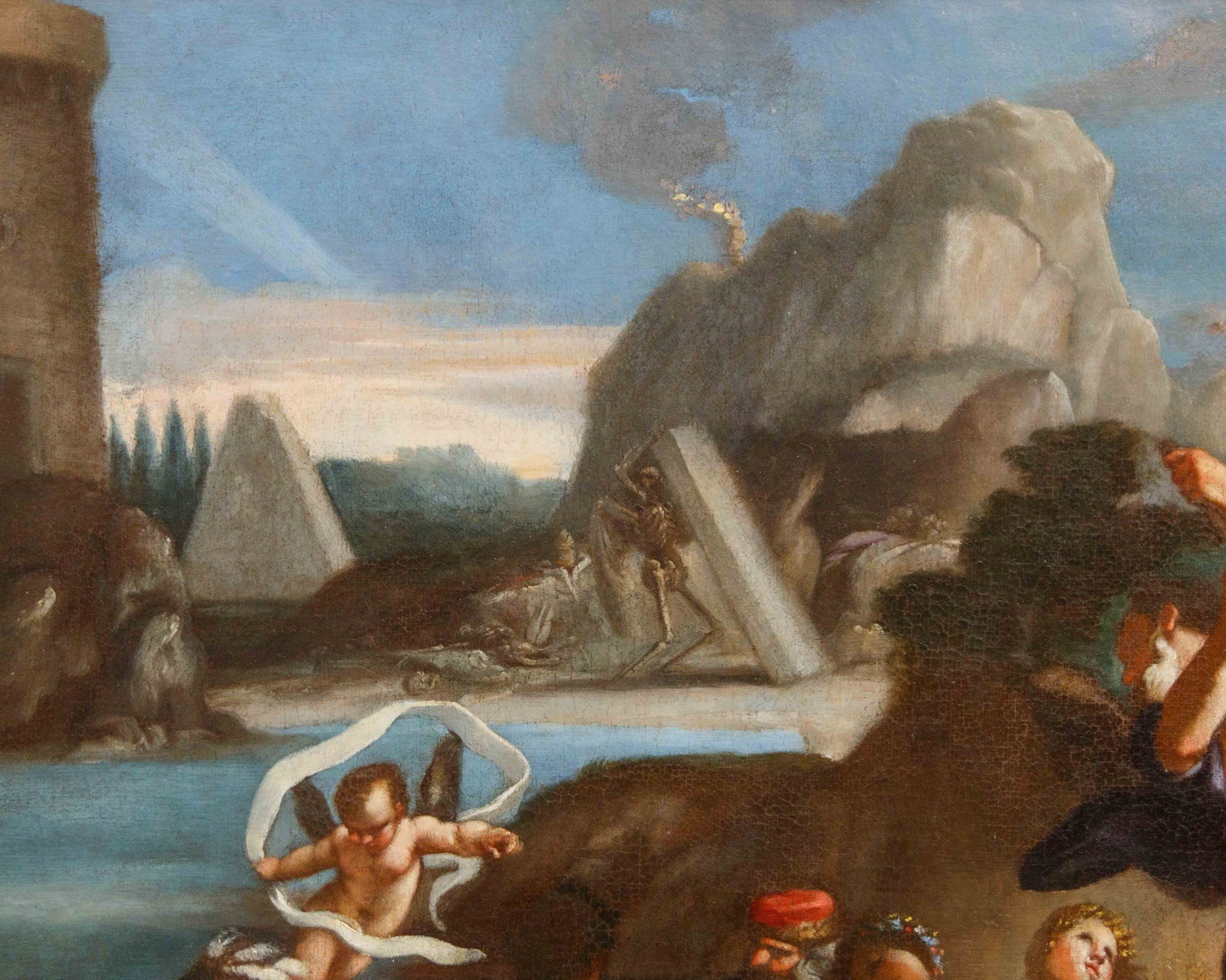
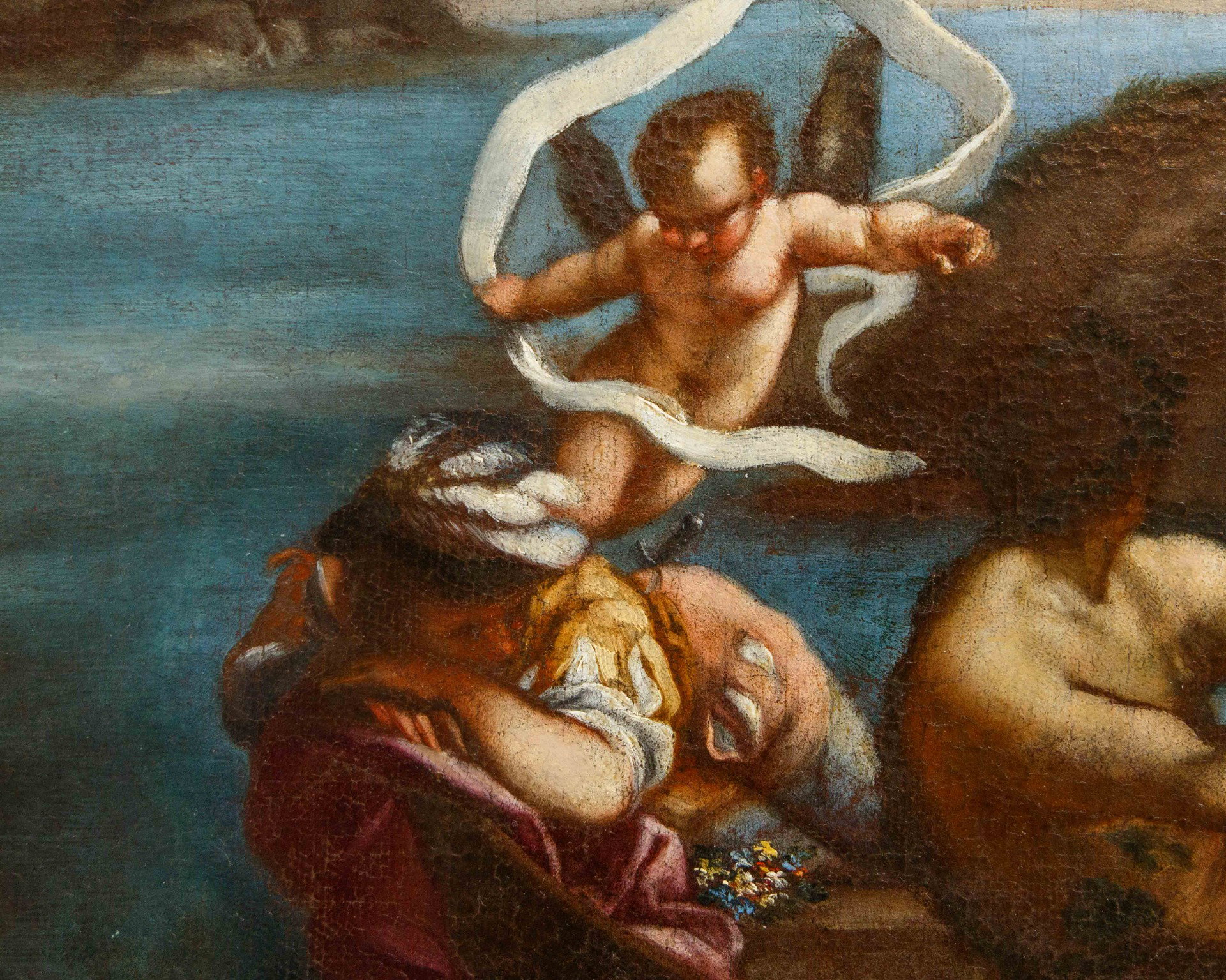
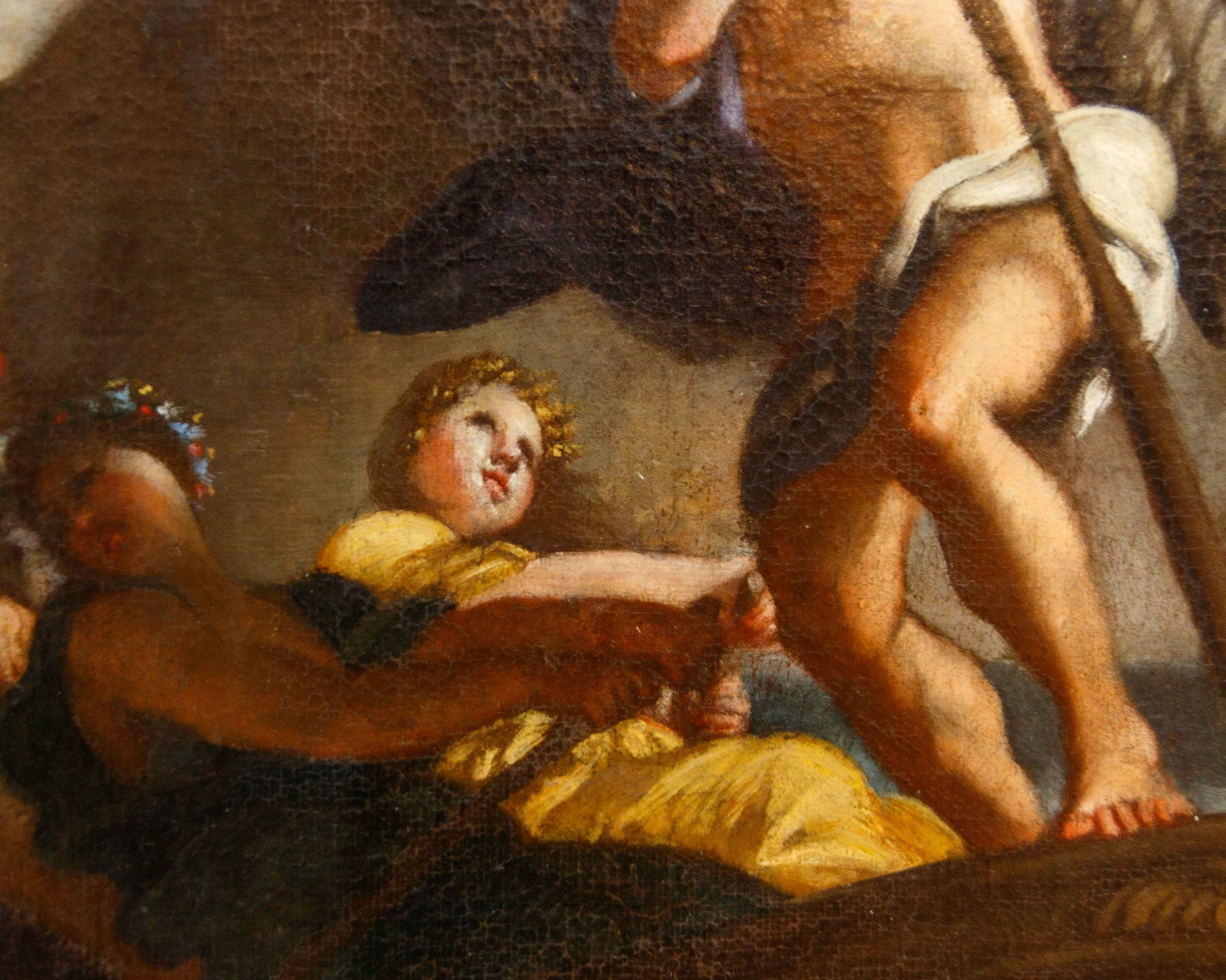
The attached work, an oil on canvas from the Neapolitan school attributable to the period straddling the 17th and 18th centuries, tackles the mythological theme of Charon ferrying souls across the Acheron, the infernal river well described by Dante in the Divine Comedy. The painting stands out for its dynamic and intense interpretation of the subject. In the foreground on the right, Charon reigns supreme, his figure rendered with a powerful Michelangelesque musculature, typical of the physical representation of the Neapolitan Baroque. He is not a bearded old man here, but a vigorous and winged ferryman, with large dark wings that accentuate his otherworldly nature, as he propels the boat with the aid of his long oar. The souls, crammed into the boat, row in turn to move away from the infernal vision unfolding behind them, made even harsher by the typically rocky and barren landscape: skeletal figures seem to overturn their own tombstones, making the tension experienced by the protagonists even more palpable. A man with a red cap looks back in anguish, while a woman with a turban collapses exhausted at the edge of the boat. A peculiar detail is the presence of a winged putto floating above the boat, one with a fluttering white sash. This inclusion is unusual in a depiction of Hell, suggesting a possible allegorical interpretation.
The attribution to the Neapolitan school of the late 17th and early 18th centuries is strongly supported by the teachings of Luca Giordano (1634-1705), whose dynamic and luminous style dominated the Neapolitan scene and beyond. The work reflects the mature phase of Giordano's Baroque, which abandoned the darker shadows of Ribera in favor of a brilliant palette and a swirling composition that infuses life and movement into the scene. The swift brushstrokes and the handling of light on the muscular, tense bodies are stylistic hallmarks of Giordano and his pupils, such as Francesco Solimena or Paolo De Matteis. Giordano himself painted a specific work on this subject, "Charon's Boat and the Rape of Proserpina," housed in London (Mahon Collection, post 1685) and later frescoed in the Medici Riccardi Palace in Florence. Although Giordano's work combines the ferryman with the abduction of Proserpina by Pluto, the fact that this subject was tackled confirms how fashionable it was in his studio or circle, offering a model for later artists. The winged Charon, more akin to a genius or a daimon than Dante's elderly ferryman, fits well with Giordano's visual sensibility, which often reinterpreted classical figures with physical vigor and dramatic theatricality. The coexistence of anguished figures and allegorical putti also harks back to the complex staging and richness of invention of the Neapolitan master, who mixed the sacred, the historical, and the mythological with great ease.
For Italy only: with Ars Antiqua, it is possible to spread all amounts up to a maximum of €7,500 at ZERO INTEREST, for a total of 15 INSTALLMENTS
Ex. Total €4,500 = Monthly installment €300 for 15 months.
Ex. Total €3,600 = Monthly installment €720 for 5 months.
For amounts exceeding €7,500 or for longer payment terms (beyond 15 installments), we can provide a personalized payment plan.
Contact us directly for the best quote.
DIRECT TV
– SUNDAY 5:00 PM – 9:00 PM Terrestrial Digital 126 - Sky 824
– Streaming on our website www.arsantiquasrl.com and on our social media Facebook and Youtube
All works offered by Ars Antiqua are sold with a certificate of authenticity in accordance with the law and an accurate in-depth description.
It is possible to view the works directly at the showroom gallery in Milan, via Pisacane 55 and 57.
We personally organize transport and delivery of works, both for Italy and abroad.