Jacob Ferdinand Voet (1639-1689)
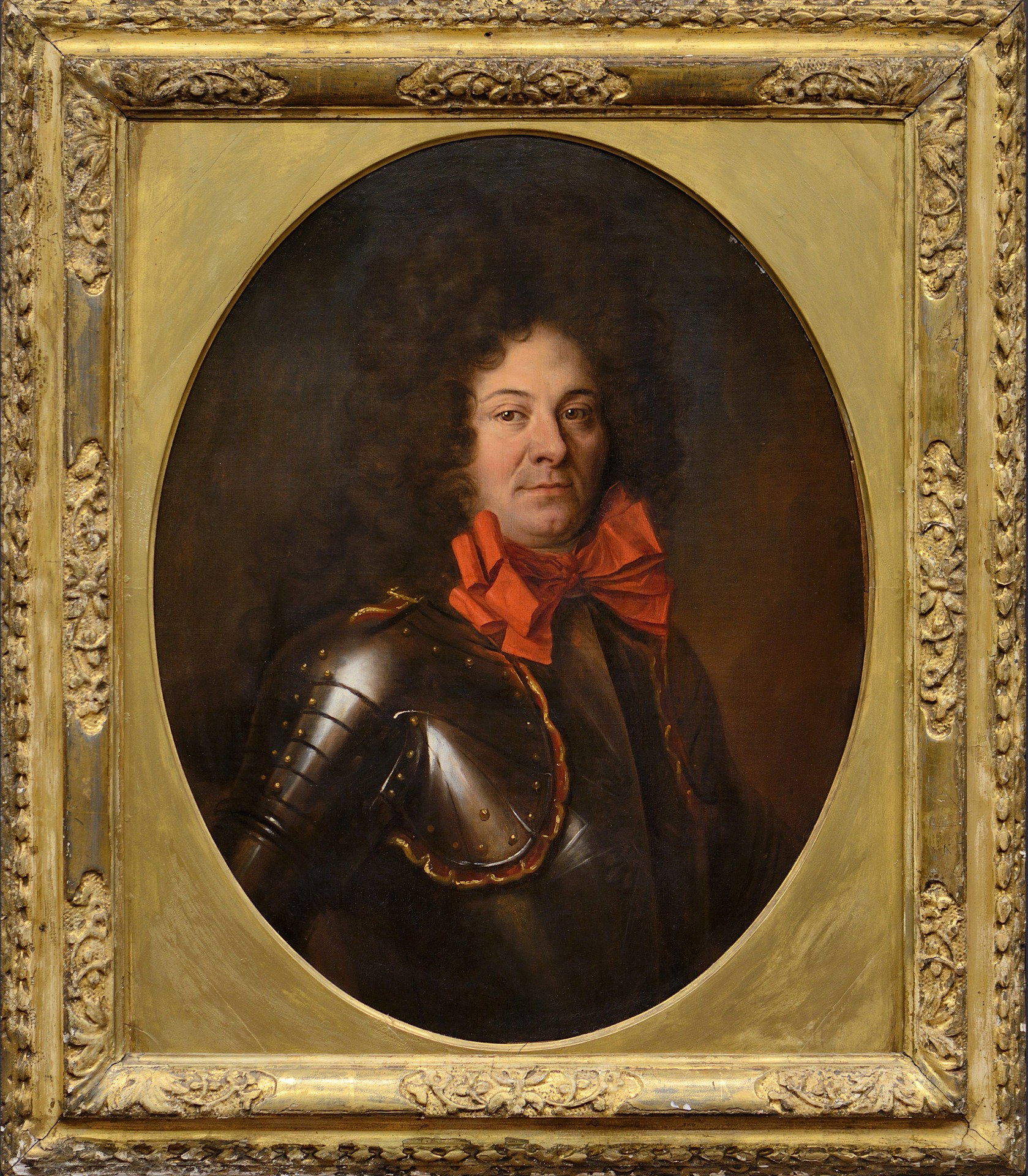
Portrait of Louis de Crevant, Duc d'Humie'res
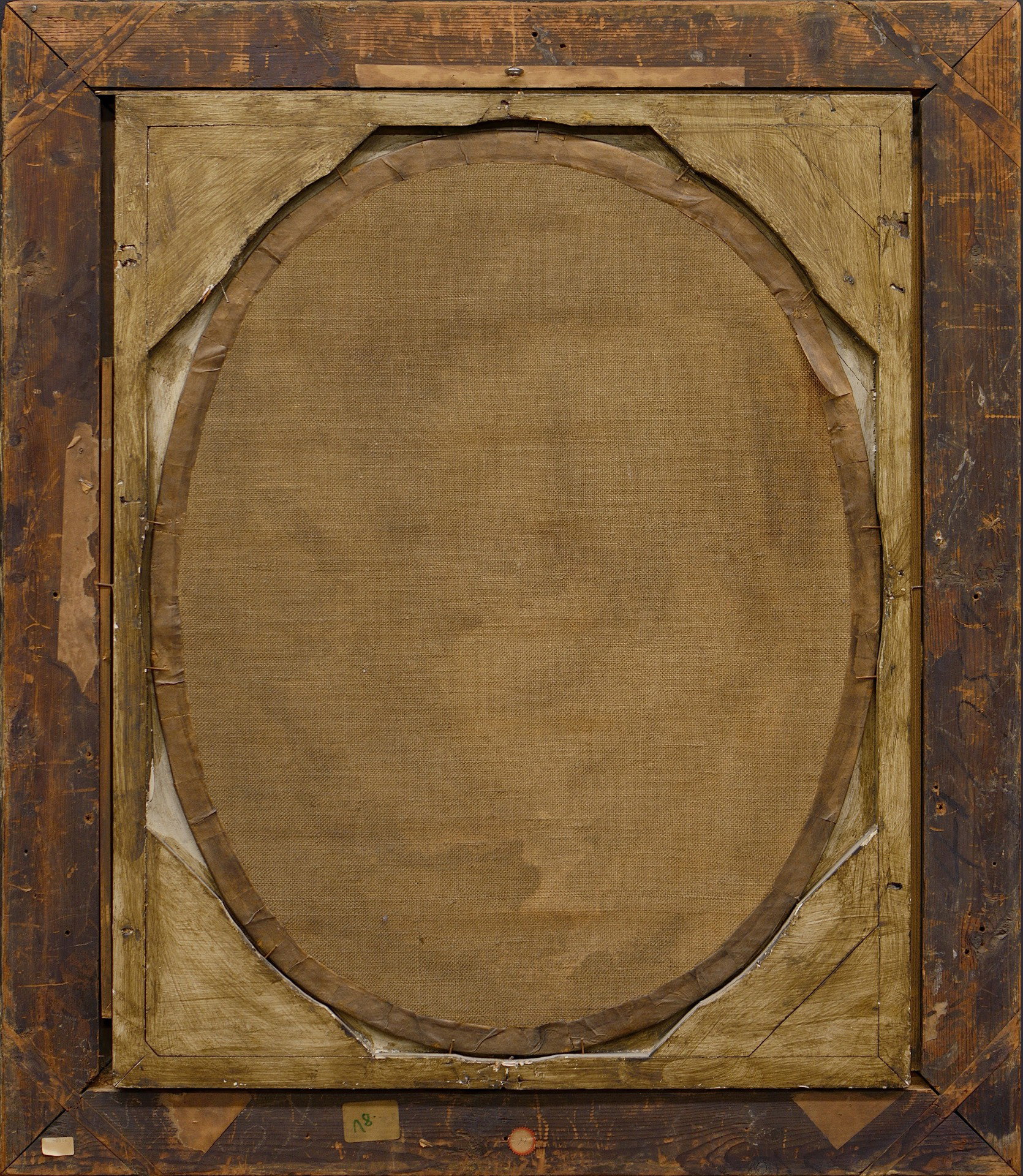
Ca. 1888, oil on canvas laid on panel.
cm. 73.5x58
The work is accompanied by a critical sheet by Prof. Francesco Petrucci.
For comparisons: J. F. Voet, Portrait of Louis de Crevant. Château of Azay-le-Ferron
The portrait depicts an austere gentleman framed in right half-profile, dressed in armor and breastplate, a striking multiple-knotted red fabric bow-tie, and a large brown wig on his head, according to the French-influenced fashion of the 1680s.
Typical of aristocratic military portraiture of the time, derived from the official images of Louis XIV, is the contrast between the severe tone conferred by the presence of the armor and the affected tone of the accessories, expressing strength, power, and elegance.
He is a high-ranking French officer or general, whose superior dignity is demonstrated by the presence in the center of the breastplate of an carving with the Cross of the Ordre du Saint-Esprit (Order of the Holy Spirit), better known as the Order of the Cordon Bleau, i.e., the forked cross bearing the fleur-de-lis of France in the inner corners and the dove of the Holy Spirit in the center. A very exclusive honor conferred by the King of France himself.
From an executive point of view, the portrait can be traced back to the manner of the Flemish portraitist Jacob Ferdinand Voet, one of the greatest specialists in court portraiture of the Grand Siècle, to whom it can be attributed with absolute certainty.
The careful definition of the painting compared to the more extreme pictorialism of the Italian period, confirms a dating of the painting to the artist's last French period, around 1687-89, in accordance with the clothing and identity of the character that is proposed to be established here, as we shall see. The smooth handling of the complexion, evident in the face, and a freer, pictorial and nonchalant execution, with liquid and rapid brushstrokes on a background preparation laid in glazes, present in the armor and accessories, are typical of Voet. The golden highlights of the red border of the breastplate and the metal of the armor itself are pure touches. Vaporous and soft, with a light and nuanced painting, is the definition of the wig.
The comparison with the portrait of Louis de Crevant Duke of Humie'res preserved in the Château of Azay-le- Ferron (oil on oval canvas, cm. 64 x 48, inv. AF 10) and with the version of the three-quarter figure portrait, inserted in a landscape with a battle in the background, preserved at the Muse'e Bonnat in Bayonne, shows remarkable physiognomic similarities.
Various engravings derived from Voet's portrait are also known (Jacques Lubin, Nicolas de Larmessin, etc), which document the importance of the high-ranking officer and dignitary of the court of Louis XIV.
The portrait under examination seems in fact to propose a further pose of the famous French general posed a few years from the first sitting, referable to 1685.
This is evident from the physiognomic details: the upturned nose, the severe expression with a deep gaze, the dimple on the chin, the full lips, and the cheeks marked by wrinkles of character. The duke in this case appears slightly fattened and plump, with a more ovalized face.