17th-18th century
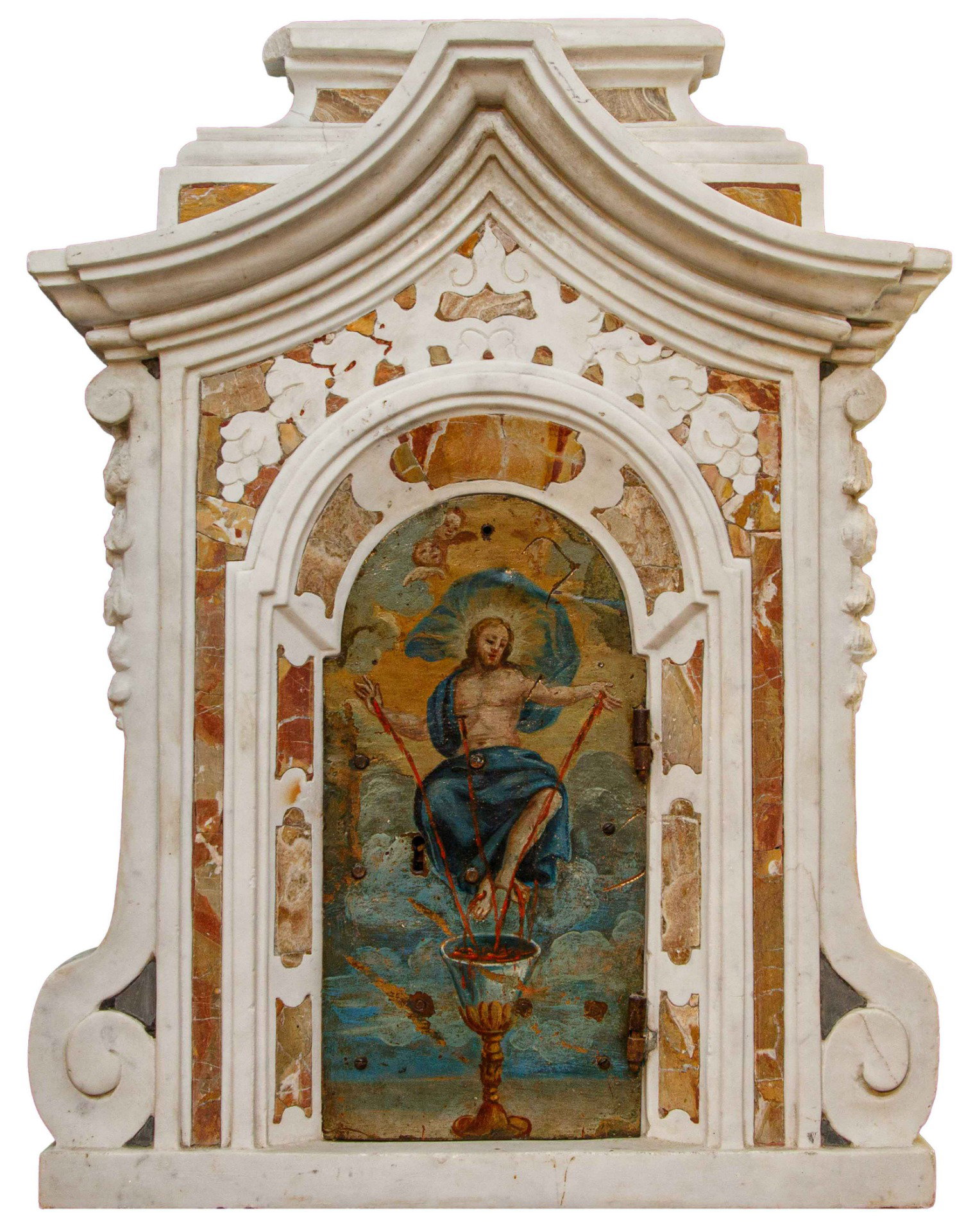
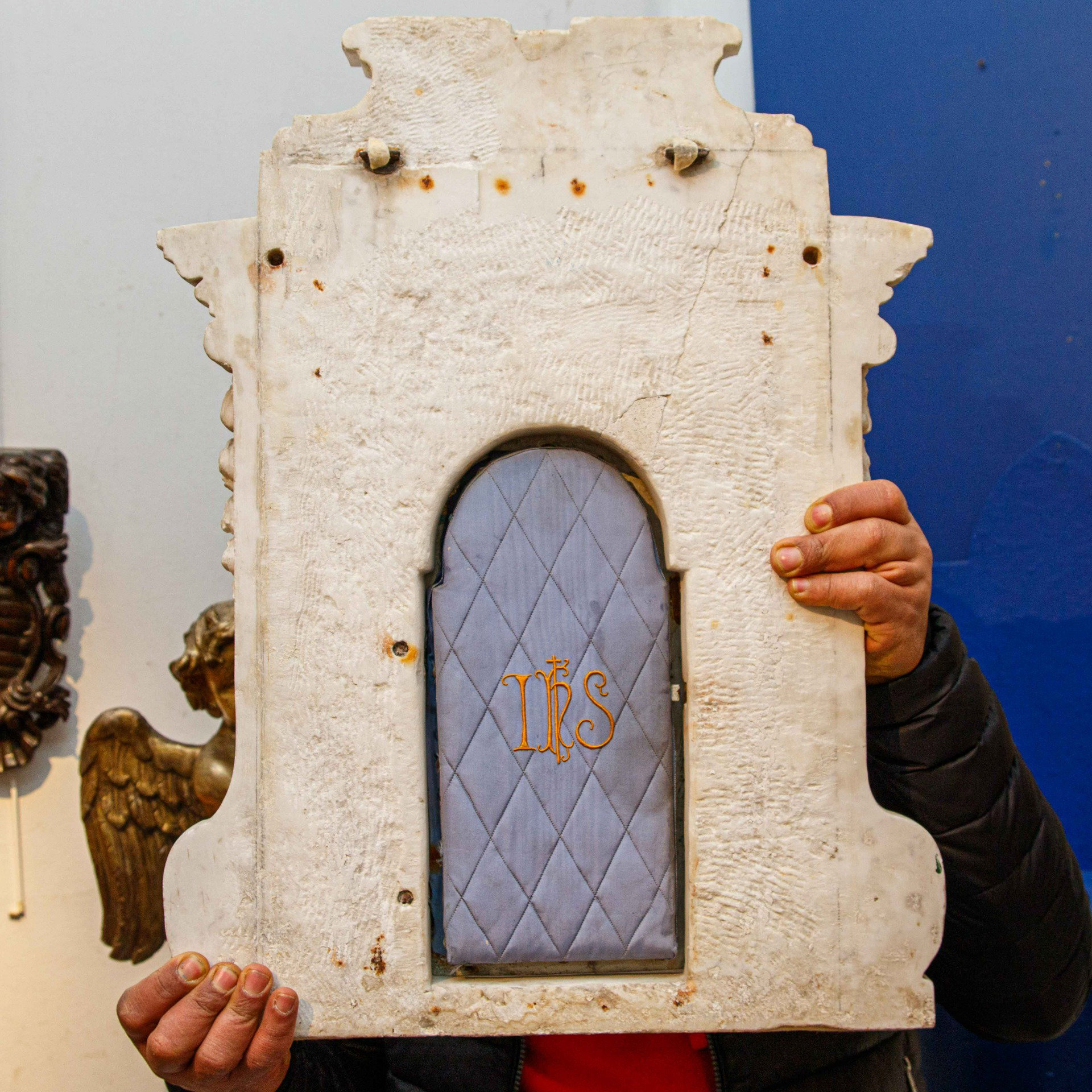
Niche frame with Resurrected Christ
Ancient and reclaimed polychrome marbles, 60 x 46 x 10 cm
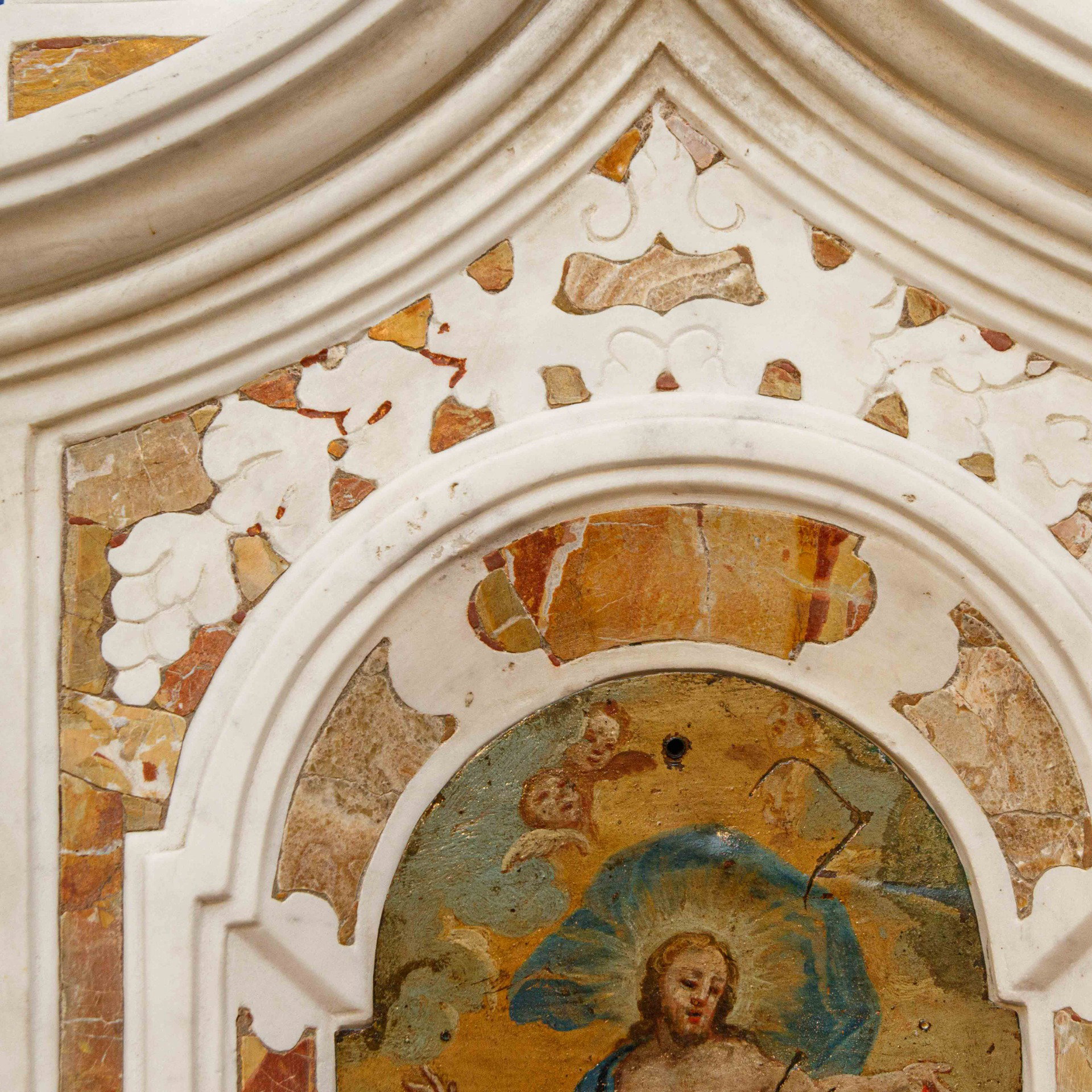
The aedicule with an architectural frontal is made of precious marbles, probably recovered from lavish buildings or elaborate ancient objects. The marbles used appear to be giallo antico, quarried since Roman Republican times from Numidia, and red Sicilian marble, extracted from quarries in the mountains behind the village of Castellammare del Golfo, in the Trapani area. Giallo antico marble was already used by the Numidians from the 2nd century BC onwards. Pliny attributes its introduction to Rome to Marcus Aemilius Lepidus in 78 BC, who used blocks of it for the thresholds of his house. Suetonius reports that the people erected an honorary column of Numidian marble in the Roman Forum dedicated to Caesar; Augustus used it for the columns of the peristyle of his house on the Palatine Hill, along with portasanta marble and pavonazzetto marble, and also made extensive use of it in his Forum. The quarries soon became imperial property, and this variety of marble was widely used for column shafts and wall and floor coverings in public buildings in cities closer to the Mediterranean coast, and was particularly exported to the Italian peninsula. It was also used for statues of barbarians or wild beasts, in relation to its origin. In the 3rd century, the quarries were probably exhausted, and giallo antico was gradually replaced by yellow breccias of other origins and of lesser value. Red Sicilian marble, also used since Roman Republican times, is frequently used in Renaissance and Baroque Sicilian architecture.
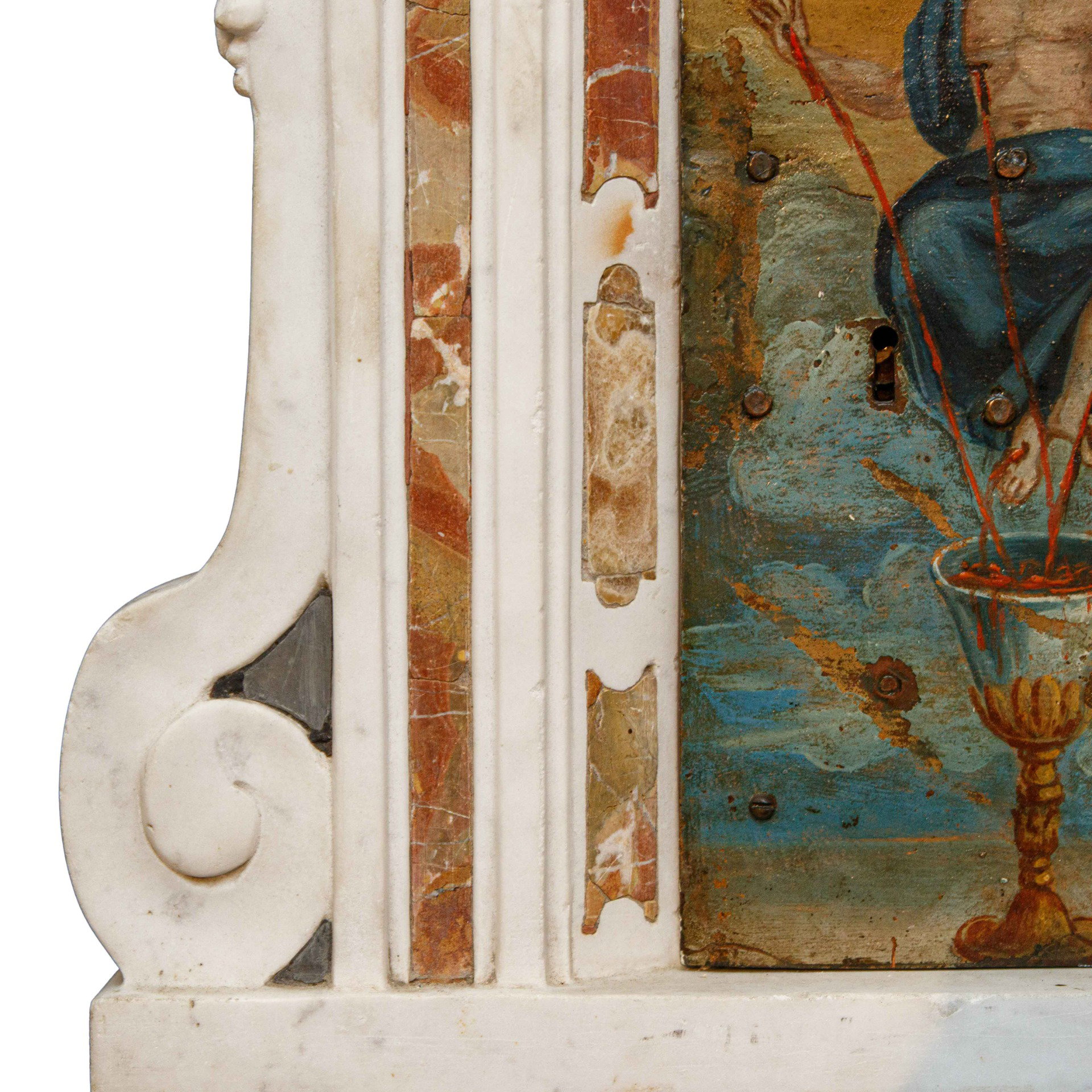
The structure of the aedicule recalls the elaborate and eclectic architecture of Baroque Italy, often characterized by volute details found on the base of this elegant object.
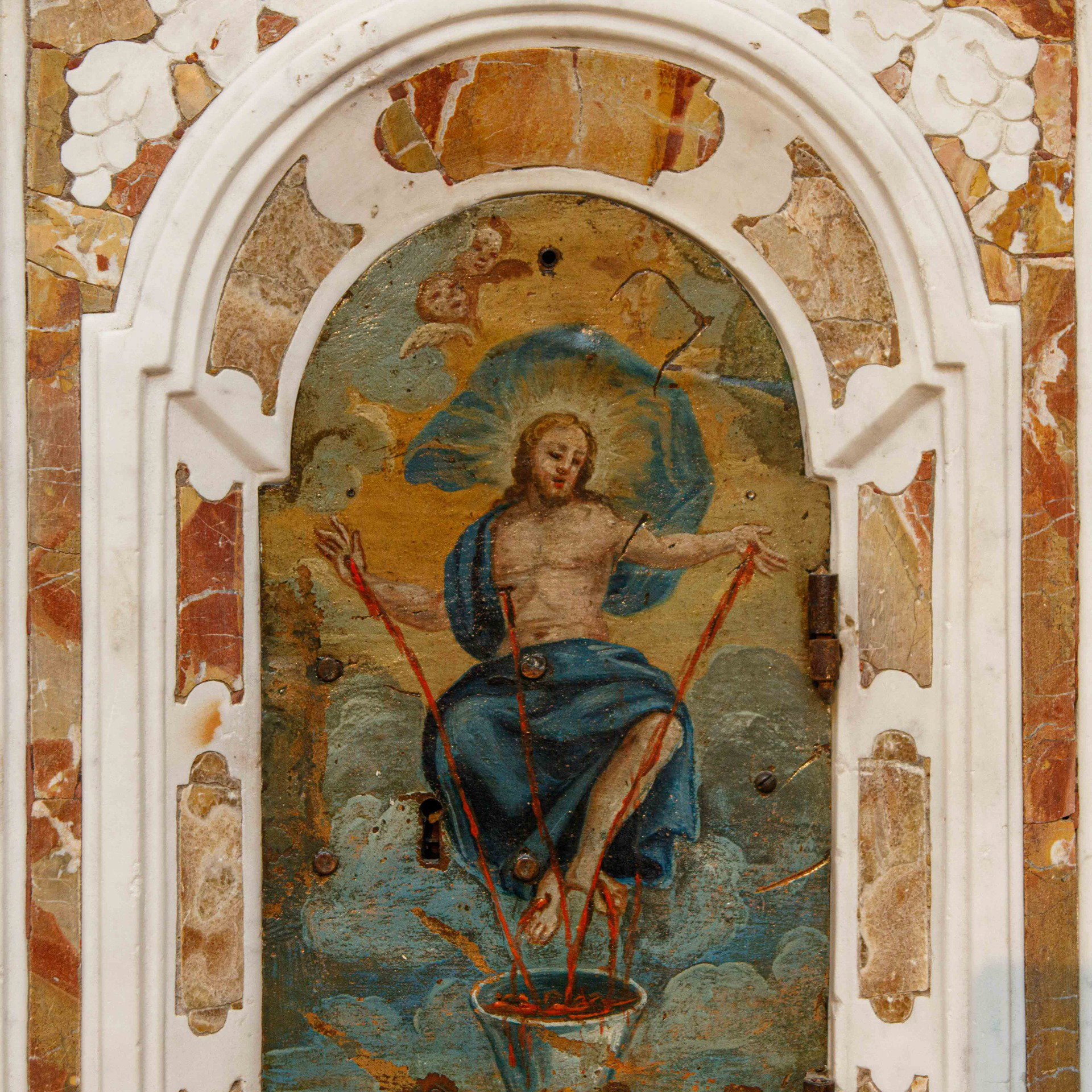
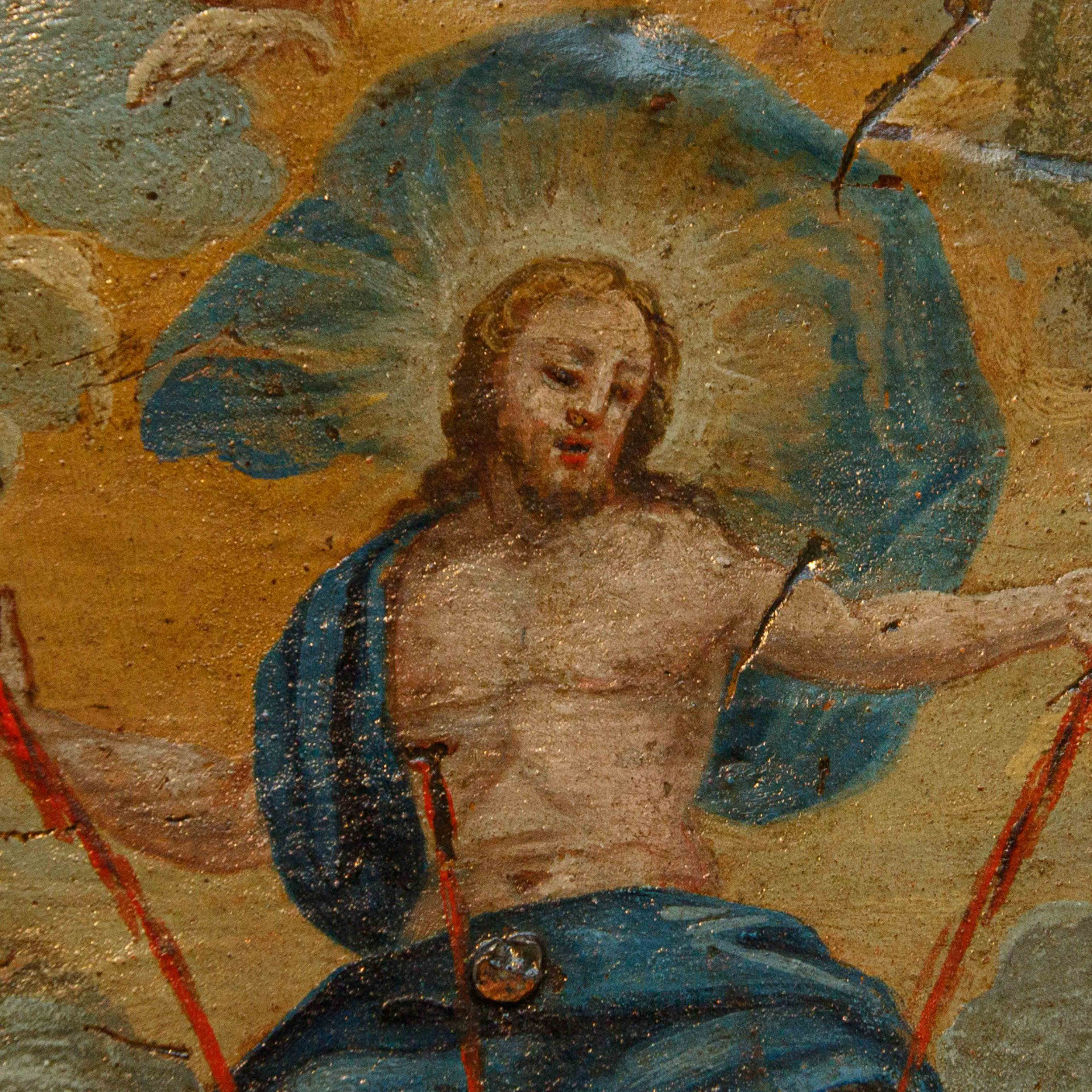
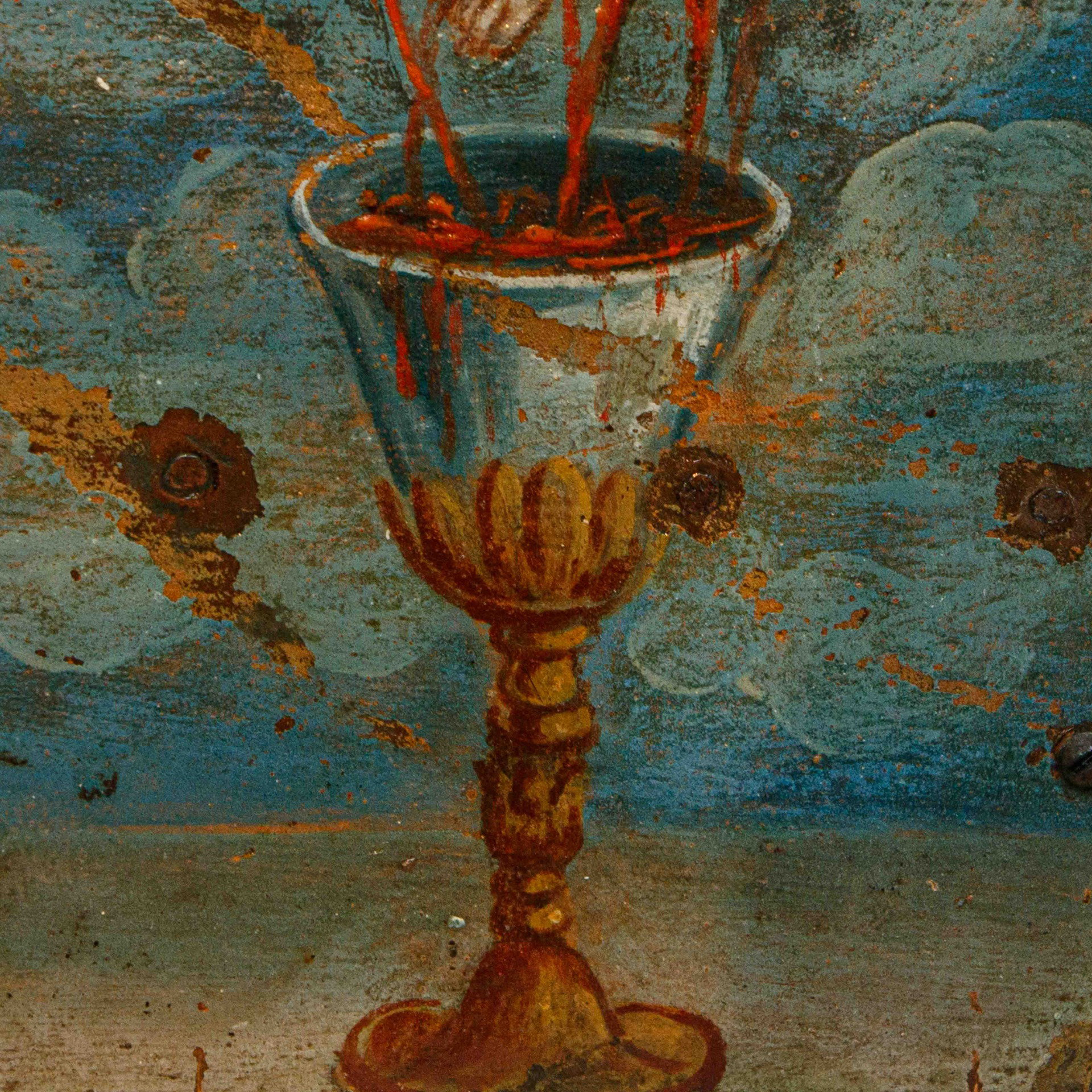
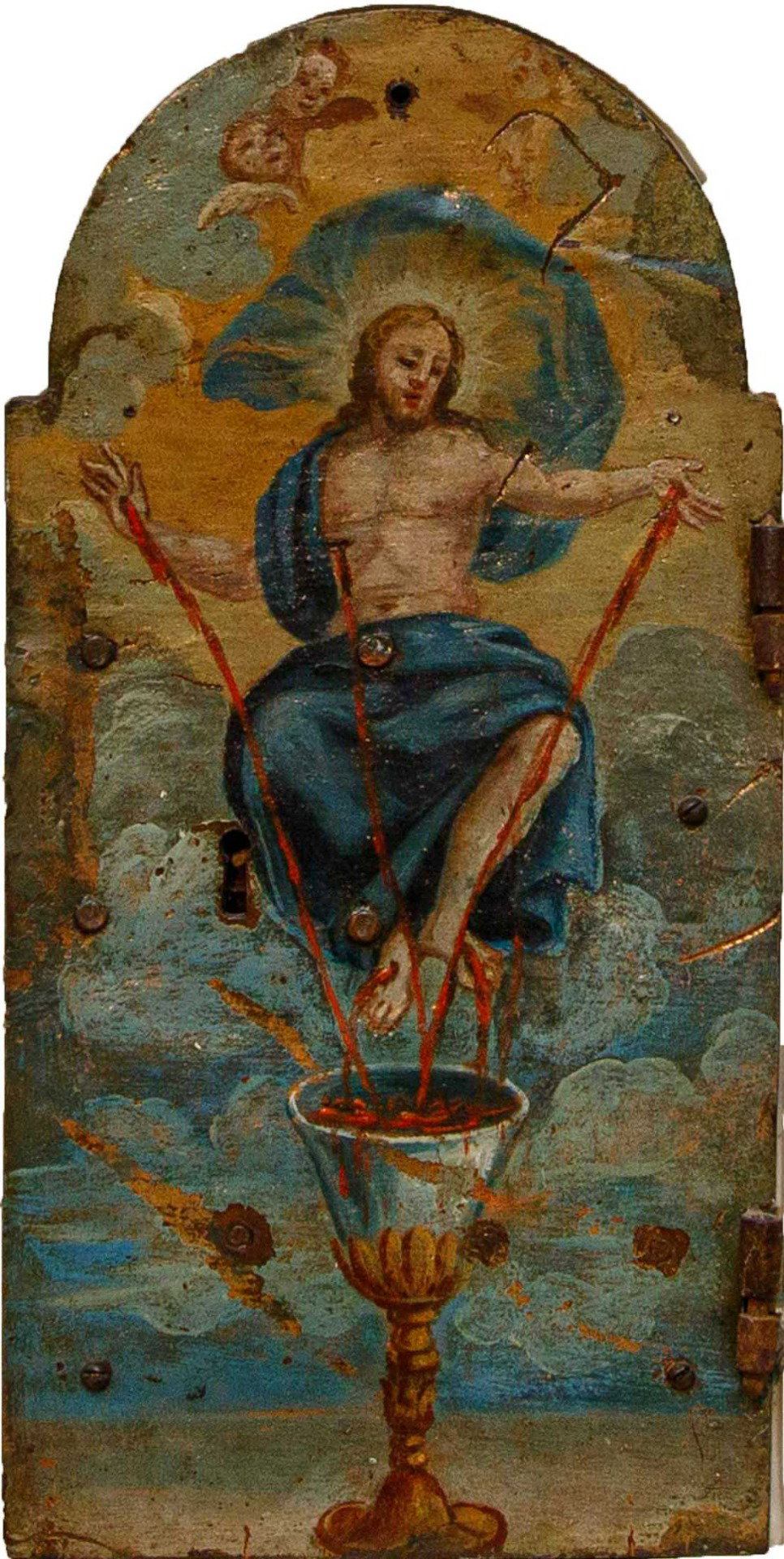
A painted metal door is placed at the closure of the aedicule, depicting a chalice of the Eucharist filled with the blood of Christ: this iconography, with limited visual fortune, finds limited diffusion in Southern Italy in the 18th century.