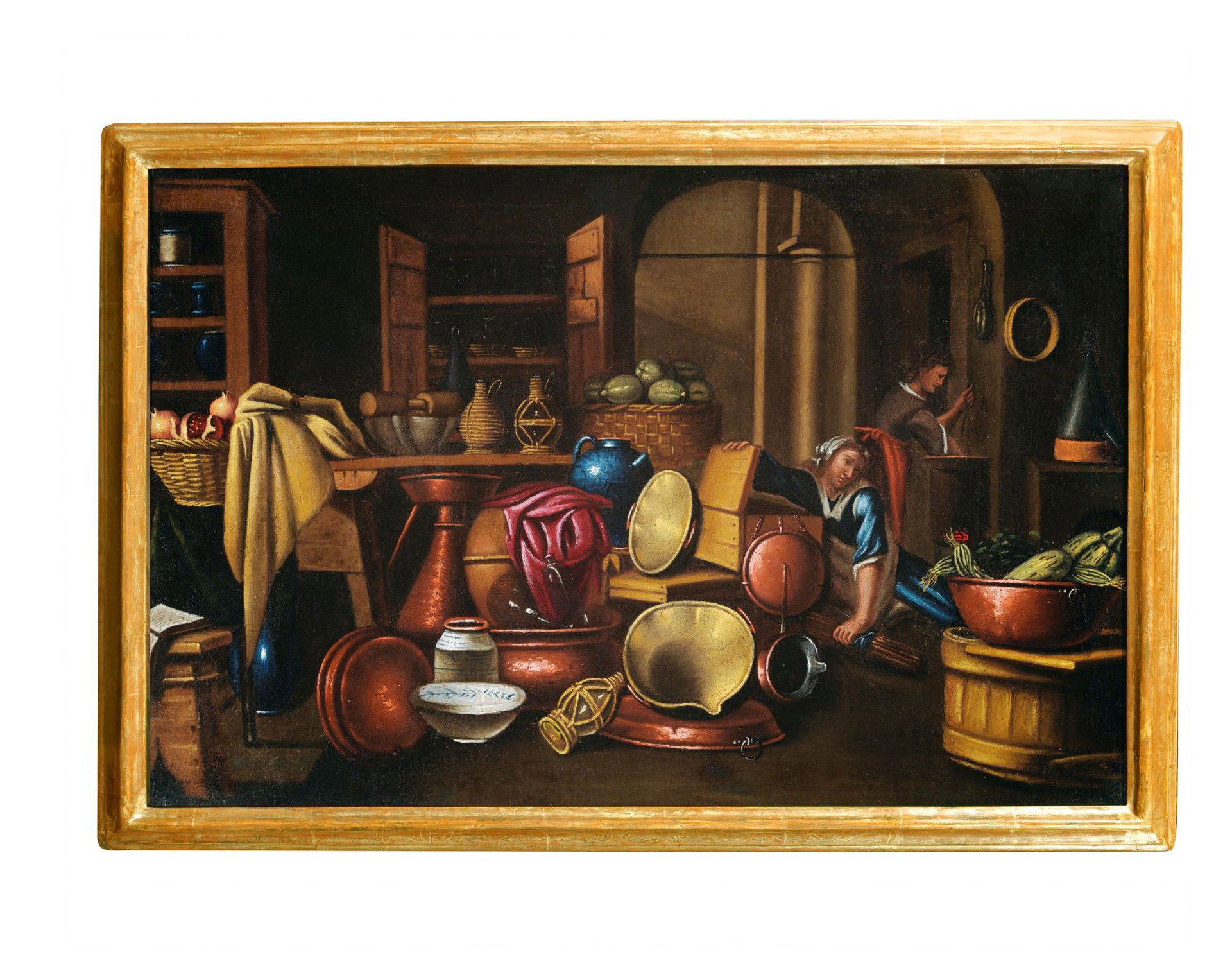
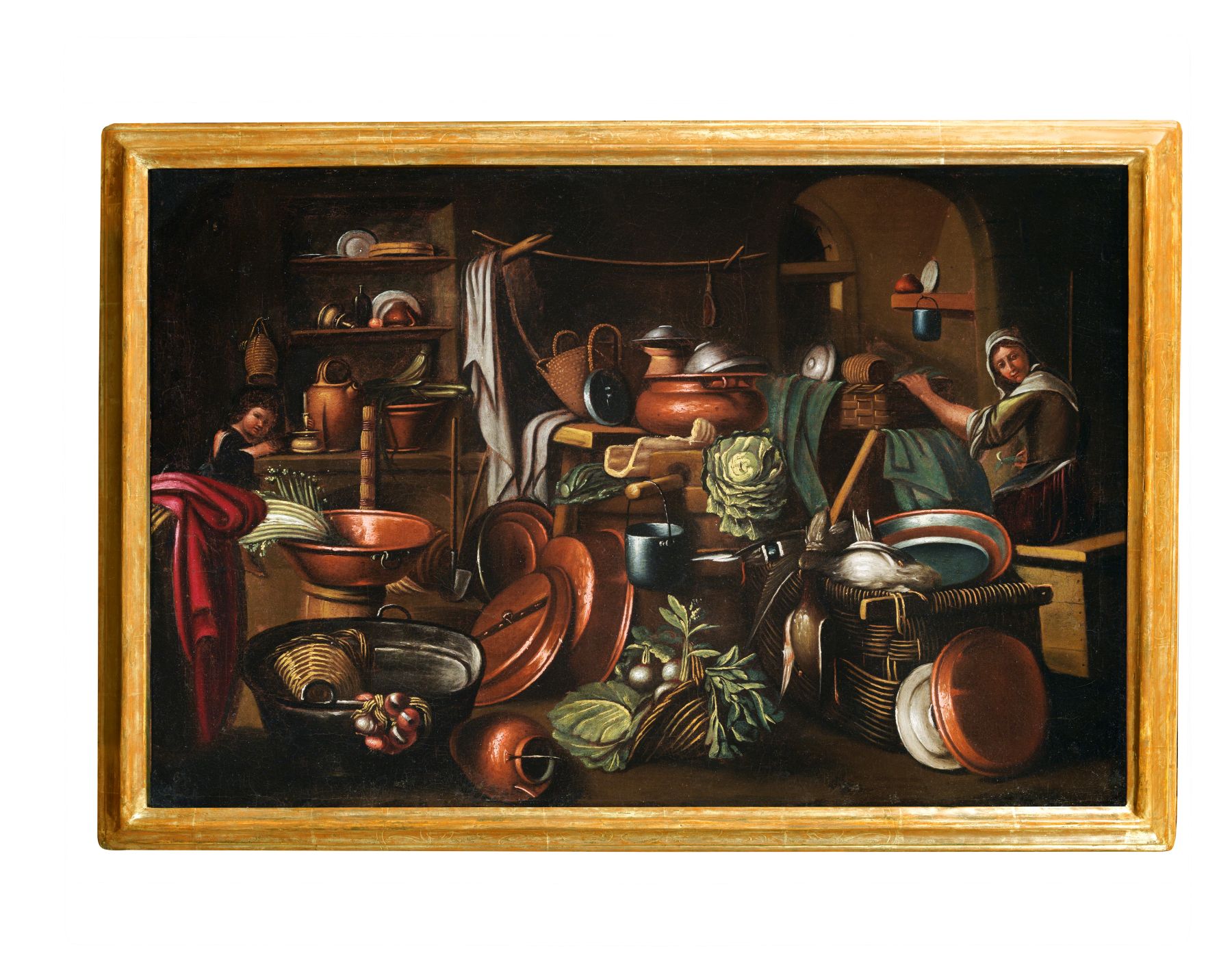
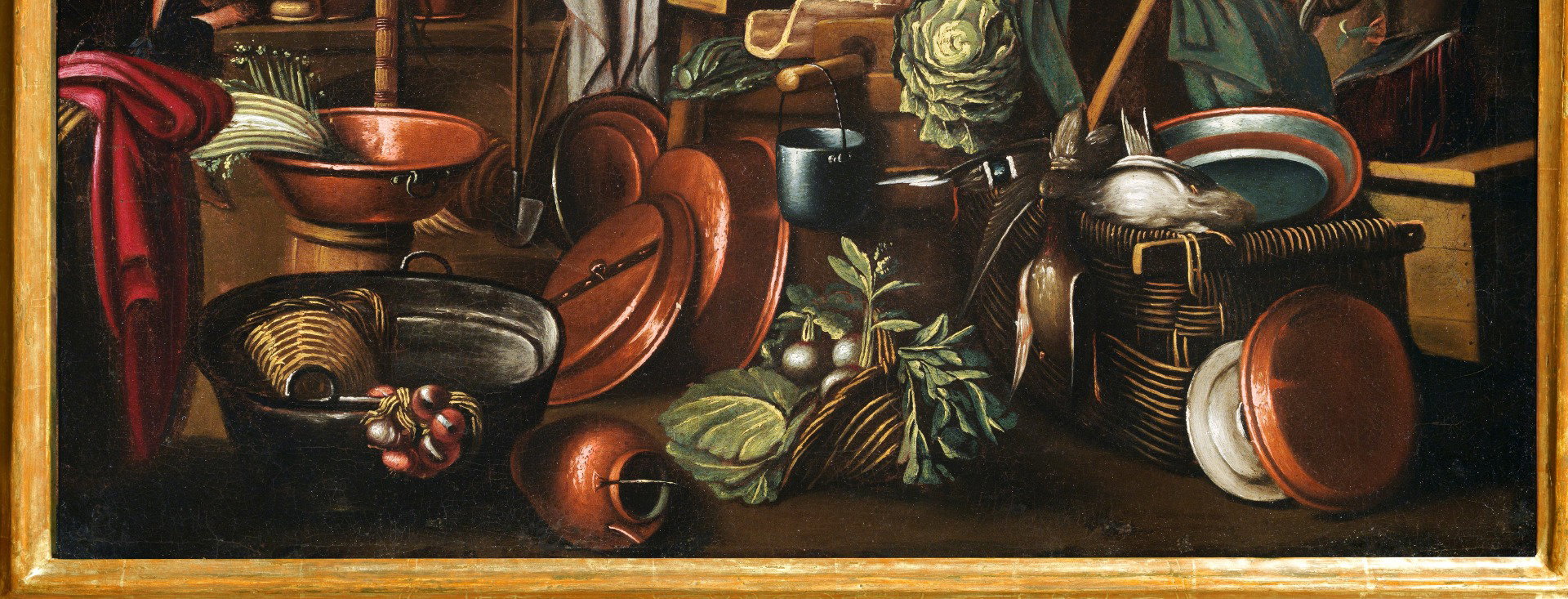
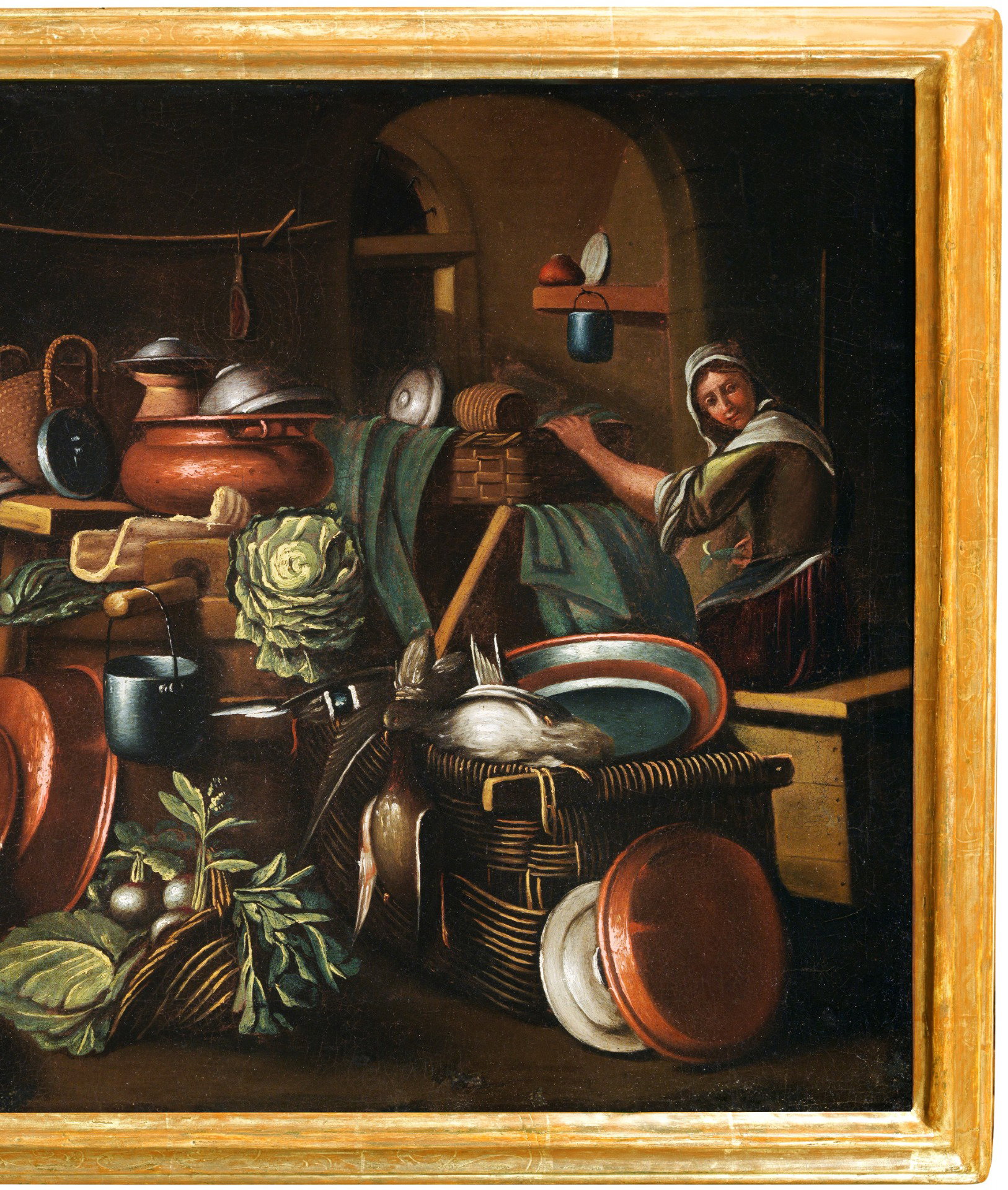
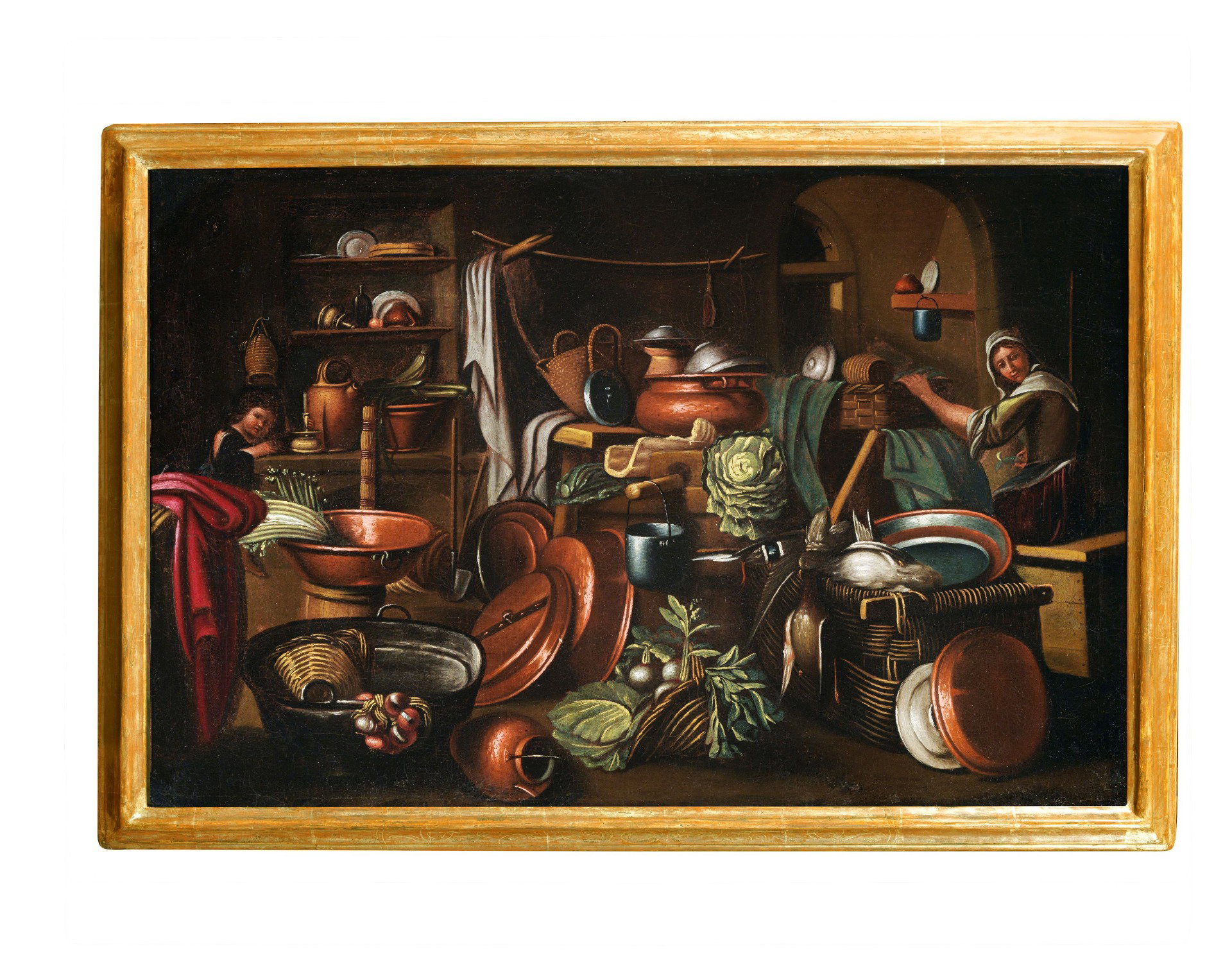
Pair of paintings, oil on canvas, measuring 48 x 73 cm without frame and 58 x 83 cm with frame, depicting two curious kitchen interiors by the painter Antonio Crespi (Bologna 1704 – 1781).
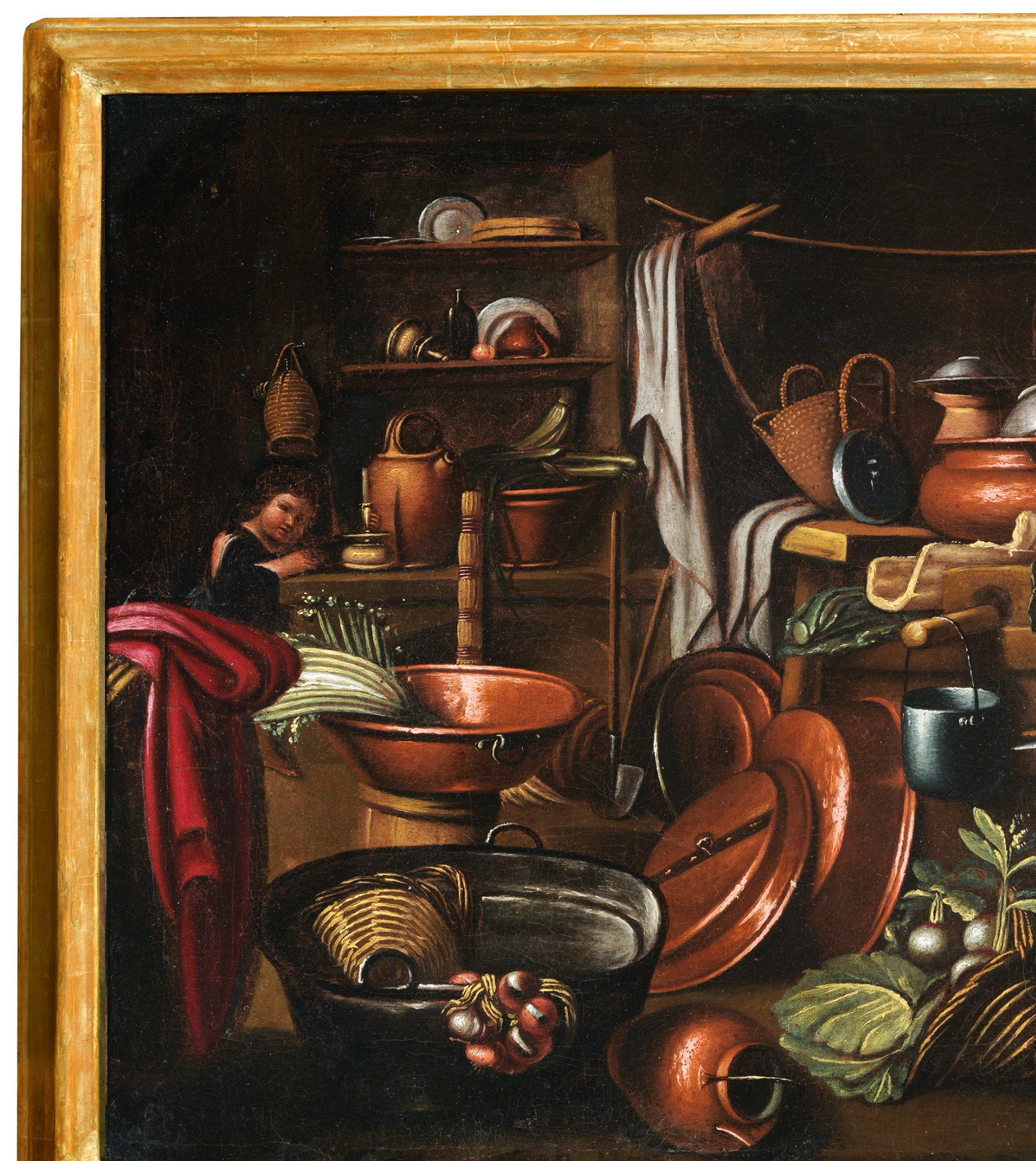
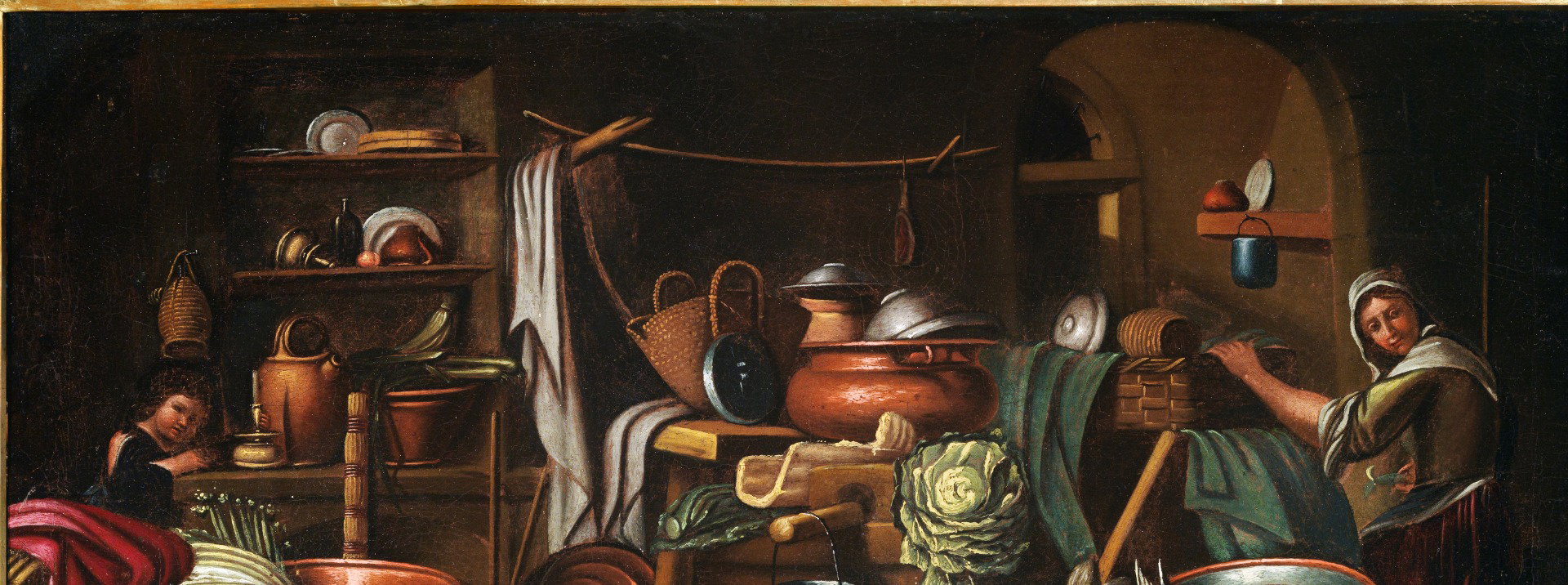
The paintings we are examining are shining examples of 18th-century Emilian painting and are undoubtedly attributable to the painter Antonio Crespi (Bologna 1712 - 1781); the painter depicts a theme very dear in the painting of the 17th and 18th centuries and with a completely personal taste puts pots, jugs, plates and various foodstuffs in the foreground; everything is put on display and not depicted as a kitchen was really arranged. It is no coincidence that the housewives who work seem to entrench themselves behind this barrier of objects.
Antonio Crespi, son of the great painter of the early 18th century. Giuseppe Maria, grew up in his father's workshop and strove to assimilate his style as it evolved in the 1920s of the century, supported and greatly helped by an approximation to the truth that was far superior and significant.
Works executed by Antonio alone are fully and easily explained by that somewhat easy and rough cursive script that immediately catches the eye, but also by that feverish commitment in the ornaments and minute descriptions of clothes and objects or by the physiognomic traits.
The paintings in question are an important document of Crespi's best vein because he exhibits a luministic impetus of brilliant ability; this happens because undoubtedly the best part of our painter's activity is that relating to portraits of both people and objects, which he carried out with constant commitment, achieving a peculiarity of manners that marks a significant phase in the development of the genre, with a lucid anticipation of the executive finesse of the neoclassicists, also due to a breadth of mixtures and a perspicacity of definition that are all typical prerogatives of great Italian painting and of Antonio himself.
The two canvases that we are observing here seem to refer to the naturalistic taste of the last decades of the eighteenth century thanks to a diligent and very accurate painting of these two kitchens and a meticulous painstaking in the depiction of housewives.
Crespi was a great lover of humble painting, that is, of canvases depicting foods or objects related to the kitchen, giving us the image of a self-confident, cheeky artist, free from pre-arranged schemes; indeed, he develops a new way of painting capable of highlighting the taste of tactile values.
The paintings and art objects published here are my exclusive property and therefore are always available to be viewed in person, by appointment, in my exhibition venues located in Sanremo and Brescia.
The work, like all our objects, is sold accompanied by a FIMA photographic certificate of authenticity and lawful origin; this document identifies the object adding value to the article.
We personally take care of and organize the packaging and shipping of works of art with insurance worldwide.
Dr. Riccardo Moneghini
Art Historian