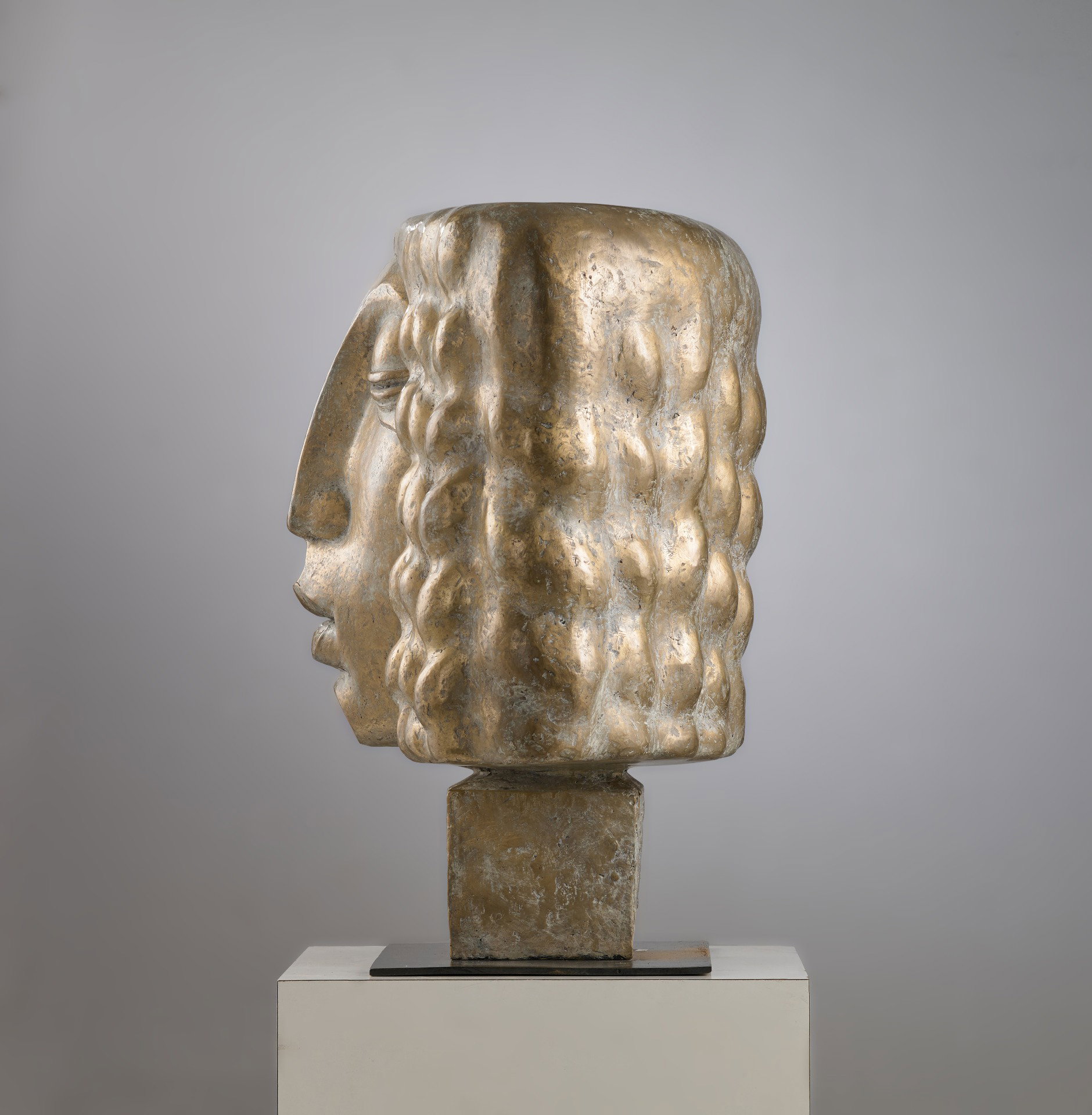
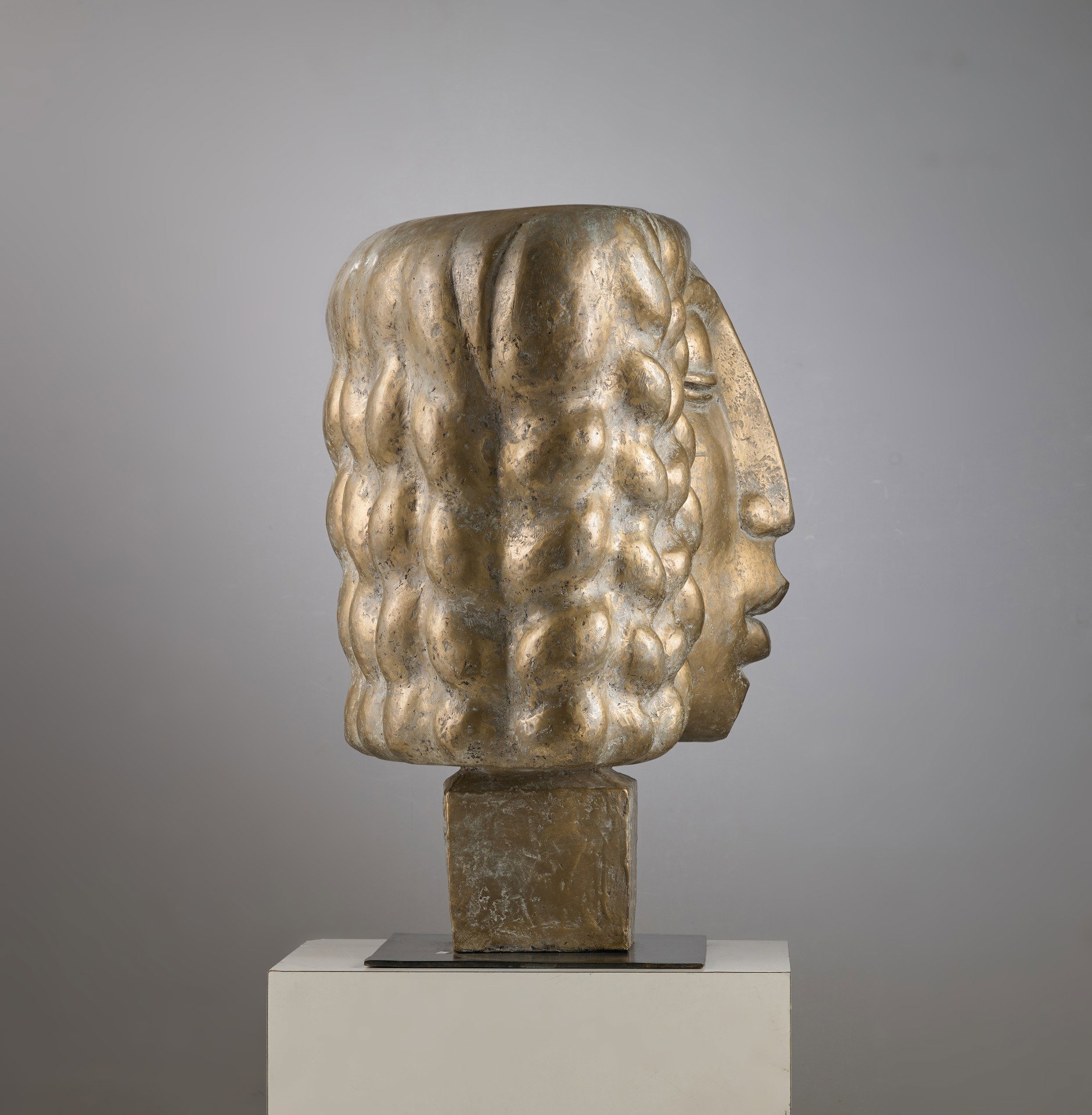
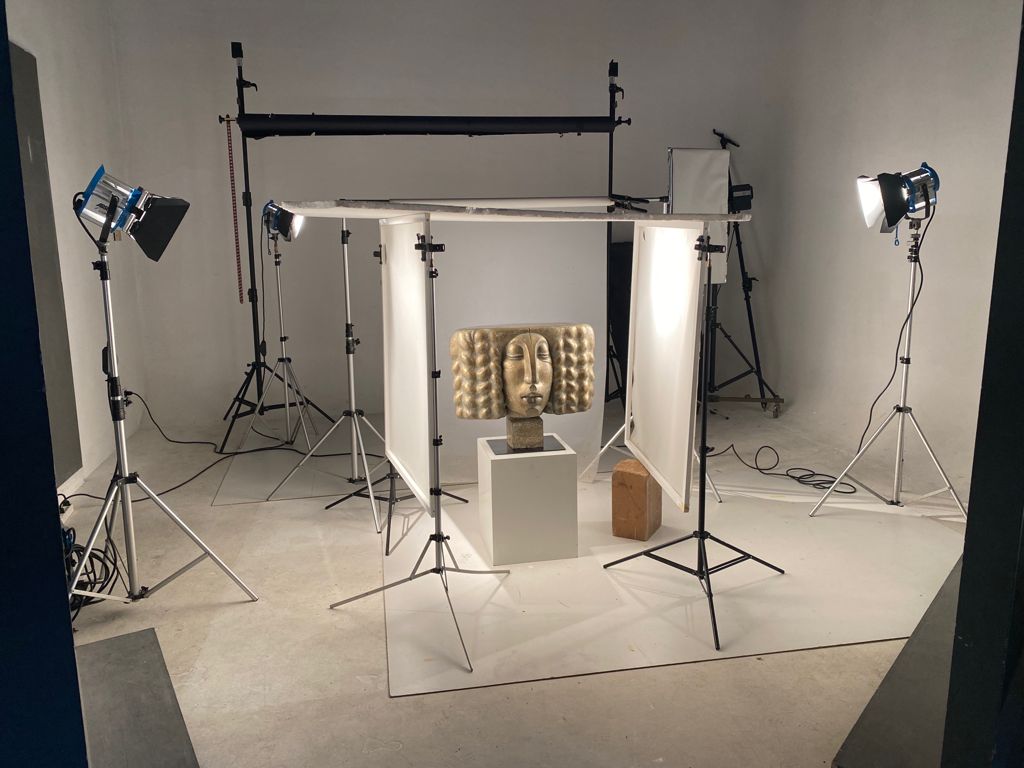
Oxidized and polished bronze sculpture
Work by Master Giuseppe Rivadossi (Nave, 1935)
Measurements: cm 57.5x74x38
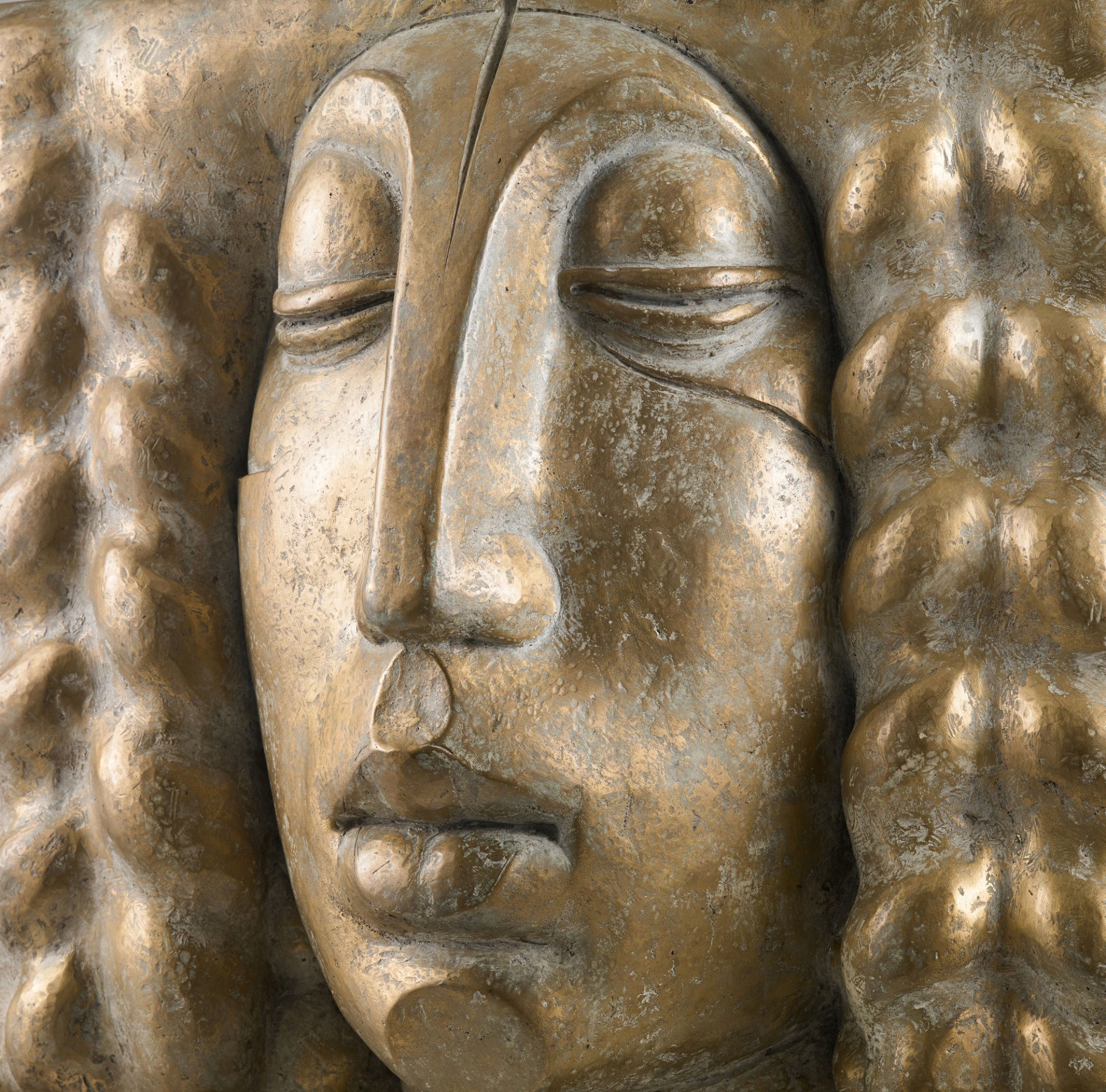
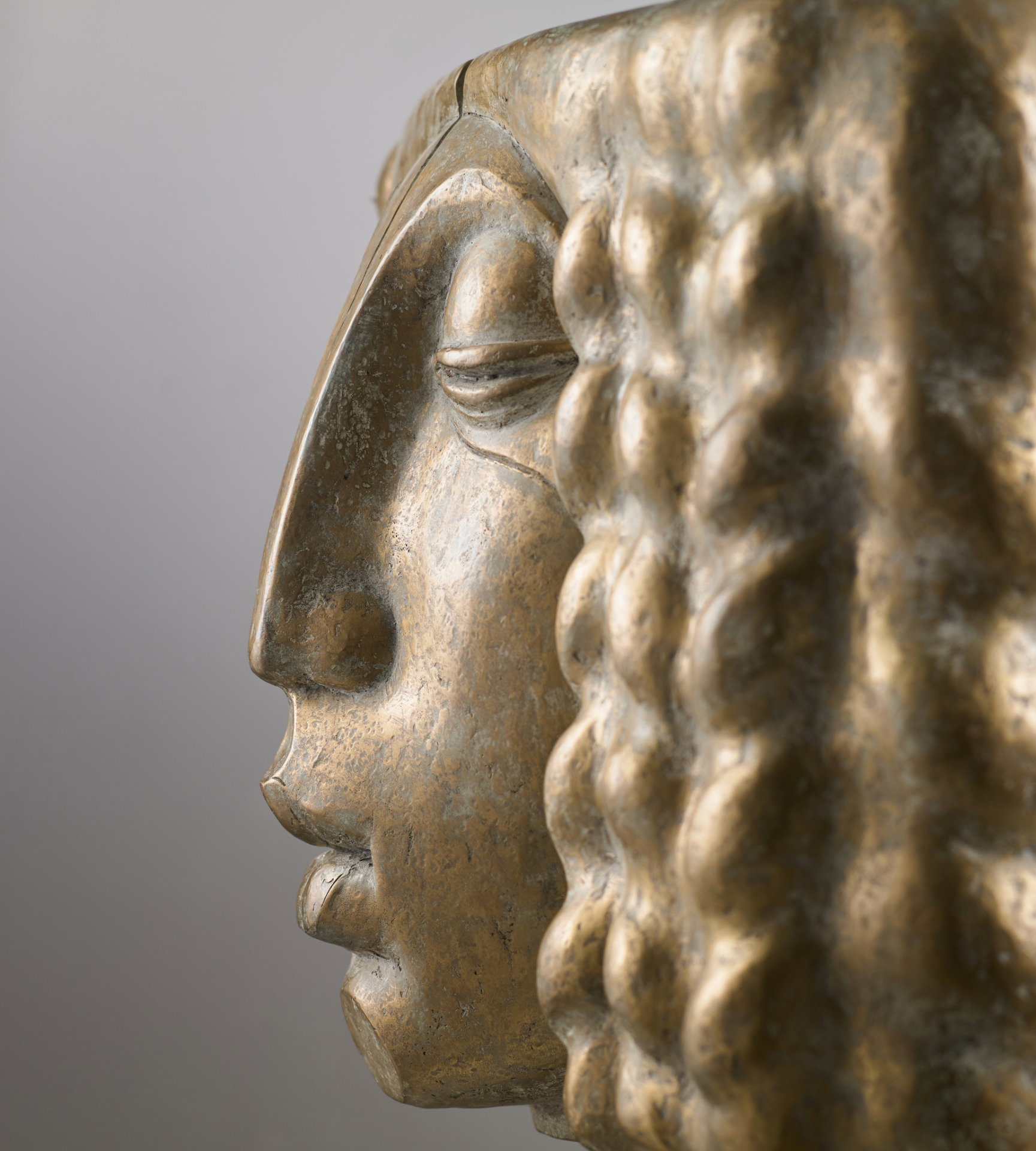
Head of a woman with thick, curly hair, captured, with her eyes half-closed, in a moment of serene and profound meditation.
The artistic representation, of large dimensions and with a magnetic presence, involves the viewer with its beauty and transmits a sensation of deep inner serenity.
Giuseppe Rivadossi
Having inherited an interest in art from his father Clemente, Rivadossi officially began his artistic career in the 1960s, approaching the study of sculpture in bronze, wood, and terracotta, and taking an interest from the beginning in domestic space, which would later become one of the key themes of all his work.
In the 1970s, thanks to the attention of friends such as Francesca Amadio and important gallery owners such as Renato Cardazzo, Elio Palmisano, and Alfredo Paglione, he began his exhibition season as a sculptor, which saw him exhibit in various national and international artistic events such as the Milan Triennale (1974), the Menton Biennial (1976), the Rotonda della Besana (1980), the Palazzo del Ridotto in Cesena (1996), and the Galleria d'arte moderna Palazzo Forti in Verona (2005).
Giovanni Testori, Vittorio Sgarbi, Roberto Tassi, Gianfranco Bruno, Marco Vallora, Ermanno Olmi, Giorgio Cortenova, Piercarlo Santini, and Mario Botta, among others, have written about Giuseppe Rivadossi's work and poetics.
Giuseppe Rivadossi says:
I have seen wood being worked since I was a child.
I have seen forests grow and trees of all sizes and qualities being cut down.
I saw my father transform these woods into wonderful barrels and beautiful carts for the neighboring farmers.
Until twenty or twenty-five years ago, where I now live, the relationship between man and man, man and nature, was still based on an ancient ethic.
Then industry arrived and with it began the looting.
The hope of a less hard life soon turned into a bitter realization.
The new technology, which was only supposed to be a more perfected tool, turned out to be a tool of frustration and general disintegration.
Now, in this situation, I feel more and more deeply the need to express that sense of fundamental unity of existence, as a basic idea not to be lost or to be rediscovered at all costs every day and in everything.
I consider the environment in its totality of nature and human intervention, the unique work of art to which everything belongs and in which we all are.
I believe that (Art) is all the work of man and, speaking of my work (which I consider for what it is, only a very small part of that unique work in which we all, for better or worse, operate and live), I will tell you that I too, like my father, started by building furniture and various things in wood for my people.
Going forward, I realized that these things had to be built according to deep and precise needs.
So I found myself working on containers (furniture) and sculptures with an appearance that was increasingly in contrast with the environment that was degenerating, transforming, and impoverishing itself, and I realized that these things of mine were taking on ever greater significance, both for the way they were built and for the material used. I then partly abandoned the function of containing for a different function.
So I arrived at these last images, in which the idea of a different way of living, of living inside (inside life, inside the things of life) is figured through structures that I create starting from precise planning and recovering the common technique of carpentry as a primary language.
Now these images, these sculptures, and these pieces of furniture are born from the depths of my experience as a song, of that hope and of that only alternative that lies before us, more than of nostalgia for the past.
Giuseppe Rivadossi
The work, like all our other objects, is sold with certificates of authenticity and lawful origin.
We personally take care of and organize the packaging and shipping of works of art with insurance all over the world.