SOLD
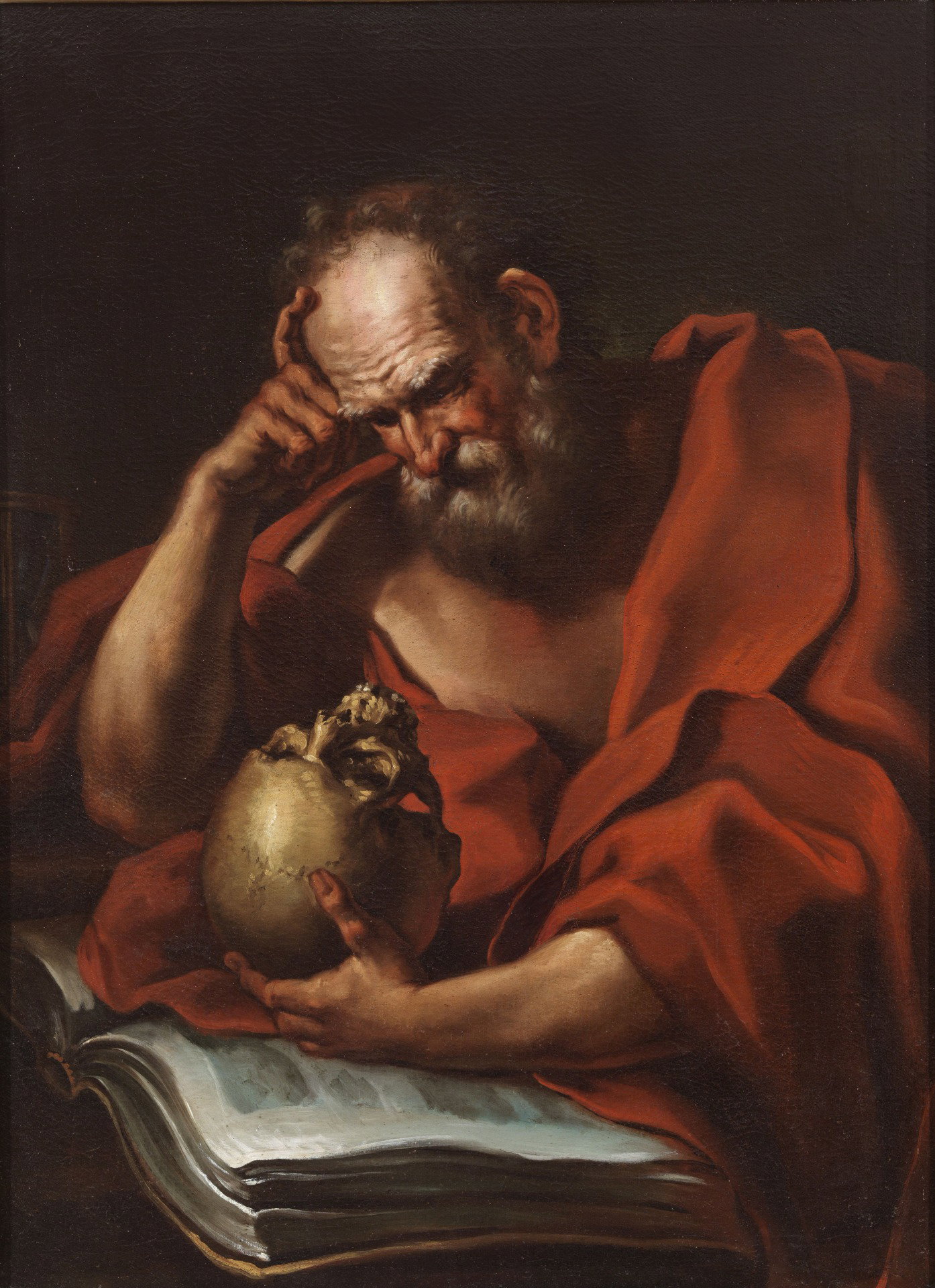
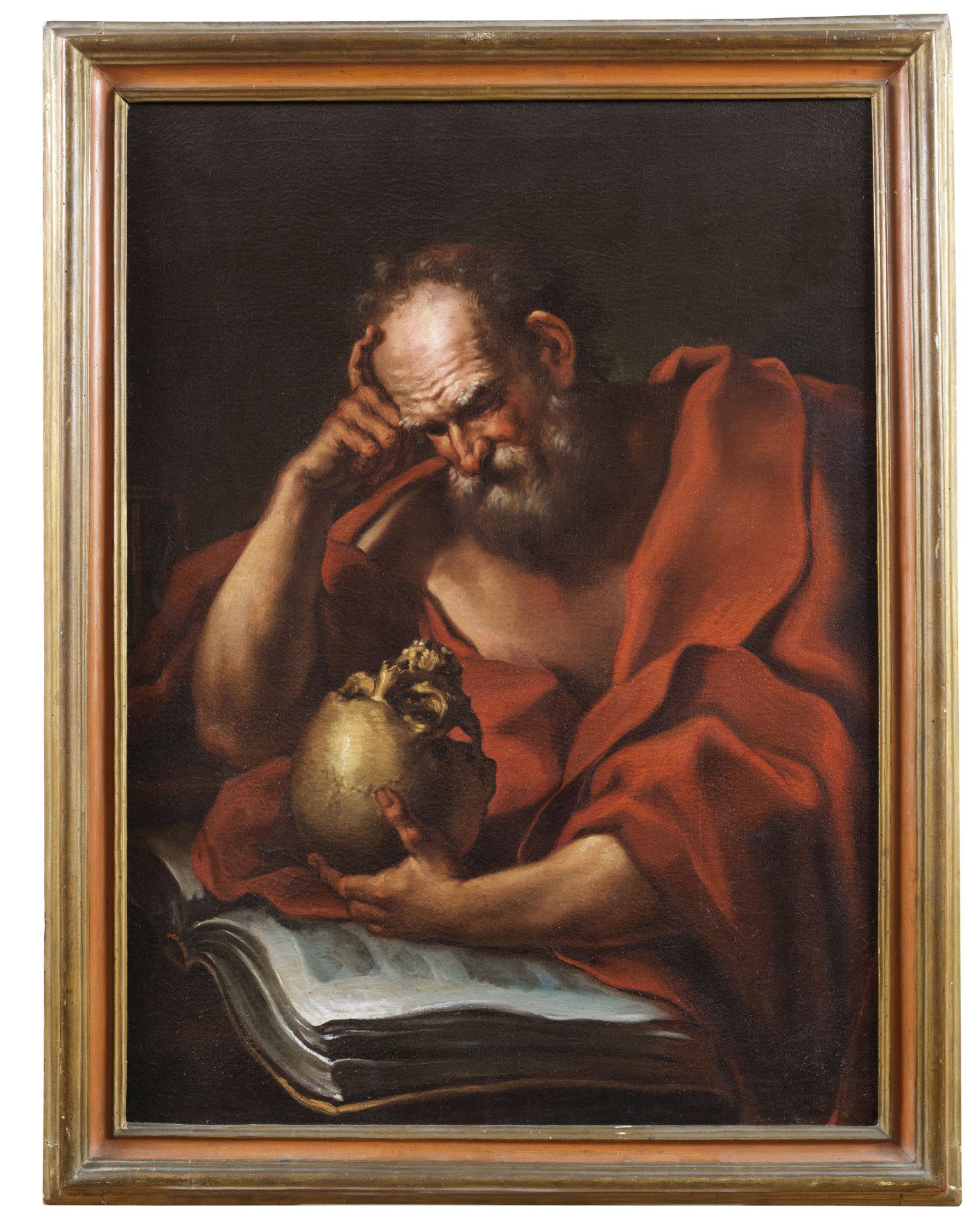
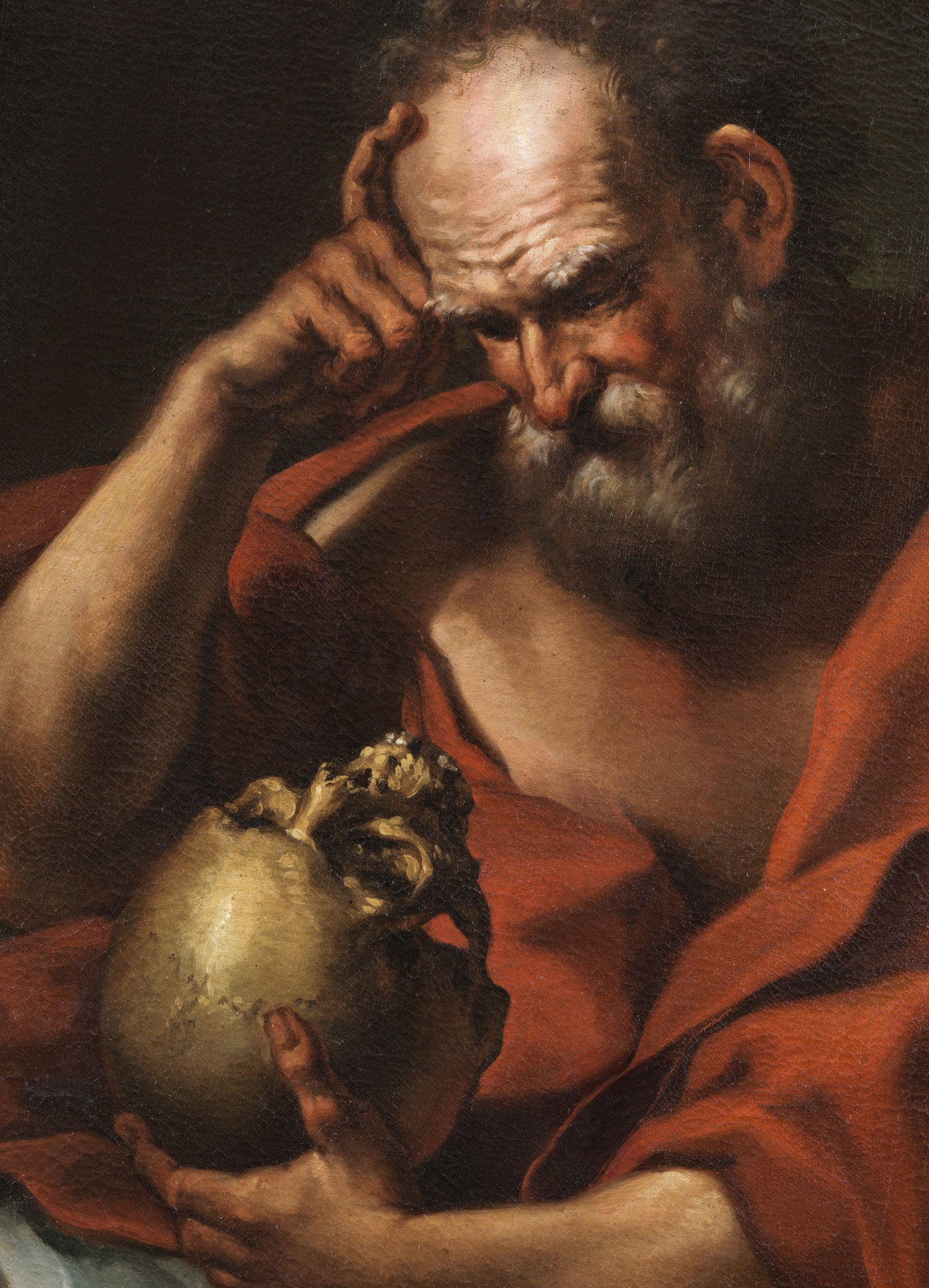
Oil on canvas painting, measuring 90 x 73 cm without frame and 112 x 86 cm with a marvelous contemporary frame, depicting Saint Jerome by the painter Giovanni Battista Merano (Genoa 1632 - Parma 1698); we recognize him by the ample red cloak and because he is captured while reflecting on the transience of earthly things, holding a skull in one hand, resting on a volume.
He lived long after Peter, born in Stridone in 347 and dying in Bethlehem around 419/420: he was a scholar, as he is credited with the first version of the Vulgate, that is, the translation of the Bible into Latin - written in order to make it more widely accessible - and an anchorite, founder of male and female monasteries, advocate of ecclesiastical celibacy.
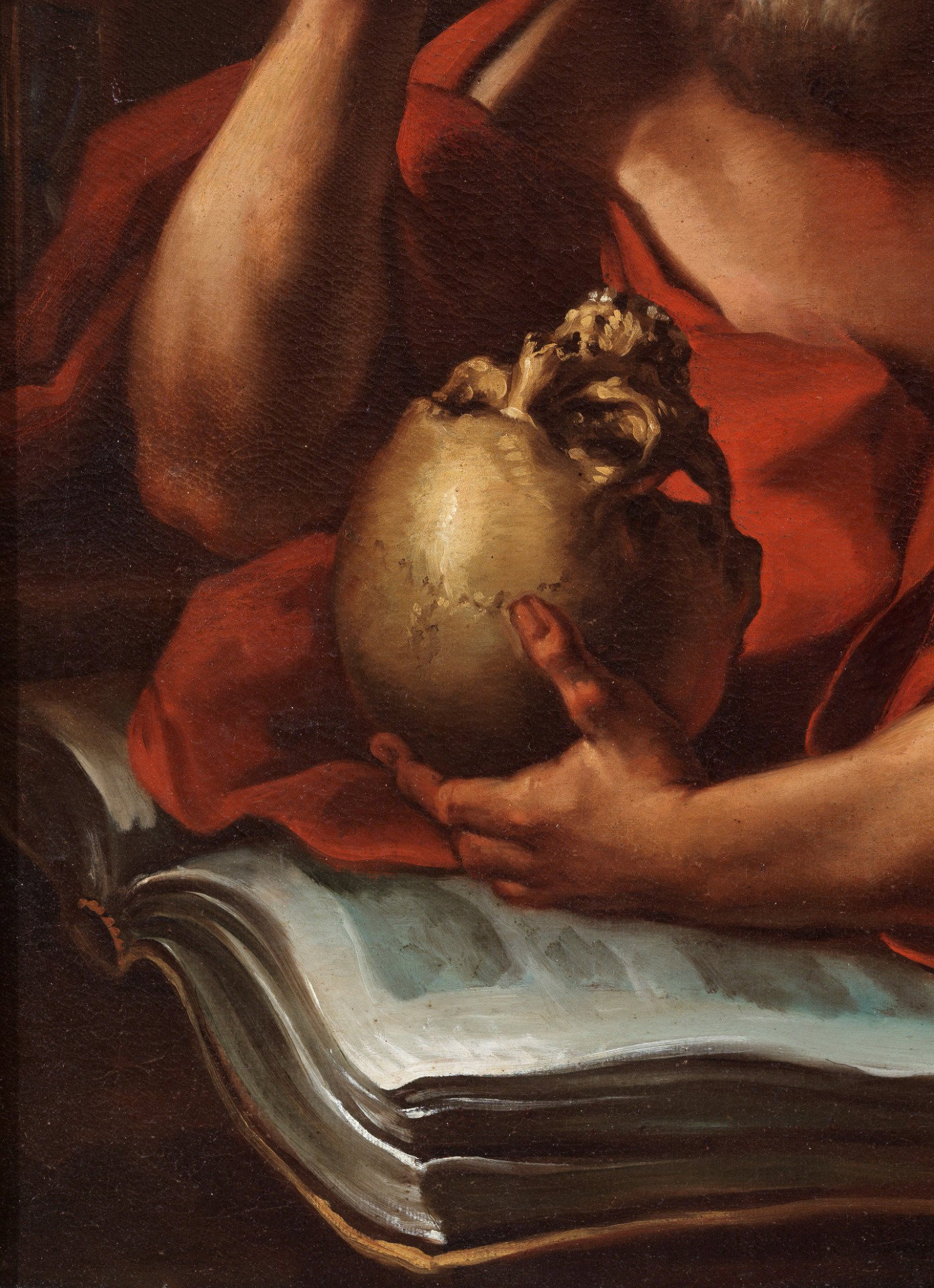
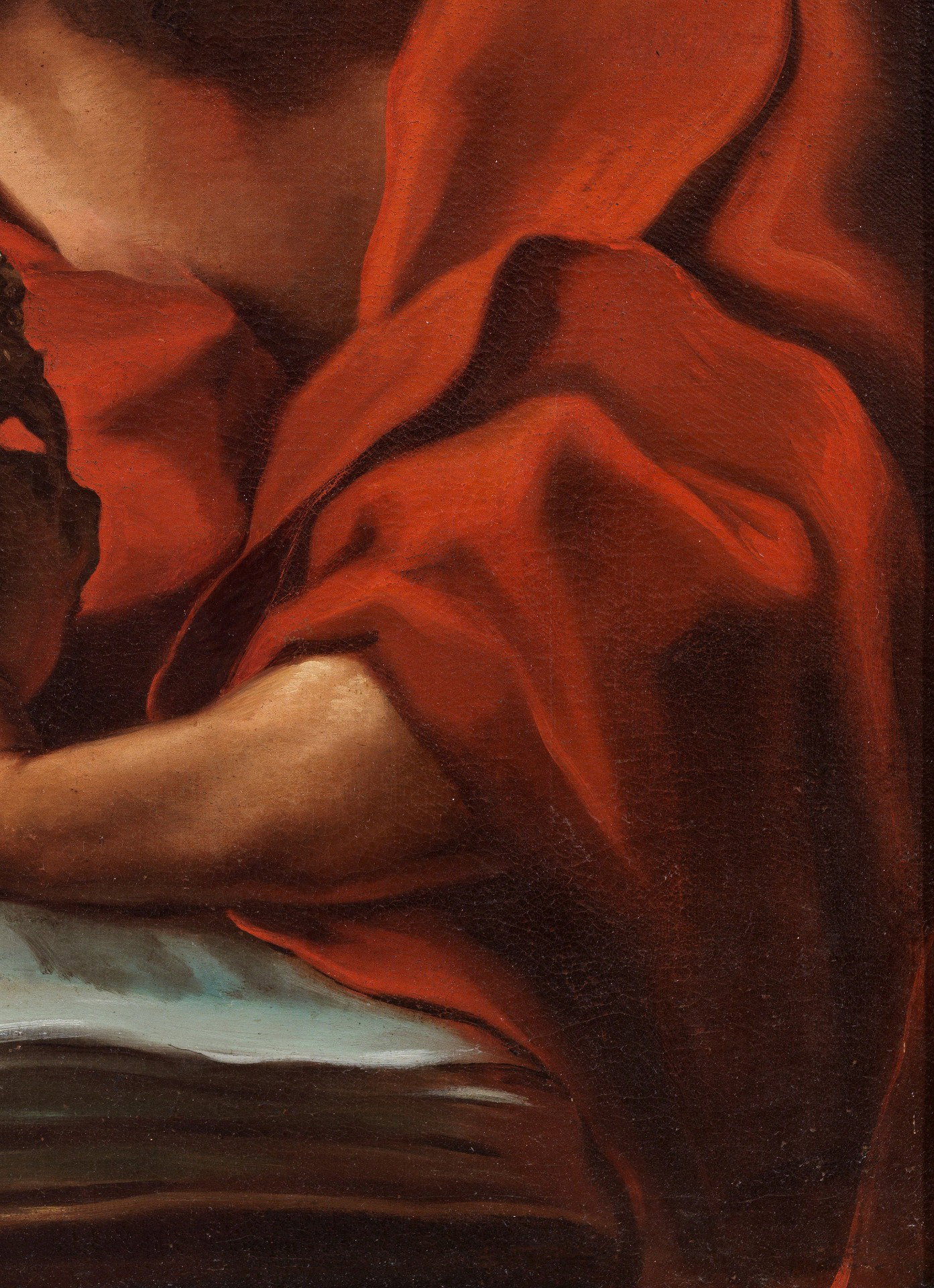
In the canvas that portrays him, we find many stylistic peculiarities already found in Saint Peter, indicating that both works were executed by the same hand: we have the same dark background from which the figure emerges with strong volume, here even more vivid and plastically prominent. In fact, the folds of the garment are wider and more varied, giving a certain dynamism to the composition: the wisdom of the foreshortenings and a realistic excavation even more insisted upon than in the pendant canvas is striking: see the gnarled hands, nervously articulated in space, or the vigorous brushstrokes that restore to the limit and tangible the wrinkles that dig the forehead, the grizzled beard, the important nose, the expression so intense and convincing, with the eyes that seem about to shed tears as they turn to the skull, rendered with remarkable mastery both in the foreshortening so difficult to the limit of trompe l'oeil.
Convincing comparisons allow us to return these two well-known canvases to Giovanni Battista Merano: I begin with this Saint John of San Facundo, who purifies the factions of the church of the Capuchins of Savona, datable to the canonization of 1691 as the protagonist of the altarpiece bears the halo that qualifies him as a saint.
We find a very similar way of painting the drapery, with rich and constantly moving folds to enhance the volumes of the bodies they cover and the same hands with an elongated shape, with well-defined phalanges, diligently foreshortened, intensely expressive. Moreover, here is the same use of an intense light that strongly identifies the figures, coming from my lateral source, which analytically stops on the reflections it creates to restore the exact location in the pictorial space of the various elements of the composition. Expressive verve of Saint Peter in the face pathetically turned to the sky, with the traits well highlighted to identify without excessive idealizations the physiognomy with prominent nose and chin, marked mouth, light that sparkles on the wrinkles and cheekbones to render its consistency.
We find a similar movement of the clothing where the folds are crisp and curl jagged with edges a little 'sharp distinguished by light tones.
The wrinkled and thin hands, with bony fingers instead, find wide correspondence with the San Girolamo, comparable also with this particular trait from the already mentioned frescoes of Parma: the face of God who gives the tables of the law to Moses is at the limit of congruence with that of our painting, and even in the difference of size and technique (a painting on the wall) we have the same beards and hair that frame flowing and vaporous the face, the same frowning and grave look, not to mention the way in which it is returned, in this case, the unfolding of the curvilinear mantles for large planes whose volumes are revealed by lines of shadow, to enhance in precise and wise design.
Moreover, all these works seem to me to be united by a poetics poised between early seventeenth-century influences, between Giovanni Andra de' Ferrari and a certain classicizing Emilian culture of which there were very high examples in Genoa (Saint Peter echoes prototypes of Guido Reni) and a formal breadth, a more 'modern' expressive verve.
The white pupils with very dark irises, the languor of the gaze turned to the sky, the red and a little fleshy lips peeking out from the beard, the pointed nose a little rounded and shiny revealed by a white stroke seem to me to denounce the same execution technique.
The paintings and art objects published here are my exclusive property and consequently are always available to be viewed in person, by appointment, in my exhibition venues located in Sanremo and Brescia.
The work, like all our objects, is sold accompanied by a FIMA photographic certificate of authenticity and lawful provenance; this document identifies the object, adding value to the item.
We personally handle and organize the packaging and shipping of artworks with insurance worldwide.
Dr. Riccardo Moneghini
Art Historian